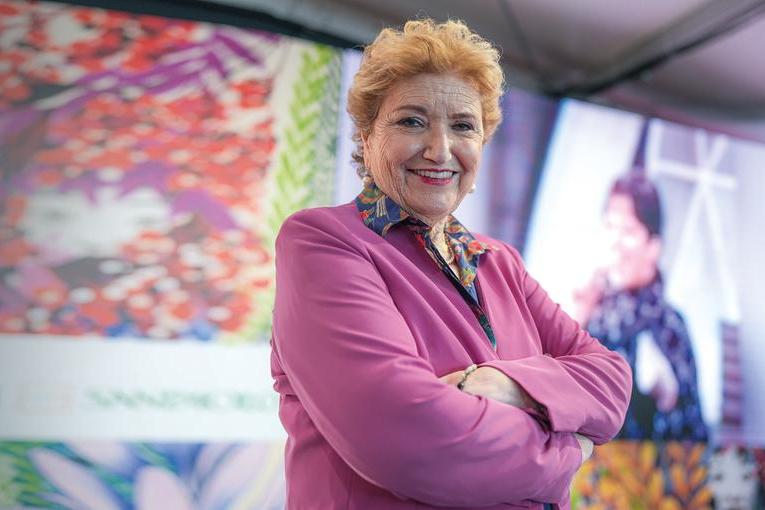





The moderator Sabina Fedeli opened with a quote from Albert Camus of 1970: “We cannot stop this world from being a world of torturing children, but we can make sure that fewer children are tortured.” It was Ida Borletti to feel it as a personal calling and to found the CAF. Almost fifty years later, the association manages residential communities where children removed from juvenile court live 365 days a year, 24 hours a day.
The book – written jointly by psychologists, educators and coordinators – is the first systematic documentation of that method. Laura Calabresi, clinical manager of the CAFexplained its heart: «Repairing means first and foremost offering shelter. No therapeutic work can take place if these children do not first experience the community as a safe place.”


They are children accustomed to unpredictability and violence: “They don’t know if someone will take them to school in the morning, they don’t know if they’ll come home and find their father beating their mother.” Only when fear leaves room for trust do we move on to the second meaning: «The trauma does not go away, it leaves indelible scars. But meticulous work allows these children to stratify positive experiences on a daily basis, rebuilding self-esteem and a sense of self.”
Gustavo Pietropolli Charmet, psychotherapist and honorary president of CAFwith forty-five years of observation behind him: «These children are not sick. They were at the forefront of the struggle between man and woman disguised as mother and father. They were not safe. We had to protect them.” The device that makes this possible is not the individual psychologist but the community as such: “It’s a question of taking care of this device down to the smallest details, where little by little everything is fixed and trust is regained.”
On the institutional side, Paola Ortolan, president of the Juvenile Court of Milan, he described a system in trouble: «The juvenile courts have maintained organic plans based on the needs of a society of fifty years ago. With the Cartabia law, at least we should be double what we are.” And the problem is upstream and downstream: «Our decree only makes sense if someone does something afterwards. The blanket is short.”
Lamberto Bertolè, Welfare Councilor of the Municipality of Milandispelled the most widespread myth: «In Italy we have 3.5 children removed per thousand, the OECD average is eight. We don’t have an excess of removals.” Yet the public narrative tells the opposite, with concrete effects: «We distance the most fragile families from the service system. We should create a system of trust, not something to hide from.”
Finally, the most powerful image of the day: Above almost every bed in CAF communities there is a piece of paper with the word “mom” — even when mom was the one who did the harm. Charmet: «They continue to believe it, that the mother exists, and that sooner or later the real repair will be made there, on the family».