



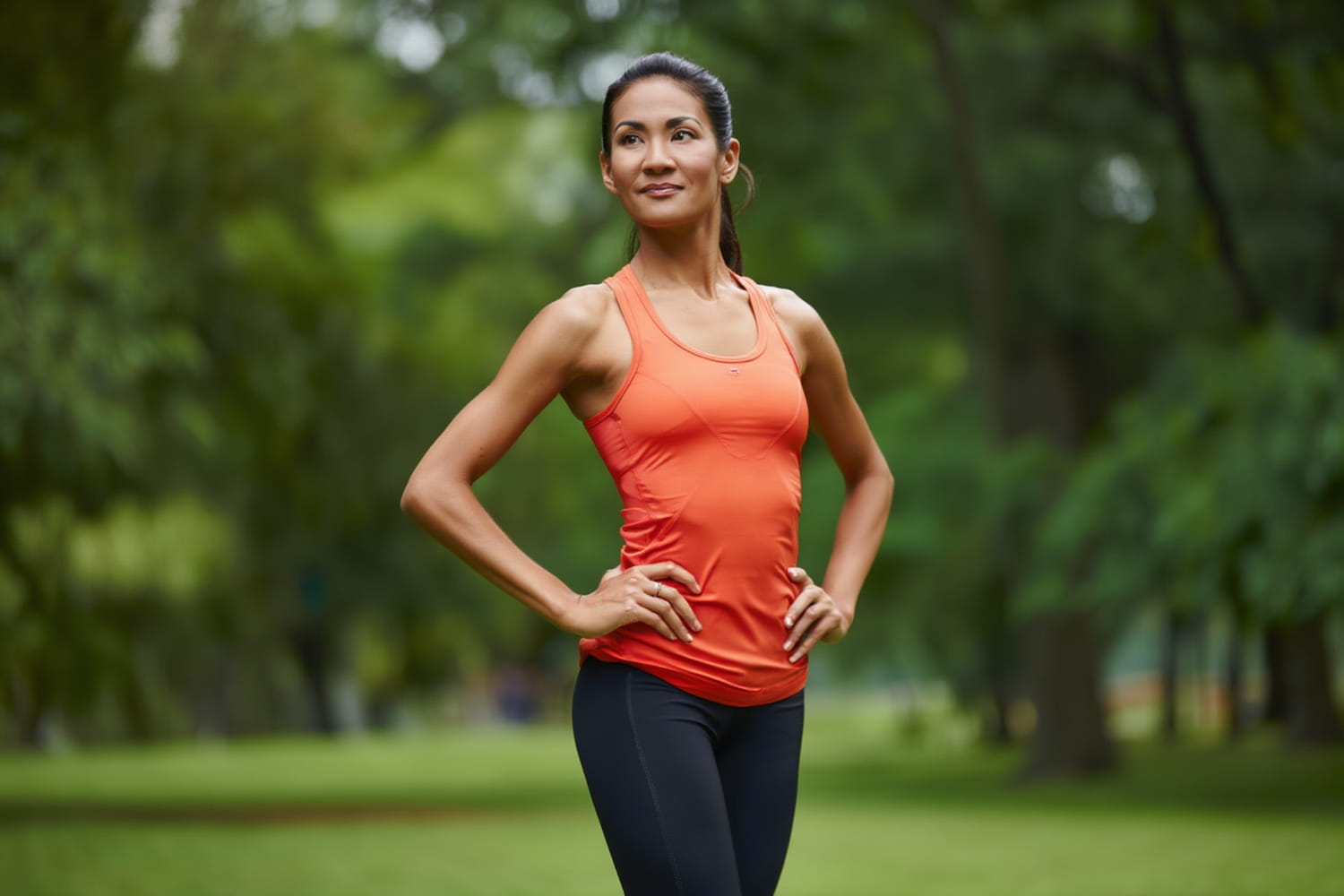
Soft arms, slack stomach, sagging glutes… After the age of 50, muscle loss accelerates. Here is the simple tip to find a toned silhouette, without intensive efforts.
From the age of 30-35, muscle mass already begins to decrease naturally: studies show that we lose on average 3 to 8% of muscle mass per decade, with an acceleration after the age of 60. This loss intensifies as we approach premenopause and then after age 50. Result: the arms become more flabby, the stomach relaxes, the buttocks and thighs lose tone. Added to this are more frequent back pain and an increased risk of fracture in the event of a fall, due to lack of sufficient musculature to protect the skeleton.
Contrary to what one might believe, it is not necessary to embark on very intensive sports sessions from the start to obtain results. With age, the body recovers less quickly and it is essential to adopt a gradual approach, especially after a long period of sedentary lifestyle. For many, starting gently with slow contraction exercises helps strengthen muscles in depth while respecting the joints. This does not mean, however, that sustained effort should be banned: on the contrary, current recommendations emphasize that sufficiently stimulating resistance work, even after 50 years, remains very beneficial when it is well supervised and introduced gradually. This measured and progressive approach is notably defended by coaches like Lucile Woodward, known for promoting sustainable fitness adapted to all profiles.
The simple tip accessible to everyone is based on an often underestimated accessory: elastic bands. Inexpensive, easy to transport and use at home, they allow you to gently work the entire body. Pull-ups to strengthen the arms, leg extensions to tone the thighs, or even targeted exercises for the glutes: in a few weeks, the silhouette is redefined, posture improves and pain decreases. This method is widely acclaimed in modern coaching, particularly by professionals like Coach Rich, who highlight the benefit of progressive resistance to strengthen the muscles while preserving the joints.
To optimize results, these exercises can be supplemented with simple movements like squats, which strengthen the lower limbs, or with a gentle endurance activity like brisk walking.
Beyond the aesthetic aspect, the benefits are real for overall health. Muscle strengthening helps to preserve bone density, a major issue after age 50, and to reduce the risk of falls. Work relayed by Harvard University shows that adapted bodybuilding not only allows you to age better, but also to gain autonomy and quality of life. A good reason to get started without delay.