





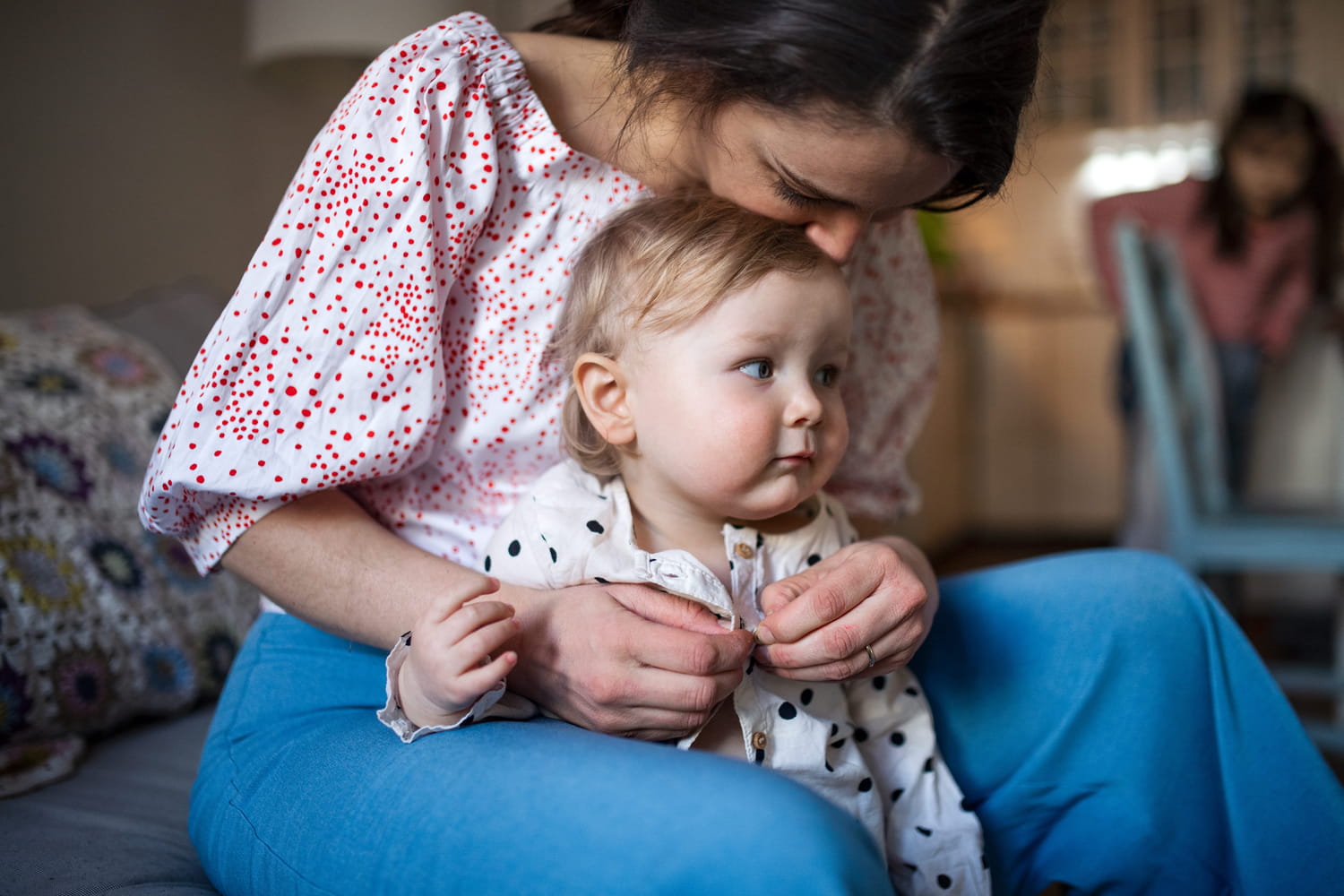
Faced with their children’s stress, certain parents’ reactions contribute to lastingly reinforcing their fears rather than alleviating them.
A child who refuses to go to an activity, who worries about something new or who gets stuck in the face of an unfamiliar situation: these moments are part of the daily life of many families. For parents, it is not always easy to know how to react. Between the desire to help and the desire to reassure, reactions vary, but they are not all without consequences.
Indeed, anxiety in children is not necessarily a serious warning signal. It often appears when he is confronted with something he has not yet mastered. Professionals insist on this point: it plays a role in learning. Cheryl Donaldson, marriage therapist, puts it this way: “Anxiety is the mechanism by which our body tells us that we need to act in one way or another…or, in the case of children, anxiety tells them, ‘This is a new skill I need. This is a new experience.’ In other words, these moments of discomfort contribute to the construction of the child.
In these moments, many parents seek above all to relieve the pressure as quickly as possible. Hannah Scheuer, clinical social worker, warns on this point: “If we give in, we will only make things worse. Giving in is actually enabling avoidance.“Concretely, this means that by preventing the child from confronting his anxieties, he may feel better in the moment, but he does not really learn to manage what worries him. “This will only make things worse and have negative long-term consequences”she specifies. Little by little, he will then associate his discomfort with something that must be avoided at all costs, permanently reinforcing his anxiety.
Conversely, specialists recommend a more balanced posture. It is not a question of minimizing what the child feels, but of supporting them differently. Laura Buscemi, specialized in supporting children, summarizes this approach in three steps: “We need to validate, we need to regulate and we need to mitigate risk.” It’s about recognizing the emotion, offering tools to manage it, then encouraging the child to move forward despite the discomfort. This work requires time and a certain consistency, but it allows the child to develop real confidence in his abilities.
In certain cases, professional support may be necessary, particularly when anxiety disrupts daily life, relationships or sleep. Specialists also point out that parents play a central role, not only through their reactions, but also through the example they set. Learning to manage your own stress, showing concrete strategies or simply verbalizing what you feel can help the child build their own benchmarks.