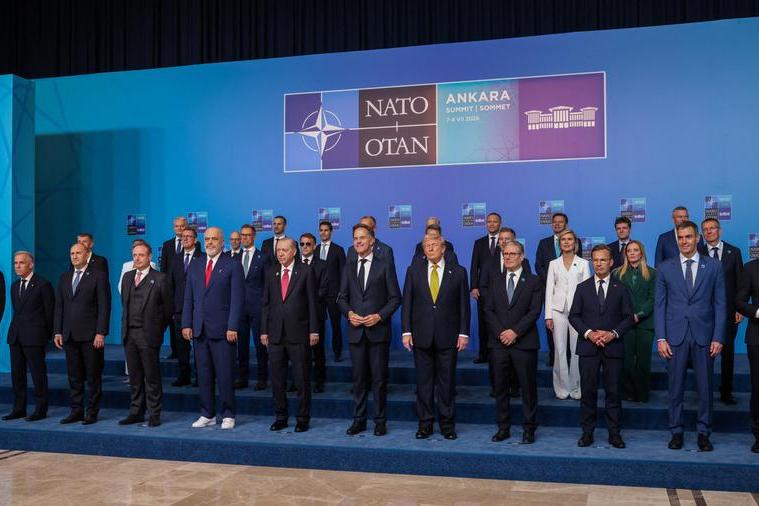
«A stronger Europe in a stronger NATO»: it is all here, in this sentence contained in the final declaration of the Ankara summit, the meaning of the summit that brought together the countries of the Atlantic Alliance and the definition of the future scenario of the Organization. This was underlined by the Secretary General of NATO, the Dutch Mark Rutte, stating: «To remain transatlantic we must become more European».
Faced with a progressive disengagement of the United States by Donald Trump, who for some time now has not hidden his discontent with his allies, going so far in recent days as to raise the possibility of withdrawing all US soldiers from European territory, the Ankara summit put it in black and white that the future of the Atlantic Alliance can only be guaranteed through a radical transformation of its structure which makes it more autonomous but no less solid, capable of surviving without the defense guarantees provided so far by the United States, thanks to closer collaboration with the European Union, as also reiterated by the President of the EU Commission Ursula von der Leyen.
Moreover, Donald Trump confirmed this fully in Ankara, where he arrived reluctantly, has once again expressed his evident annoyance towards NATO, has launched new attacks against the allies, he once again reproached Italy for not giving him the basis for the war on Iran, he denounced that he wanted to break off commercial relations with Spain which does not want to raise military spending to 5%, he returned to fuel tension with Denmark by reaffirming his aims on Greenland.
Washington, therefore, requires European countries to take on a new leadership role in the Alliance, if he wants it to continue to exist. From now on, Europe will have to be able to defend itself on its own, no longer counting on the protection of the USA that has characterized NATO since its origins.
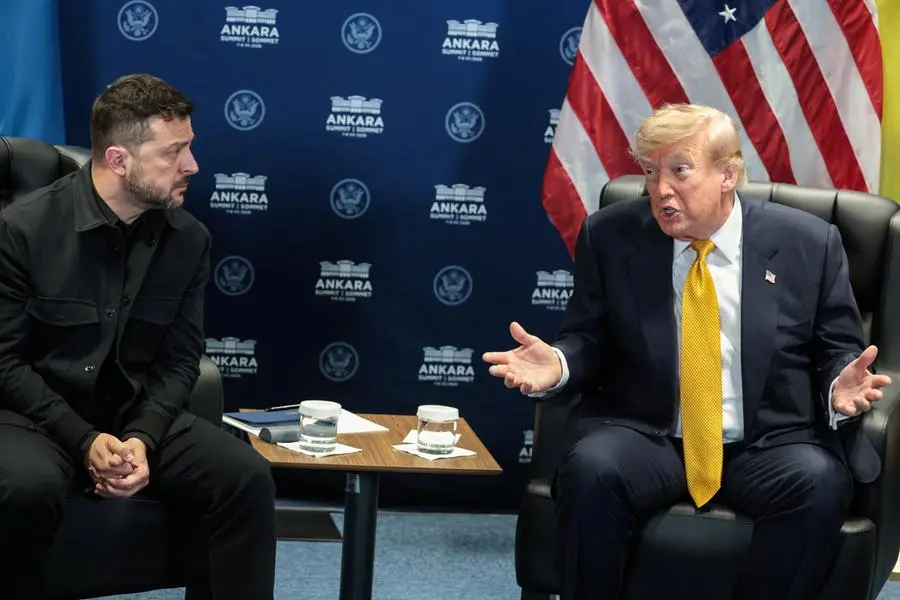
Donald Trump and Volodymyr Zelensky at the bilateral meeting.
(REUTERS)
The North Atlantic Treaty Organization was born as a collective political-military alliance in 1949, after the Second World War, in the midst of the Cold War, bringing together two North American countries (USA and Canada) and ten European countries (including Italy) with the aim of counterbalancing the growing power of the USSR by creating a defense guarantee and a form of deterrence against the Soviet threat, on the basis of Article 51 of the United Nations Charter, which affirms the right of independent states to individual or collective defense. With the fall of the USSR, NATO did not dissolve, but changed its strategies and objectives, for example, dealing with peacekeeping missions in the Balkans and Afghanistan. Over time the Alliance has expanded eastward, to the borders with Russia, with the entry of former members of the Warsaw Pact and former communist bloc countries, reaching the current composition of 32 members.
Starting in 2014, with the Donbas war erupting following the Russian-backed armed insurrection, the subsequent proclamation of the separatist republics of Donetsk and Luhansk, and the occupation and annexation of Crimea by the Russian Federation, Moscow has once again become perceived as a real threat to the countries of Eastern Europe (starting from the small Baltic Republics, which joined NATO in 2004). In the last decade, thus, the geopolitical and military center of gravity of the Alliance has progressively shifted towards the east, Eastern Europe and the Baltics, and Poland has taken on an increasingly relevant and strategic role within the Organization.
This structure, which has raised criticism and discussions within NATO itself because it is not shared by everyone, has lasted until today and, indeed, has strengthened in recent years: after the large-scale aggression of Ukraine by Russia in 2022, Finland and Sweden applied for membership and joined the Alliance (in 2023 and 2024 respectively) to defend themselves from any threat to their territorial integrity thanks to the principle of collective defense established by Article 5 of the Treaty (if a NATO country is attacked the other members undertake to intervene militarily in its defence).
A pillar, collective defense based on Article 5, which was forcefully reaffirmed in Ankara: in the final declaration the allies reaffirm their “unity, solidarity and collective strength” as the “foundation of peace, security and prosperity”. The gaze is still focused on Russia: the commitment to defense, we read in the declaration, is necessary “to counter the long-term threat that Russia represents to Euro-Atlantic security and stability and the persistent threat of terrorism”.
The key words are defense and deterrence, which are based on a mix of “nuclear, conventional and missile defense capabilities, integrated with space and cyber resources”: according to the vision of the Alliance countries, to avoid new wars by discouraging possible attacks from the outside we must demonstrate that we are strong. To do this, it is necessary to “expand collective productive capacity”. New procurements worth over 50 billion dollars were announced in Ankara.
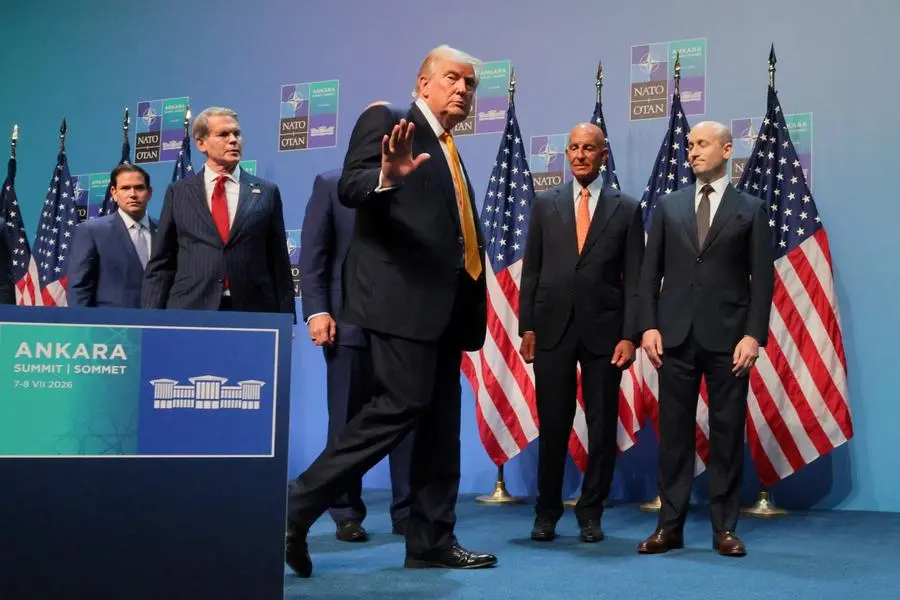
Donald Trump at the end of the final press conference.
(REUTERS)
In the construction of transatlantic security, the role of Ukraine strongly emerges, which for the first time is recognized as a fundamental partner for its contribution to the defense of the continent. The allies confirm their full support for Kyiv and undertake to provide Ukraine with 70 billion euros in military equipment, assistance and training in 2026 and maintain the same level of assistance also in 2027. Ukrainian President Zelensky, invited to Ankara, met Donald Trump to talk about a possible way out of the war.
Europeans increasingly recognize the strategic relevance of Kyiv in building common defense. The great Ukrainian capacity to independently produce drones, which is decisively changing the trend of the war with Russia, has rapidly transformed Ukraine from a country solely receiving assistance into a country providing security systems to Europe. Dutch Prime Minister Rob Jetten underlined this: when Russia attacked Ukraine we wondered what Europe and NATO could do for Kyiv, today Europe and NATO must ask themselves what they can learn from Ukraine.
At the defense industry forum in Ankara, Zelensky signed “drone agreements” with three NATO members, Denmark, Estonia and the Netherlands. Trump, for his part, changed his attitude towards Zelensky and Ukraine by declaring that the US will grant Kyiv the license to produce the Patriots themselves, to defend themselves from Russian missiles.
Military spending, security threats, strengthening defense: these are the priorities of the summit and its final declaration. No mention, however, of the heavy human cost of the ongoing wars, of the victims and humanitarian crises that they cause, of the social cost of the increase in the production of armaments, which has already seen a significant increase in 2025.
At a time when Donald Trump ends the ceasefire with Iran, tears up the memorandum of understanding signed in June and reignites the conflict by launching a new offensive against the country, in the final declaration of the summit the allies say that Tehran must not possess nuclear weapons and ask the country to fully respect freedom of navigation in the Strait of Hormuz. Statements that sound like a endorsementa form of support from NATO for the offensive, after the strong tensions between Trump and the allies, who the US president has not forgiven for their lack of support in the war between the United States and Israel against the Islamic Republic.