by Arianna Monticelli
It was just after 12.30pm on Saturday 10 July, a hot but breezy day, when the unthinkable happened in Brianza. It’s 1976, the factories here are working at full speed, for the benefit of everyone. That day, however, something forever stopped the undisputed faith in modern industrialization. In the Icmesa company, Industrie Chimiche Meda Società per Azioni, in the Municipality of Meda on the border with Seveso, the rupture of the safety disk of a reactor releases TCDD, an acronym for tetrachlorodibenzoparadioxin, a highly toxic molecule into the air. It will only be known after several days: it is the beginning of an event that will forever mark a territory, but will also lead to the introduction of European regulations for industrial safety systems, to protect health and the environment. A disaster which today, exactly 50 years later, is also remembered for the ability of a population to react, demand answers and be reborn, and which will be commemorated with the arrival in Seveso of the President of the Republic Sergio Mattarella.
When the accident occurs, Icmesa, controlled by the Givaudan group of Geneva, part of the multinational Hoffman La Roche, is called by everyone “the perfume factory”. It has been producing intermediates for cosmetics and medicines here since 1948. In just a few decades, villas have sprung up around it, built with sacrifices by families who arrived mainly from Veneto and the South. Fifty years ago, when those who lived closest to the factory perceived an acrid smell, they did not imagine that an invisible substance, pushed by the wind, was already settling on houses, fields and people, poisoning a six kilometer radius between Seveso, Meda, Cesano Maderno and Desio. The mayor of Seveso, on Sunday morning, was summarily informed of the accident by the company top management, who downplayed it.
But the days pass and flowers and vegetables begin to burn and farmyard animals begin to die. On July 17, observing what was happening and without knowing who the “enemy” was, an emergency was triggered: an ordinance declared a neighborhood an “area invaded by toxic gases”. The consumption of fruit and vegetables is also prohibited in nearby municipalities. Mayors go around with megaphones to alert citizens. Local journalists reported it and within a few days the case went around the world, especially when the children closest to the factory got red spots on their faces. It is chloracne, a manifestation of dioxin intoxication, but then no one knows how to interpret it. Monitoring begins at the Pio
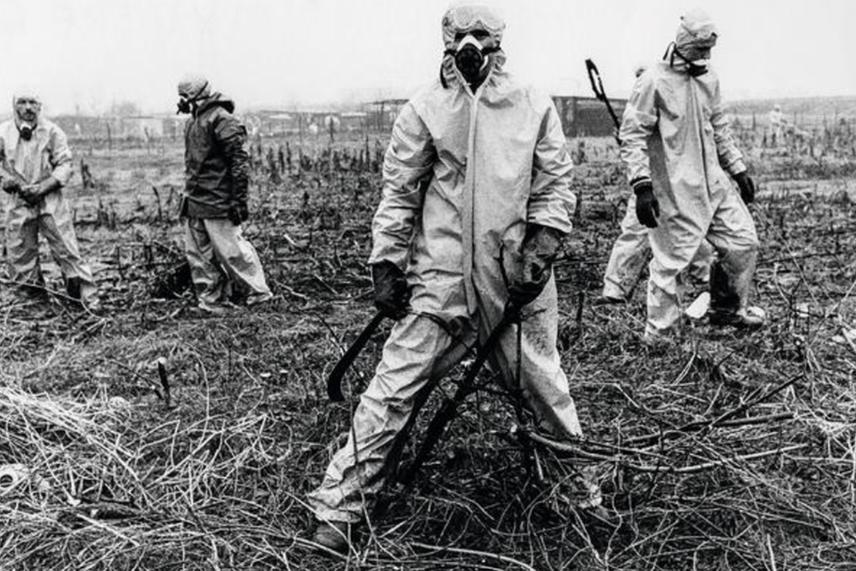
In the meantime, the affected area is delimited, divided into three zones: zone A is the one of maximum contamination, where the military places barbed wire; they are covered in white suits and gas masks. It is the image that will forever label the area and its inhabitants: Seveso becomes synonymous with contagion and fear and will remain so for years, with the excellent furniture produced here sent back to the artisans and people on holiday made to return home with an excuse, rather than having them in their hotel.
In July, the evacuation of over 200 people was ordered. In August, over 700 people were displaced. Those who live in the most contaminated area will never return to their homes again. Everyone else will see her again after a year and a half, emptied of everything. All animals are killed. It is a lost community, but not immobile. Those who have been evacuated organize themselves into committees, those who have remained try to help. The Dean’s Assistance Office is born, created by young Catholics between 17 and 20 years old, to support families and provide information to counter misinformation and fear. In September 1976, in the then Archbishop’s Seminary of Seveso, young people organized a large solidarity meeting: 5,000 of them arrived from all over Brianza.
Meanwhile, the population continues to be subjected to massive health monitoring. An enormous screening which, 50 years later, has never stopped and continues today on the new generations. No increase in tumors or mortality has, in various studies, been directly traced back to dioxin, even if damage to the organism is confirmed; but more than the toxic substance absorbed by the blood, the psychological and social weight of the disaster counted. The uncertainty of cleanup and compensation has also left profound marks.
In 1977 the Lombardy Region defined the reclamation plan and opened the Seveso Special Office. The first Seveso Directive was born in 1982: the accident in fact pushed Europe to adopt rigorous rules to protect people and territories exposed to industrial sites with dangerous substances. Starting in 1981, two enormous safety tanks were built to store all the contaminated material: since 1983, the Bosco delle Querce natural park has risen in the area, 43 hectares of memory and regeneration. Seveso transformed pain and anger into collective commitment, the drama into a warning and culture of environmental responsibility. Precisely at Bosco delle Querce, awarded the European Heritage Mark in 2026, Mattarella will arrive on Friday 10 July.