






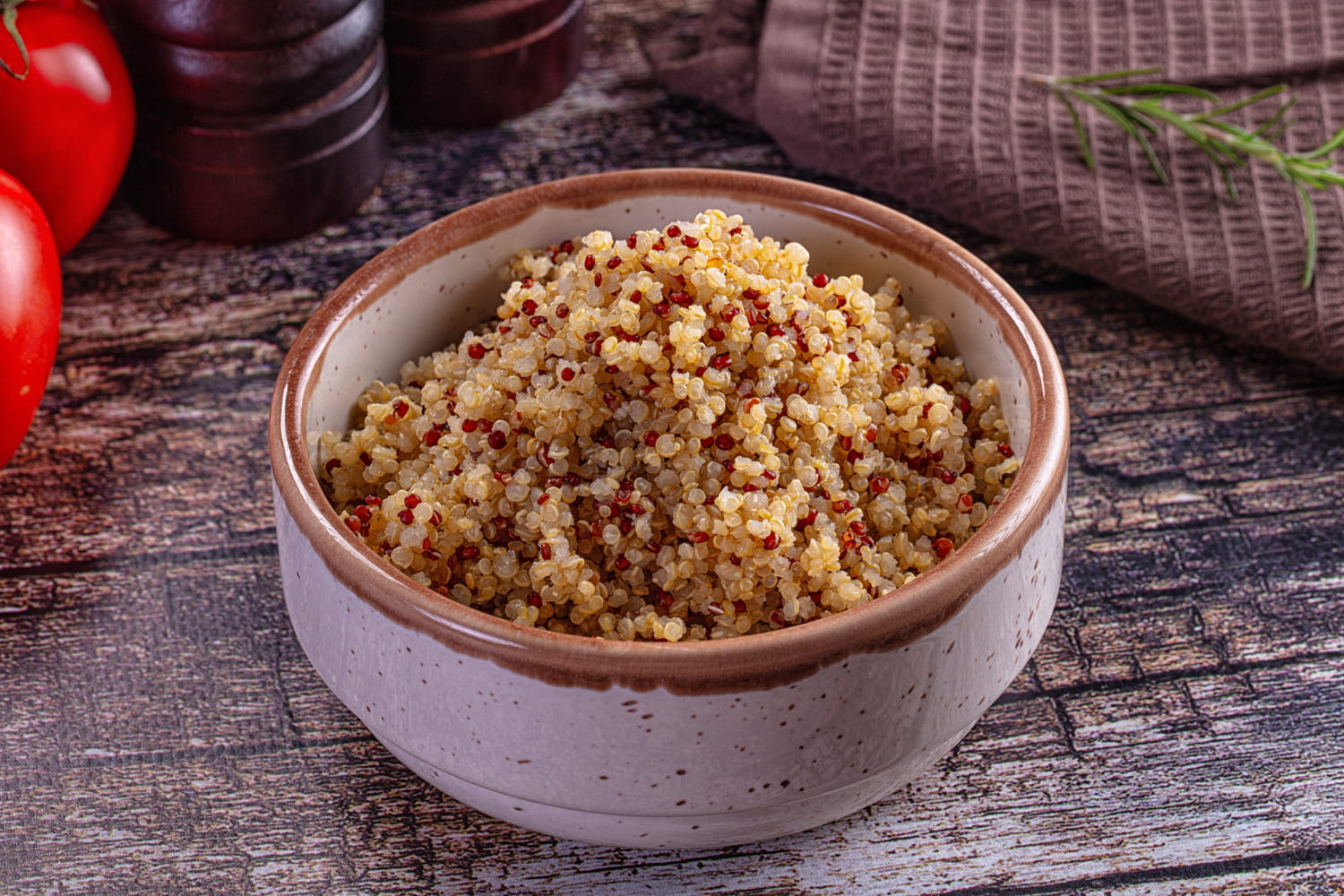
Quinoa is a small seed propelled a few years ago to the rank of superfood because of its many nutritional qualities. Health benefits, calories, weight loss… Focus on what we nicknamed the “rice of the Incas”.
Considered a true “mother seed” by the Incas, quinoa has established itself on our plates as the essential healthy alternative to classic starchy foods. But beyond its crunchy texture and delicate taste, what are its real health benefits? Is it really high in protein? That’s everything you need to know about quinoa and why this exceptional seed deserves a special place in our daily nutritional balance.
What is quinoa?
Beneath its cereal appearance, quinoa is actually a vegetable from the chenopodiaceae family (leafy vegetables), cousin of beets and spinach. But it is its pearly seed which is used in cooking, where it lends itself to the same recipes as rice or wheat. Its first cultures date back almost 7000 years in the Andes of South America. There are two varieties of quinoa: white (or blond) and the red.
What are the health benefits of quinoa?
Quinoa has approximately the same caloric value as cereals (rice, pasta, semolina, etc.) but it differs in its nutritional composition.
Much more rich in protein than pasta and rice, quinoa is valuable for people who limit or even eliminate meat foods (meat, fish, etc.). Vegetarians, vegans and even flexitarians will therefore have every interest in putting quinoa on the menu to supplement their protein intake. Another advantage of this little seed: they have all the essential amino acids to the proper assimilation of their proteins, unlike other cereals and vegetables.
Twice as much rich in fiber than pasta and three times more than rice, quinoa is good for transitbut also valuable in the prevention of cardiovascular diseases, diabetes and certain cancers. Finally, quinoa is much richer in minerals and trace elements, notably iron, manganese, copper and potassium, than the majority of other cereals.
How many calories in quinoa?
A 100 g serving of raw quinoa provides 380 calories. Cooked, it swells with water and triples in volume, its caloric value is then 116 calories per 100g.
Nutritional values
| NUTRIENTS | QUINOA COOKED IN WATER, WITHOUT SALT: CONTENT PER 100 G |
|---|---|
| Proteins | 4.1g |
| Carbohydrates | 18.8g |
| – including sugars | 0.87g |
| – including starch | 17.6g |
| Dietary fiber | 2.8g |
| Lipids | 1.92g |
| – including cholesterol | 0.0 mg |
| – of which saturated fatty acids | 0.23g |
| – of which monounsaturated fatty acids | 0.53g |
| – of which polyunsaturated fatty acids | 1.08g |
| Water | 71.6g |
Does it contain gluten?
Quinoa is naturally gluten-freewhich largely contributed to its sudden popularity during the gluten-free diet boom in the early 2010s. It is much more digestible when you have sensitive intestines.
Does quinoa make you lose weight?
Starchy foods have a special place in slimming diets because they are rich in complex carbohydrates and low in lipids (fats). This is all the more true for quinoa which is also rich in excellent quality proteins as well as fiber. Its proteins provide even more satiety and help fight against muscle wasting often linked to weight loss. Its fibers trap, during digestion, part of the sugar and fats from the meal and limit their absorption. Finally, quinoa is one of the starchy foods low glycemic indexa real guarantee of slimming. Its consumption does not disrupt blood sugar levels and does not cause a spike in insulin, a hormone that promotes fat storage.
No quinoa for children before 2 years old
Quinoa is covered in a thin layer of saponin, which can give it a slightly bitter taste. Saponin can be dangerous for certain animals and insects but is not dangerous for adult humans. On the other hand, doubt remains for very young children with an immature digestive system, which is why we recommend, as a safety measure, not to introduce it into the diet before the age of two. A large part of this saponin can be removed by rinsing the quinoa with plenty of water before cooking.