





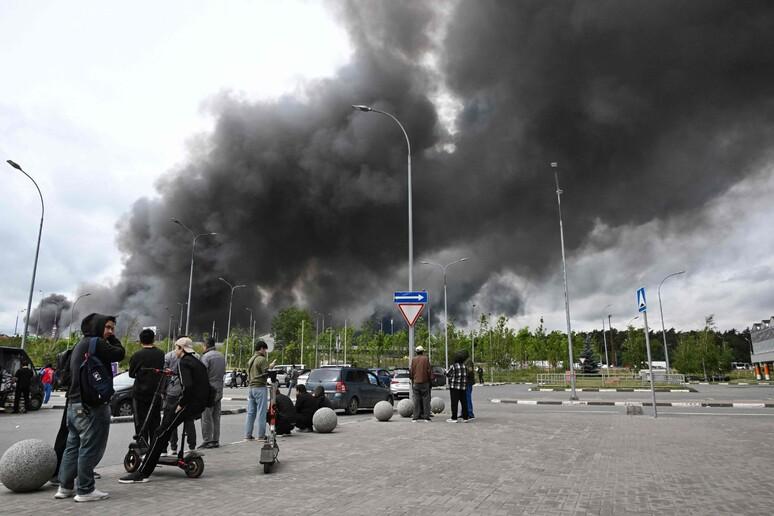
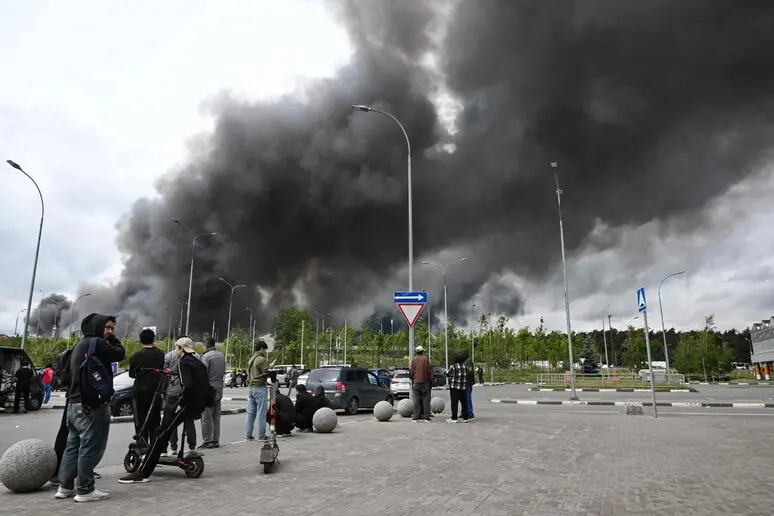
There is a precise moment in which the war stops being a background noise for the capital of the country that wanted and promoted that conflict, a distant accounting of mud and trenches in the evening bulletins, and becomes a physical presence, the smell of burning, black smoke that erases the horizon. That moment materialized at dawn today in the Moscow sky. For the second time in just three days, Ukrainian drones have pierced the defenses of the Russian Federation, hitting one of the most important oil refineries in the capital region at the heart, over five hundred kilometers from the border. International agencies, led by Reuters, describe fifty-two aircraft intercepted or shot down, the forced stop to civilian flights in the Domodedovo and Sheremetyevo airports, the columns of smoke visible from the residential neighborhoods and the silent panic of a metropolis that suddenly rediscovers itself vulnerable.
In the cold style of military showgirls we talk about “degraded strategic objectives”. But behind the twisted steel of the burning Rosneft oil tanks there is a widening psychological fault. For years the Kremlin has sold its population the illusion of a surgical “special operation”.a drama to be consumed on television screens while life in Moscow’s cafés went on untouched. Today the mirror broke. The war returns along the same tracks from which it started, remembering that no one can say they are safe if their neighbor’s house burns down.
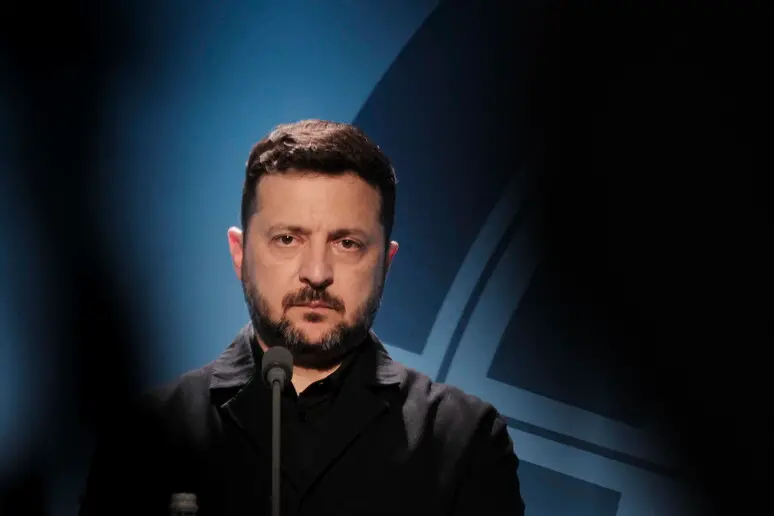
Volodymyr Zelensky, speaking to the nation in the hours following the raid, said it bluntly: «The long haul is the right answer, the pressure must push Russia to the conclusion of the conflict». It is not an isolated event, but the culmination of a long and painful strategic metamorphosis that has seen Ukrainian forces move from the desperate defense of the first hours of the invasion, in February 2022, to a complex architecture of long-range counterattack.
To understand how this morning’s flames came about, we need to rewind the tape of an epic made of blood, earth and technology. There was the winter of 2022, when Kyiv looked set to fall in three days and citizens filled Molotov cocktails in their courtyards. Then, the first extraordinary counteroffensive in the autumn of the same year, which liberated the Kharkiv region with a lightning-fast maneuver and forced the Russians to withdraw from Kherson, returning Ukraine to its only occupied regional capital. That was the phase of field heroism.
2023 and 2024 were instead the years of attrition, of mud trenches in Donbassdashed hopes against the “Surovikin Line” and dramatic delays in Western arms supplies, which left entire Ukrainian cities exposed to systematic bombing of power plants.
And it is precisely in that darkness, between the cold of the houses of Kharkiv and the cries of the children in the underground shelters, that the strategy of 2025 and 2026 was born: asymmetric, technological, ruthless. Unable to compete on the number of soldiers in an exhausting war of frontal attrition, Kiev has industrialized the production of long-range drones, taking the offensive directly to the energy nodes that finance the Russian war machine. In recent weeks, the Saratov, Kirov and Rostov depots have fallen under Ukrainian attacks. Until this week’s epilogue in Moscow.
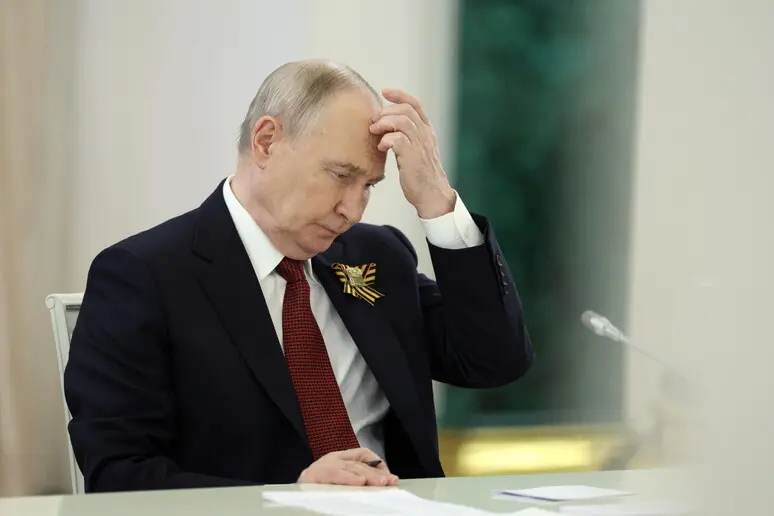
However, journalism has a duty to look beyond military maps and drone efficiency statistics. If the critical gaze helps us to decipher the profound crisis of tsarist power and the crack in consensus around Putin, human sensitivity requires us to look at the invisible scars of this escalation. Because every petrol tanker that explodes in Moscow is the tragic mirror reflection of a gutted apartment building in Zaporizhzhia or a school torn apart by flames in Kyiv. War, when it becomes total, does not spare souls. There is the elderly woman from Kyiv who hasn’t slept a full night for years, woken up by air raid sirens; and today there are Russian civilians in the Moscow suburbs who look at the sky with the terror that a piece of burning metal will decide their fate.
Human accounting is never a zero-sum balance. While the stock markets analyze the impact of the raids on the price of crude oil and NATO analysts calculate the days of logistical autonomy left for the Russian troops at the front, the living flesh of two peoples trapped in a funnel of violence that seems to have no diplomatic way out remains on the ground. The attack on the Moscow refinery is not just a tactical victory for Kiev or a failure of the Kremlin’s anti-aircraft defense; it is the definitive sign that the border line between the front and the rear has evaporated. War has come home, in its most naked, democratic and terrible form. And as long as diplomacy remains silent, it will be the drones that write the chapters of a story that no longer spares anyone.