


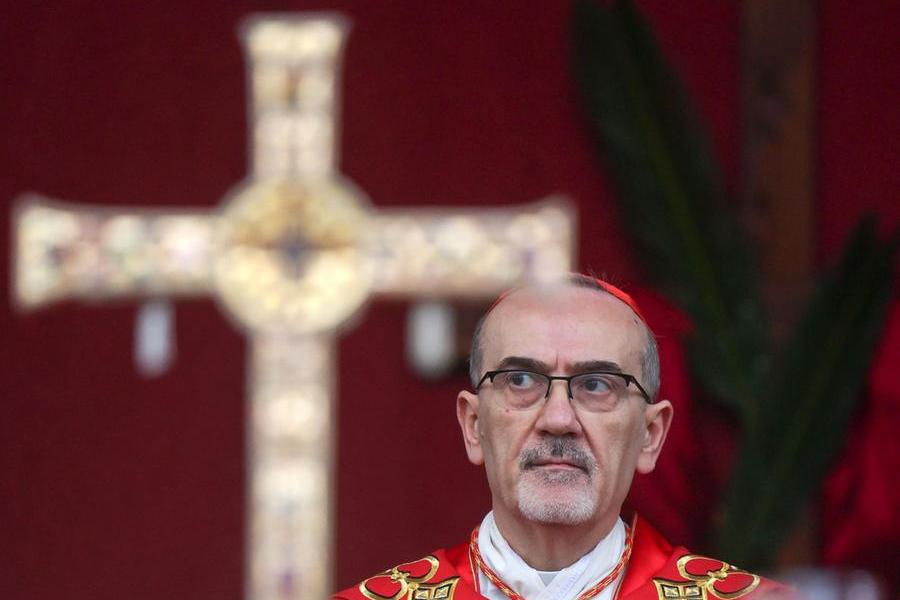


The pain runs through the whole Holy Land, torn apart by a conflict that is setting the entire Middle East on fire, but the situations “are not all identical”. You cannot “draw up a ranking of suffering” but «there is a difference between those who exercise power and those who suffer it, between those who govern and those who are governed, between those who possess weapons and those who are threatened by them, between those who occupy and those who are occupied».
The Latin Patriarch of Jerusalem, the Cardinal, wrote it Pierbattista Pizzaballain a pastoral letter addressed to the faithful of his diocese in which he underlines that «the responsibilities are different. Recognizing this difference is an act of respect towards justice and truth.”. We need “healing from hatred and toxic memory.”
This is where the document released on April 27th, entitled They returned to Jerusalem with great joy. A proposal to live the vocation of the Church in the Holy Land. A broad text, intended for reflection and comparison, which moves between analysis of reality, spiritual vision and pastoral indications and which will be published in Italian by the Libreria Editrice Vaticana from 8 May while translation into other languages is being studied.
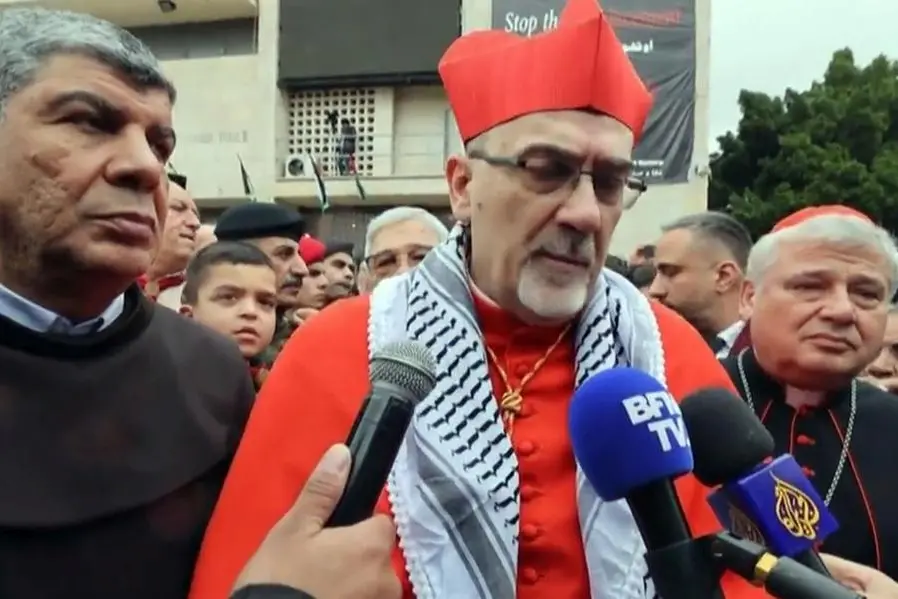
After October 7th, a change of era
The Patriarch does not shy away from the political context of the Middle East. The reference to October 7 and the war in Gaza is explicit: events that marked a watershed, closing one era and opening another: «What we are experiencing”, he writes, “is not just a local conflict, but is the symptom of a paradigm shift at a global level”. For decades the international community has believed in an order based on rules and treaties, while today “we are witnessing the return of force as a decisive tool to resolve every dispute” and “war has become the object of an idolatrous cult”.
In this scenario, war is not only fought with weapons: “It is a war that is also waged with words and images”, notes the patriarch, underlining how it is “increasingly difficult to distinguish news from propaganda”, while the question grows as to how many lives are decided by automated mechanisms. The local Church is called to different responses in heterogeneous realities, starting from Gaza, where Christians “are immersed in a condition of extreme tribulation, but the Parish of the Holy Family and Caritas remain the Face of Christ in the midst of the horror”.
The open wound of the West Bank
Alongside the drama in Gaza, Pizzaballa forcefully draws attention to the situation in the West Bank, where tension grows every day: “It is there that the future of the Israeli-Palestinian conflict is being decided,” he writes, denouncing how “aggressions caused by the occupation” and the “total absence of the rule of law are increasing”, together with “a continuous increase in settlements”. The risk, he warns, is that of “the crystallization of a situation of permanent occupation which erodes any possibility of a fair and shared solution”.
A Church called to heal
Faced with this scenario, the central question remains: how to live as Christians in the Holy Land today?
The Patriarch’s response is rooted in the very vocation of Jerusalem: «The vocation of the Holy City is to heal the world from its wounds». A mission that passes through “the meekness and courage of forgiveness” and which calls Christians to be “salt, light and leaven within the societies to which they fully belong”.
Jerusalem thus becomes not only a geographical space, but a living symbol of coexistence and relationships: “We are the Church of Jerusalem, and the Holy City is not only the geographical but also the spiritual heart of our ecclesial community”, recalls the Patriarch, describing a reality “by its essence, plural”, in which the Church is called to embrace everyone.
Wounded communities and worn words
The letter does not hide the internal difficulties. The war has also left profound marks on the life of Christian communities: broken relationships, widespread mistrust, fragmentation: “We are witnessing the dissolution of relationships”, marked by hatred and suspicion, while fundamental words such as “coexistence”, “dialogue”, “justice” and “common good” appear increasingly worn out. The complaint about the distorted use of religion is particularly strong: «the Holy Places, which should be spaces of prayer, become identity battlefields” and “sacred texts are used to justify violence, occupation and terrorism.” A drift that leads to a clear conclusion: “This abuse of the name of God is the most serious sin of our time.”
An open proposal
The letter is divided into three parts: a reading of reality, a vision inspired by Scripture and a series of concrete pastoral implications for parishes, families, schools and institutions. It does not offer immediate solutions, but a path.
It is, as Pizzaballa himself defines it, “an initial proposal for reflection”, to be developed together, “provided that we are nevertheless moved by the sincere desire to try to understand God’s will for each of us”.