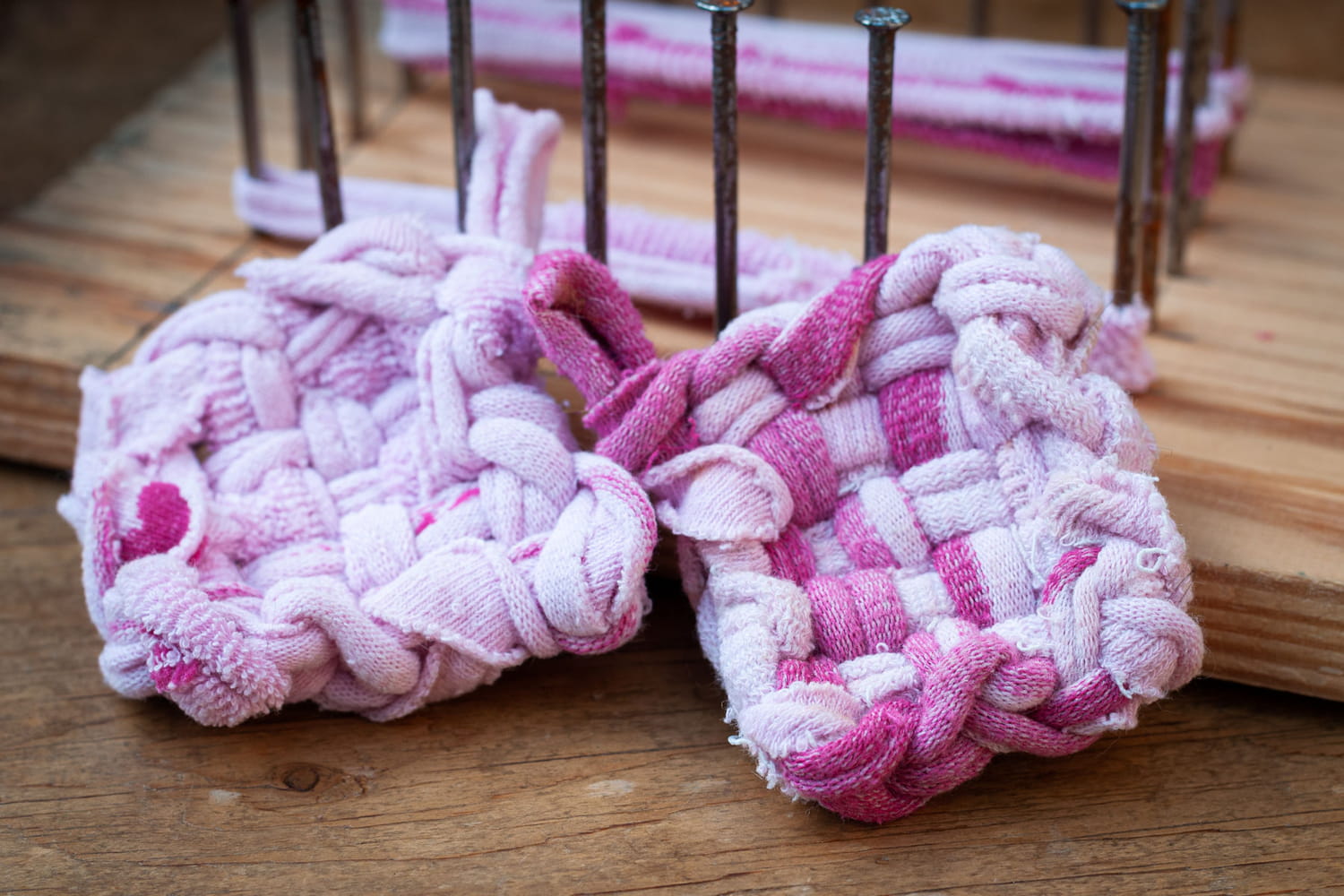
What if your old socks or worn tights became your next sponges? Easy to make, tawashis are a sustainable alternative to disposable sponges. This quick DIY helps reduce waste while giving a second life to textiles intended to be thrown away.
We often forget it, but classic sponges, especially those made of synthetic material, generate waste and end up wearing out very quickly. To limit their impact, an alternative from Japan is attracting more and more zero waste fans: tawashi, which simply means “cloth”. Made from old textiles, this reusable sponge is easy to make at home. Washable, durable and versatile, it can be used both for washing dishes and for cleaning various surfaces in the house.
For make your tawashiyou will first need to equip yourself with a small loom. If you don’t have one, know that it is very easy to make one. All you need to do is equip yourself with a square wooden board about fifteen centimeters and plant there 5 nails on the edges on each side spacing them evenly (approximately 2 cm). Once your loom is made, cut rings of fabric from old tights, leggings, sleeves or socks.
Another option? Equip yourself with a plastic container or Tupperware type glass of the desired size then place clothes pins on the edge to replace the nails in the board. You will get an extra loom in the blink of an eye.
Once your loom is made, cut rings of fabric from old tights, leggings, sleeves or socks. Then all you have to do is weave as follows:
- Thread the fabric rings on one side of the loom and its opposite side, the first at the top and the first at the bottom for example. You will get 5 vertical lines.
- Take another ring of fabric and place it on an unused side nail (e.g. the first one on the right) then pass the fabric over the first ring installed in the first step, then below the second, above the third, below the fourth and finally above the last.
- Thread the end of the ring onto the nail opposite the one you started on (on the left if you started on the right).
- Do the same with another ring of fabric and the second side nail, taking care to weave in reversethat is to say by first passing the fabric underneath.
- Continue weaving with a ring of fabric over each nail until they are all filled, always being careful toreverse weave compared to the previous line.
- To finish the tawashi, bind off the stitches by removing the ring of fabric from one nail to slide it into the next ring of fabric.
- Continue until the end and use the last ring to make a hook.
Need help visualizing how to make your tawashi? Here is an easy video tutorial using fabric strips:
What material for a tawashi?
Wondering what is the best material to create a tawashi sponge based on the sponge you would like? For a classic model which will be useful for all surfaces, you can opt for any recycled fabric, preferably choosing a tube part:
- tights,
- leggings,
- a used sock,
- a sleeve of a sweater,
- a pant leg,
- jeans,
- a used t-shirt…
You can also cut a ball from a larger fabric (like a t-shirt) but you will then need to attach the end to the loom before unrolling the ball onto the nails.


Note that you can also choose to create your knitted or crocheted tawashi. You will then cut up old textiles to create a ball or opt for a dense and resistant thread.


For a tawashi scraping gratounette stylewe can use a ball of sisal, linen or hemp. It is possible to make the tawashi sponge entirely with this material or simply add sisal to one side of the traditional tawashi. This type of material will be perfect for washing dishes or cleaning as long as the surface is not sensitive to scratches.
If you opt for a bath tawashi to wash yourselfon the other hand, choose a soft textile that will not harm your skin.