«In the parliamentary sniper there is, reflected, the image of the “sniper”: who, hidden, suddenly shoots». Gino Pallotta wrote it in his Political and parliamentary dictionary (1977) which I keep in my library like a relic. There is an old adage that has always been around in the Transatlantic: “When cornered to stop a law there are three methods: the dagger, poison and snipers.” Yesterday this category unknown to Generation Z returned from the mists of the First Republic. Devastating as always. Just one vote is enough and…zac!!! Guillotine.
The great thing about snipers is that they never find them. Otherwise they would not be snipers, but only dissenting deputies, a much less romantic category and much more dangerous for their careers. Romano Prodi, who in 2013 lost the Quirinale thanks to the infamous 101 of the centre-left, knows something about this. Because the beauty of this political category is that it is absolutely bipartisan: everyone uses it if necessary.
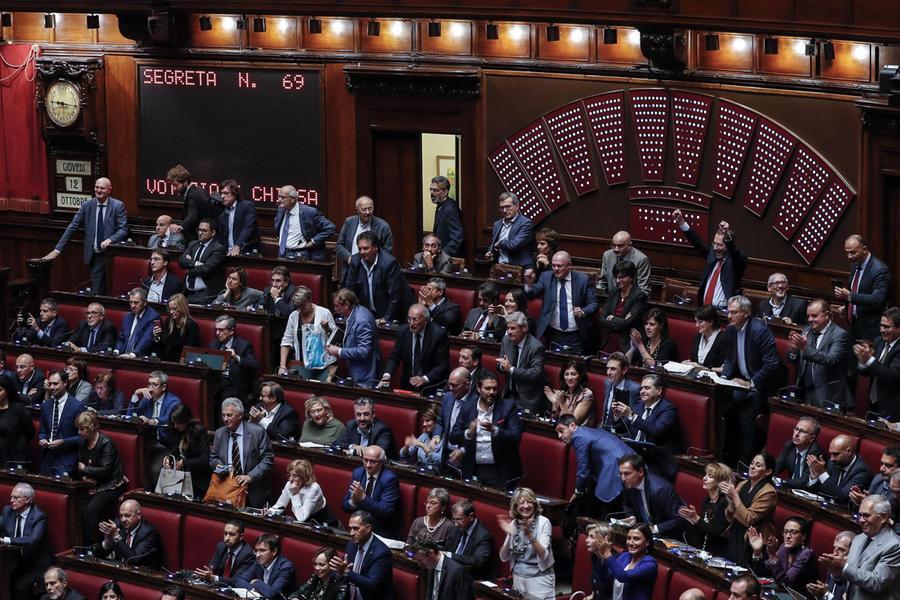
In Montecitorio the new snipers appeared at 7.09pm on Tuesday 14 July (the storming of the Bastille), without leaving any traces. Four minutes earlier they weren’t there. Then, when it was time to vote on the amendment on preferences, they emerged like a Mongol horde and brought the government under: 188 votes against, 187 in favor. Just one vote, but in Parliament a fingernail is enough to transform an announced victory into a national defeat.
Galeazzo Bignami remained petrified. Carlo Nordio, who already by nature does not seem inclined to dance, has transformed into a bronze statue. Elisabetta Casellati, after having expressed the government’s favorable opinion, attended the opposition party, who shouted «Home! At home!” as if they had stormed the Winter Palace. Because Italy is the only country where you can ask for the fall of the government even for an iota. If the comma is approved, the executive is authoritarian. If it fails, it is delegitimized. If the vote is clear, the blackmail of the majority is denounced. If it is secret, freedom of conscience is celebrated, as long as the conscience votes on the right side.
Giorgia Meloni had sensed the trap. Lega and Forza Italia had announced their support only after much hesitation and the amendment, presented by Fratelli d’Italia, Noi Moderati and UDC, envisaged a mixed system: blocked list leaders and preferences for the other candidates. It was therefore not the liberation of the voter from the party secretariats, but it gave him back a piece of pencil. Let’s say it frankly: more than a compromise, it was a Gapardesque helter-skelter which essentially left the power of important candidacies to the secretariats of the parties (and in the case of Forza Italia, the main suspect, to the holders of the fund).
The missing votes would be around thirty, perhaps thirty-six, perhaps more than fifty, depending on the calculation method and the party of the person calculating. Suspicion naturally falls on the allies. Forza Italia swears it is innocent. The League as well. The people of Vannaccia even filmed themselves while voting yes, transforming the secret ballot into a television production. In Parliament, trust is so solid that everyone must now bring video proof of their loyalty, as in Putin’s Duma or Kim Jong-un’s Supreme People’s Assembly.
The Melonians call them “Badogliani”. That’s an exaggeration. Badoglio handed the country over to the Allies; these, more modestly, delivered an amendment to the opposition. And then we can’t stand it anymore with this climate of twenty years of fascism triggered by Vannacci’s avant-garde lucubrations. But the principle is the same: the official declaration says one thing, the vote does another. And since the vote was secret, everyone can proclaim their innocence. This is the great moral superiority of the sniper: he betrays without having to lie, because no one can question him with the evidence in hand. It was not for nothing that it was a Dorothy Christian Democrat specialty.
The opposition’s celebration, however, appears a bit disproportionate. The government’s defeat is politically serious, but it does not equate to a no-confidence vote. And above all, the Democratic Party and the Five Star Movement cannot pose as partisans of preference persecuted by the oligarchies. The Rosatellum, launched in 2017 on the initiative of the Democrats, had filled Parliament with blocked lists. In 2020, then, the Pd and M5S together adopted the so-called Brescellum as the basic text, proportional without preferential voting and with the choice of those elected entrusted to the order established by the parties.
There’s nothing scandalous about it: blocked lists have their flaws, but preferences have them too. They produce clientele, consortiums, internal wars and electoral campaigns that cost more than the seat won. Italian politics has abolished and regretted them, restored and cursed them, according to the convenience of the moment. But a little modesty would be advisable before celebrating like at the World Cup.
The real news is not that Meloni lost by one vote. It’s that part of her majority doesn’t trust her enough to contradict her in public, but trusts the secret ballot enough to stab her in the dark. The prime minister wrote that reflection is needed. It is the formula with which political leaders announce a showdown without yet knowing who to do it with.
He can search for the culprits as much as he wants. They will check the attendance, the postures, the hands inserted into the button panels, the deputies who voted standing and those who used their little finger better than Arturo Benedetti Michelangeli. It won’t do any good. Snipers are like ghosts: everyone has seen them, no one recognizes them. To punish someone, you need a name.