





The parliamentary commission of inquiry into feminicide, as well as all forms of gender violence, unanimously approved the report on economic violence in recent days. An important step, according to the Action deputy, Elena Bonetti «to give a clear definition, also at a regulatory level, of a form of male violence against women that has not been recognized for too long, but which has dramatic effects. Our country, in recent years, has introduced important tools to help victims, such as the freedom income and the freedom microcredit. However, we need to insist on making women fully economically independent. The proposal that is part of the PDL with my first signature, the LeaderShe Act (AC 1818), by provide for the obligation that a woman’s salary be paid into a current account in her name goes in this direction, as highlighted by the report. Thanks to all my colleagues on the commission and in particular to President Martina Semenzato for the important work we have done.”
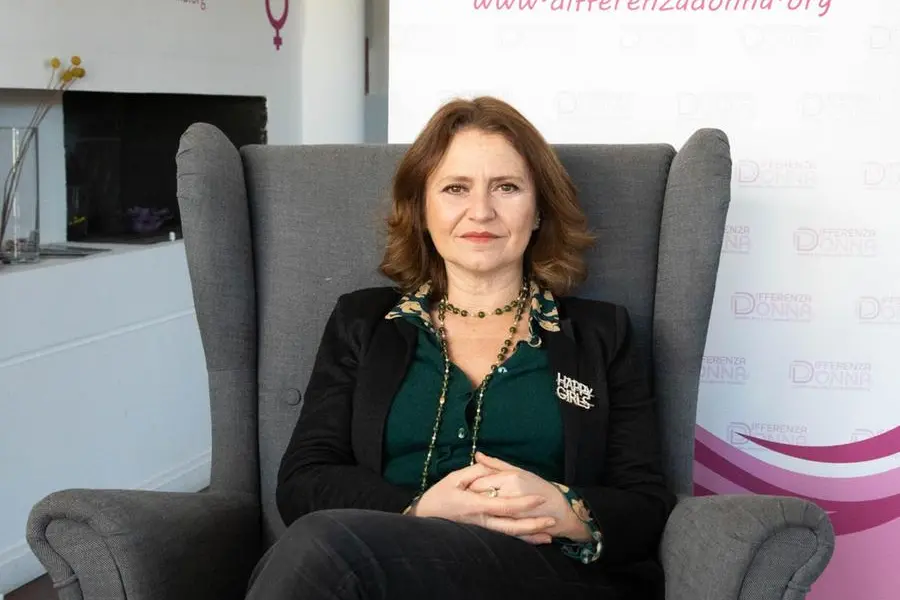
With Elisa Ercolipresident of Differenza Donna, we understand how the regulatory definition of economic violence can concretely change the protection of women and the action of institutions. «The definition of economic violence is important first of all because it recognizes a type of crime that also has an awareness-raising effect on society as a whole, from people who deal with other things to people who hold roles in anti-violence professions: judiciary, lawyer, law enforcement, social and health services. Furthermore, non-maintenance is also recognized as a form of economic violence which we, expert activists of anti-violence centres, proposed already in the 90s to recognise: this violation of an indication from the judiciary during the custody phase is a serious violation because it concerns a very high percentage of men who, following separation, do not comply with what is prescribed by the Court without having any consequences. There is always a cultural action to be taken that can accompany the maturation of a new awareness and we should invest in this, investments that are missing in Italy which prevent an evolution that is taking place in other countries.”

Are tools such as income and microcredit for freedom sufficient to guarantee real economic autonomy, or are broader structural interventions needed?
«The freedom income is an action that we use a lot to support women who are on a path to escape from violence and it is certainly useful; of course we must say that it tries to make up for significant discrimination against all women and therefore, for those who are experiencing a complex situation such as escaping violence, the difficulties add up and become really important. Female unemployment in Italy is increasingly degenerating and as we know this means impoverishment of girls and boys and of the entire country. Systemic policies are needed, ad personam measures should be a bridge to buffer their implementation and not the only possible tool. Women suffer enormous economic discrimination in Italy on an institutional level and then in intimate relationships and it is this combination that has a tragic impact on women. We must think that women in Italy graduate earlier and better than men, but then the gender gap (among managers it is 30%) the absence of welfare and nursery schools, places for people with disabilities and the elderly and care work almost completely on the shoulders of women means that – even after having done everything to be qualified at work – the impact of structural discrimination expels you making you think that you are the problem and so instead of achieving women’s empowerment we devalue them and expel them from the world of work. A tragic situation that leads us to a huge gap with all the other economies of Europe. In fact, as the World Economic Forum tells us, Italy is last in Europe for women’s economic autonomy together only with Bulgaria and Hungary.”
Can the obligation to credit the salary to an account in the woman’s name really prevent situations of control and economic abuse, or does it risk having application limits?
«The obligation to credit the woman’s personal account does not neutralize the possibility of control and therefore of economic violence, but it affirms an important principle of autonomy of female subjectivity in the economic field and this is really important. Of course, if women don’t work on the account they can’t put their earned money there and, therefore, we return to the main importance of economic autonomy: work. The independence and autonomy of women are based on their economic capacity, the others are tools that are put into play when that capacity exists in reality. Without short, medium and long-term interventions nothing will change. We also missed the opportunity of the PNRR which we knew would drive male employment because digital and green are still highly male-dominated. We forcefully and unitedly proposed counterbalancing measures with investments in infrastructure and welfare, but not only were we not listened to: this Government has further lowered the number of nursery places, creating structural damage to the entire country and to the girls and boys who could have strengthened themselves in many social skills which today we know are a fundamental tool for establishing themselves in growth and not falling into isolation, depression, addictions which today are the great problem of the new generations”.
Is it possible/acceptable that in 2026 economic violence will still be violence against women?
«It is not acceptable that women in Italy are excluded from the world of work with so many active discriminations: unemployment, unemployment, gender pay gap, care work, lack of public infrastructure, economic violence and male violence in intimate relationships. This impoverishes women, makes the new generations more fragile and impoverishes the entire country, incapable of staying in contemporary times. I am sure that young generations and women will come to take from below what governments, politics and institutions are unable to think of.”