




«Beyond even personal memories and impressions, I believe that what is important to underline is that the legacy of Pope Francis takes us directly to the main roads of the Second Vatican Council: the renewed missionary spirit, synodality as a style and constitutive form of the Church, service in poverty, dialogue with contemporaneity, the search for Christian brothers, interreligious dialogue and the search for peace».

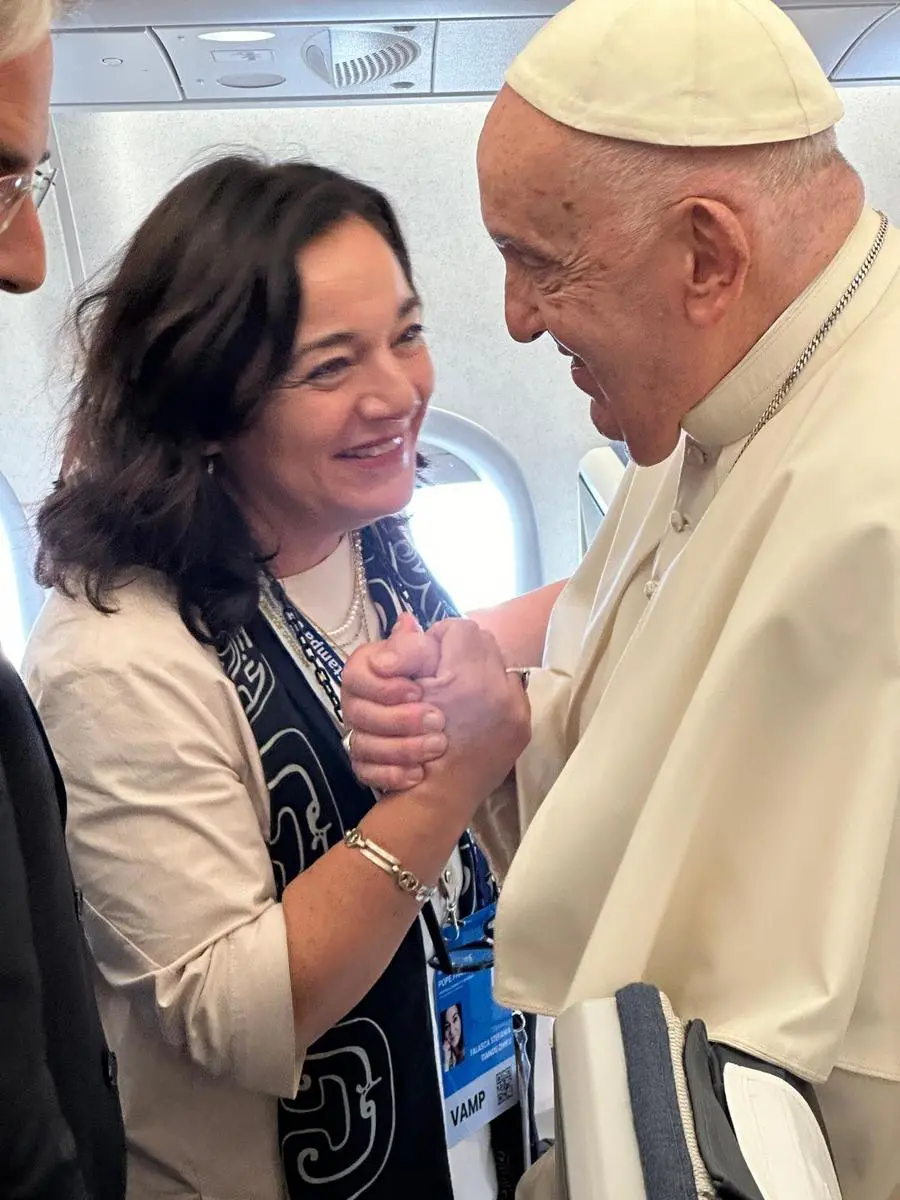
On the first anniversary of the death of Pope Francis, Stefania Falascasignature of Future and long-time journalist, who he met Jorge Mario Bergoglio since the times in which he was archbishop of Buenos Aires, he reflects on what remains of the Argentine Pope’s pontificate which lasted twelve years, from 13 March 2013 to 21 April 2025. «These lines», reflects Falasca who last year also wrote the book Francesco – The main roada (Edizioni San Paolo), «they are not Bergoglio’s own but he made them his own by carrying them forward because they flow precisely from what the Second Vatican Council was. Something he said since his first interview and which I remember he said to me before he even became pontiff, in the interview I gave him in 2007. “This”, he then said, “is the path of the Council that goes forward, that intensifies, I follow the Church”. The legacy of Pope Francis lies precisely in the wake of the conciliar action, which is also the route of the Council that marked our time and in which the Church must continue to walk.”
A legacy collected by Pope Leo XIV.
“Yes. Frankly, it made me think of the reminder that Prevost made last April 12 in the Letter sent to all the cardinals in view of the next extraordinary consistory, stating that a fundamental positive contribution can come from an organic revival of the programmatic document of Pope Francis’ pontificate, the Apostolic Exhortation Evangelii Gaudium (published November 24, 2013, ed) which at the beginning of its development offers a chapter dedicated precisely to the missionary transformation of the Church. This aspect, writes Leo This statement by the Pope and addressed to the cardinals is very important because it means that Evangelii Gaudium of Pope Francis is not only current, but is precisely the foundation for deeply orienting the path of the Church. The historical path and significance of Francis’ pontificate must be examined and begun to study in depth. There must be historiographical work in this sense, of a more scientific nature, which goes beyond what may be an emotional memory of his pontificate.”
You knew Bergoglio before he became Pope and then followed his entire pontificate. What is your most private memory?
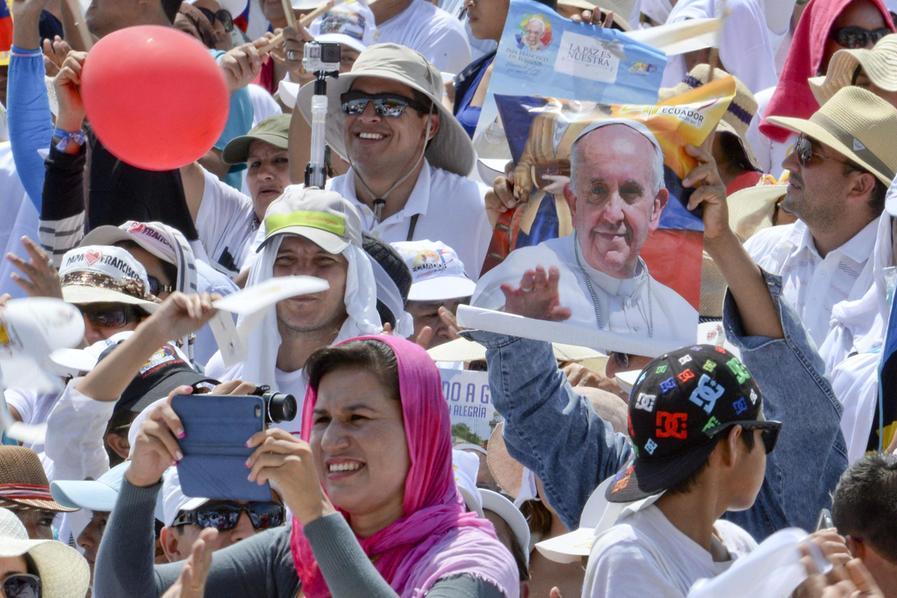
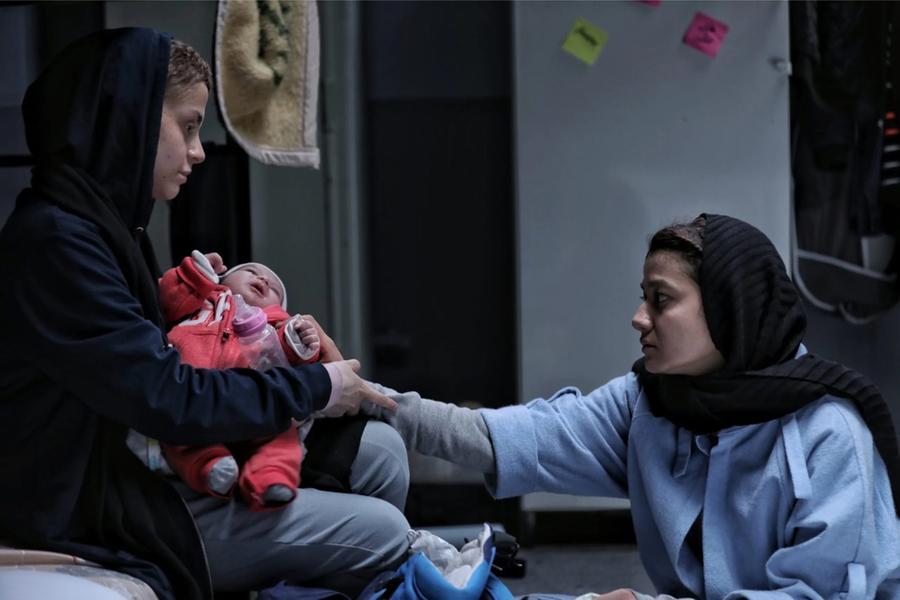
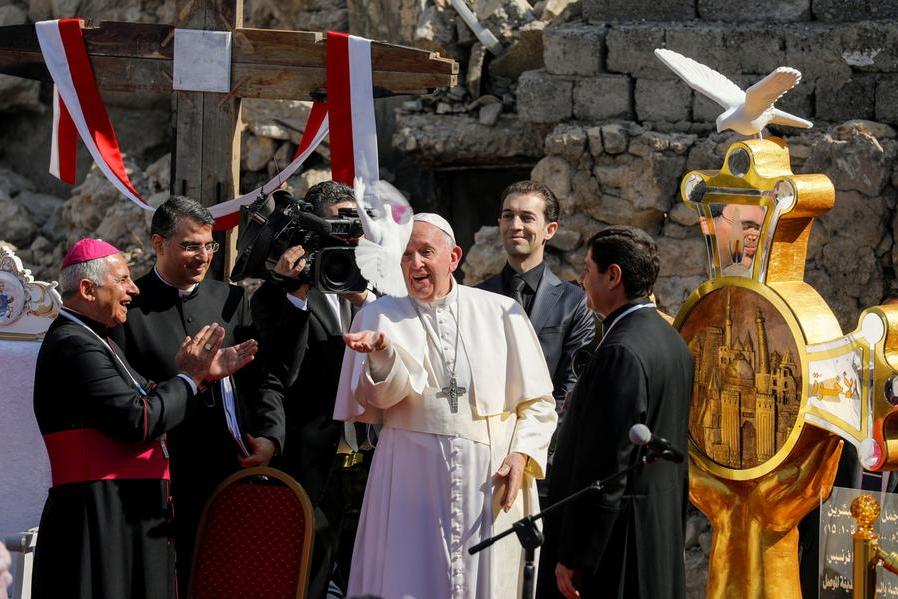
«I have many memories even if I don’t like to get into too personal suggestions. But I like to remember two moments. The first during the very difficult trip to Iraq, to Nineveh, on March 7, 2021, the trip after the pandemic. He had brought us back a land marked by decades of wars, the land of Abraham and the prophet Jonah. I remember when he entered the cathedral of Al-Tahira, in the north of the country, in the Nineveh plain, where the Christians lived, a place still marked by the devastation of ISIS. I remember the crowd waving their palms and singing in Aramaic, the mother tongue of Christianity and the one Jesus spoke. And while they welcomed him with the greeting “Holiness”, it almost seemed to relive the ancient welcome reserved for Jonah, the preacher of truth. That scene struck me very much, because it was as if we had gone back to the origins, to the times of the Apostles, to the roots of Christianity, and together to the land of Jonah. We had already spoken about that figure in an interview in 2007, and those references remained alive and current for me throughout the pontificate. He spoke to me about Jonah moving away and God leading him back to the very places of loss and confusion. In that key he also explained to me the perspective of the missionary nature of the Church and which I later find in Evangelii Gaudiumaccording to the reading also made by Leo XIV. I remember that moment well: there were children watching him come through the bullet holes, through the holes in a gate. It is an image that left a strong impression on me, due to its visual power and the context: evil, wounds, a closed world. And right there, in that place, you had the feeling of having returned to the sources, of touching first-hand the profound meaning of the Church’s mission. And that’s where he also went to indicate a direction, a perspective, within a country still marked by war.”
And the second moment?
«I have a letter from him printed here in front of me. I am the postulator of the cause of canonization of Pope Luciani, John Paul I. I have dedicated much of my life to the study and research on this figure of Pontiff who has been unjustly relegated to the shadow cone of history. The day following the beatification (4 September 2022 in St. Peter’s Square, ed) I received a short communication which I then wanted to frame. He wrote to me: “Dear Stefania, I don’t want to let this day pass without saying thank you, thank you for all the work you did for Blessed John Paul I, thank you because you believed, and I thank you in the name of the Church”. For me that letter represents a lot of the Pope’s human style. What he told me on that occasion is not worth all the things in the world. It was precisely his way of being: a human style made of closeness, relationships, concrete attention to people. A formal letter, with the coat of arms, of course, but at the same time permeated by a profound understanding of the work done and the recognition of a commitment that, in some way, goes beyond me as a person. That “thank you in the name of the Church” has a particular weight: it means, on the part of a Pontiff, a level that goes beyond the simply personal dimension and is placed on a broader, ecclesial level. And this, for me, remained a very strong sign.”