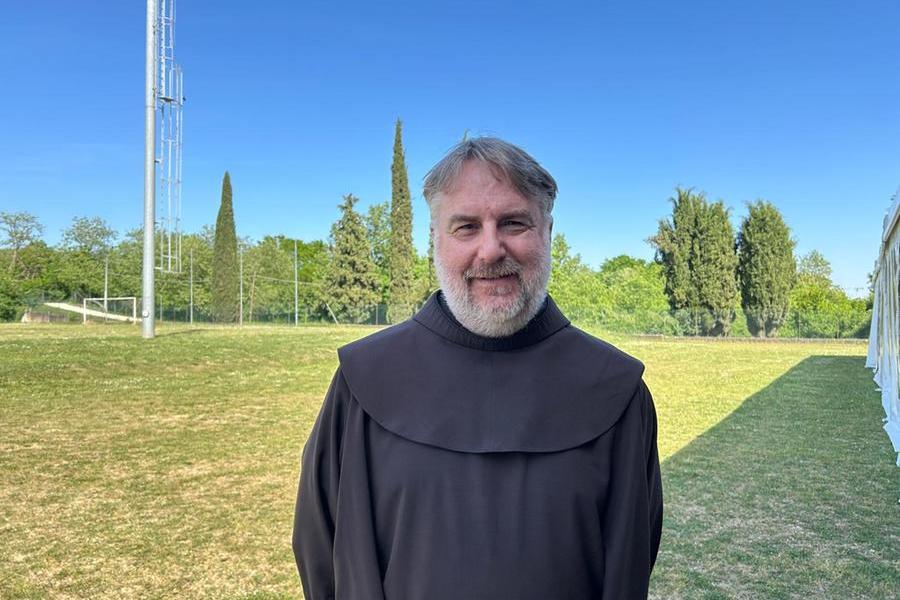


He is moved father Marco Vianelli when we reach him on the phone returning from Verona where he conducted a four-day event dedicated to “Taming the world. When the family is a place of education in affections and a school of relationships” the XXVI Week of studies on marital and family spirituality. After seven years he leaves the direction of the national family pastoral office of the CEI and is preparing to lead the Seraphic Province of Umbria and Sardinia. «They were intense and profoundly transforming years. Working with families has always been part of my path, but this time has been characterized by total dedication and encounters that have left lasting marks. Every relationship, when it is authentic, changes us and remains within us.”
Why was it urgent to put the theme of domestication at the center?
«The theme arises from a shared path within the National Council, which worked for a year on education about affections and relationships. From there emerged the need to identify a horizon capable of orienting pastoral work, offering concrete tools to operators. The expression “taming the world” arrived later, but it captures well the time we are living in: a time that shows traits of “wildness”, in which we feel the need to recover a grammar of home, of familiarity. It’s not about indoctrinating or binding, but about making human space more habitable, more domestic, capable of meaningful and emotionally mature relationships.”
In this sense, the family becomes central again.
«It is the natural place where you learn relationships, reciprocity, building bonds. In a society marked by conflict and violence, it is important to remember that these are pathological expressions of the family, not its truth. When it works, the family is the first laboratory of humanity and can truly contribute to building a better society.”
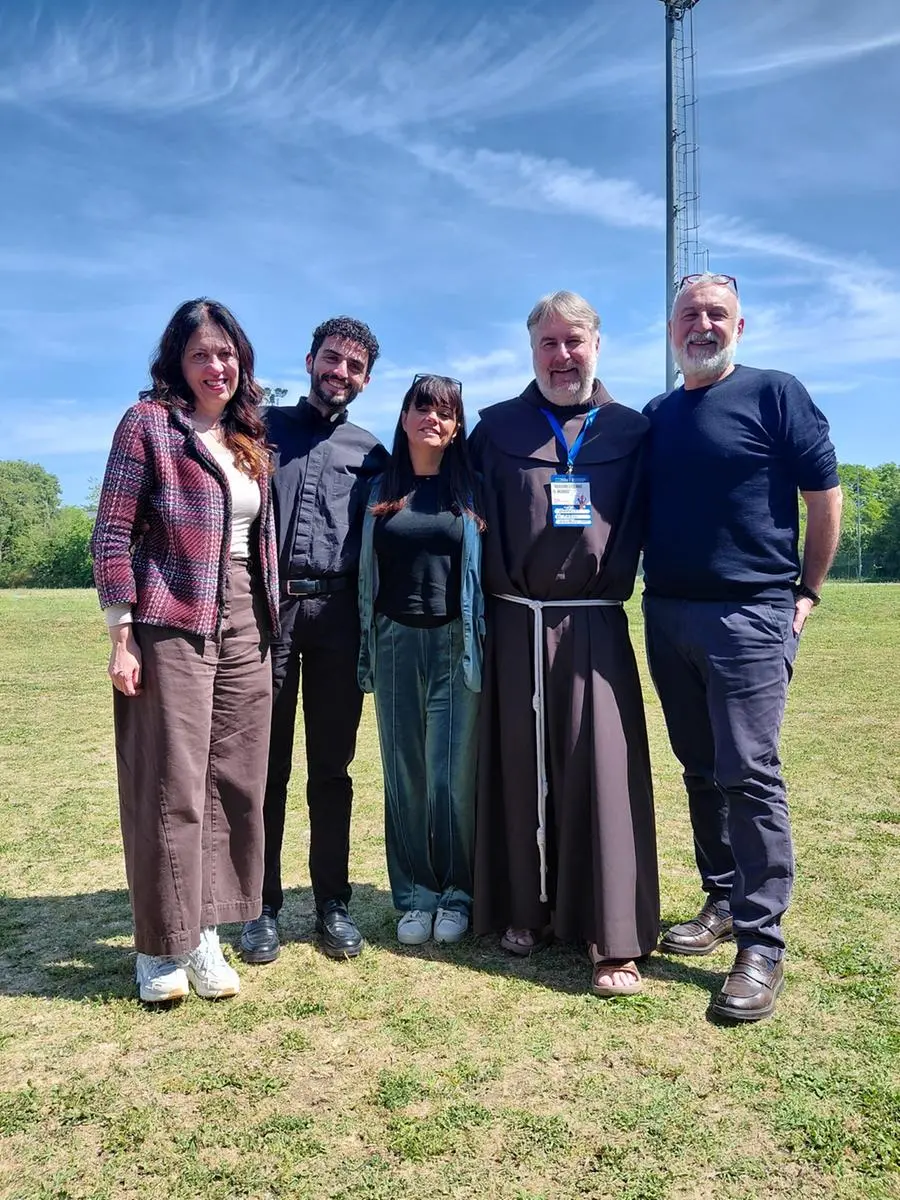
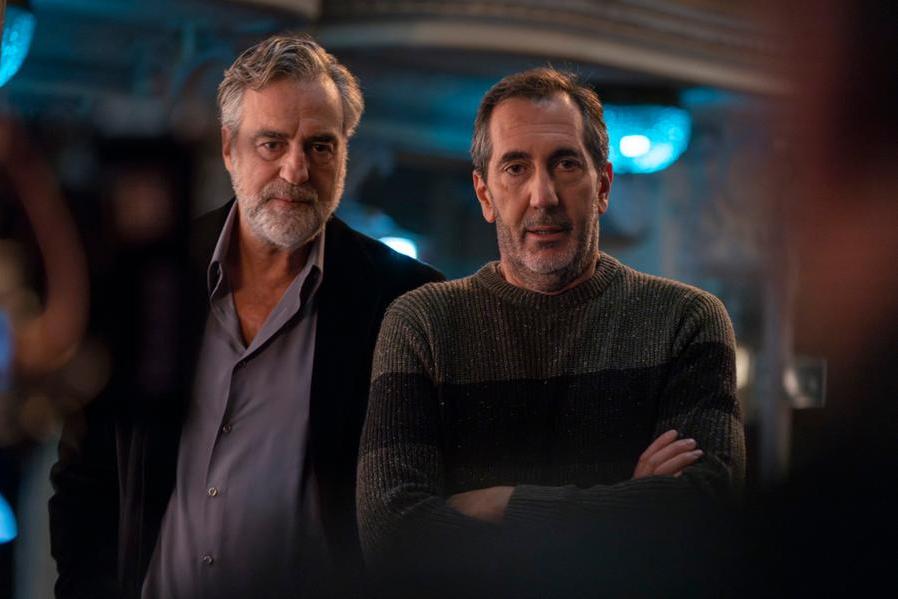
The national family pastoral office: from left, Barbara Rossi who with her husband Stefano Rossi (last on the right) leads the office alongside Father Marco Vianelli and Don Ignazio De Nichilo. Third from the left, Ombretta Pacchiarini, in charge of events.
In these seven years of mandate in CEI, how have you seen families change?
«I started this service shortly before the COVID-19 pandemic, which represented a watershed. It was not just a difficult event to go through, but a profound change in the context in which we live. Themes such as fear, fragility, violence, but also indifference emerged more forcefully.”
Yet, the family has shown great resilience.
«After the initial confusion, it became a place of shelter, of re-elaboration, of restarting. For many it was the space in which to rediscover a shared language made of affection and relationships. Even young people continue to point to it as a fundamental point of reference. Of course, when the family doesn’t work it can become a place of profound suffering. But there are antibodies, networks and contexts that can support it: it is important to activate and strengthen them.”
What are the new challenges for families today?
«More than individual challenges, I would talk about a verb yet to be fully translated into practice: integrate. If acceptance and discernment have now entered the language and practice, integration remains more complex. Integrating means making real space for vulnerability, fragility, differences – from the elderly to the young, from situations of fatigue to new forms of life. The real question is: after welcoming the other, what changes in us? What kind of “us” arises from his presence? This is not temporary hospitality, but a transformative process. The family, in this sense, is the best equipped laboratory: it is continually crossed by differences, challenges, changes – including technological ones – and is called every day to find new forms of integration. This is where one of the decisive challenges of our time takes place.”
Amoris Laetitia has turned ten: what mark has it left?
«It certainly introduced a new way of talking about the family, even if in reality many families already lived this style. The novelty was above all in the ecclesial language: a language capable of holding together the universal and the particular.
Pope Francis did not change the doctrine, but gave space to concrete stories, allowing people to feel part of the great history of the Church. This has generated greater participation and widespread responsibility. Another decisive element was the synodal method: walking together, building shared paths from the beginning. It is no longer a question of applying decisions taken elsewhere, but of working together, as if around a table. This ignited the desire to be protagonists in ecclesial and family life.
How does Leo XIV stand on the issues of the family, also in view of the world meeting called for October?
«There seems to be a clear line of continuity with the path of the last pontificates. The choice to call a meeting is very significant. It is a profoundly ecclesial gesture: it invites the Churches to tell their stories, to share experiences, to listen to each other.
In a time in which everyone seems to have ready answers, this style – made of listening, discussion, common discernment – appears particularly precious. It is a way to truly put the family back at the centre, not only as a theme, but as a starting point for building the future of the Church. The expectations are high, but above all the method is beautiful: starting from listening, from dialogue, from everyone’s involvement. It is a sign of great confidence in the lives of families and in their ability to generate new paths.”