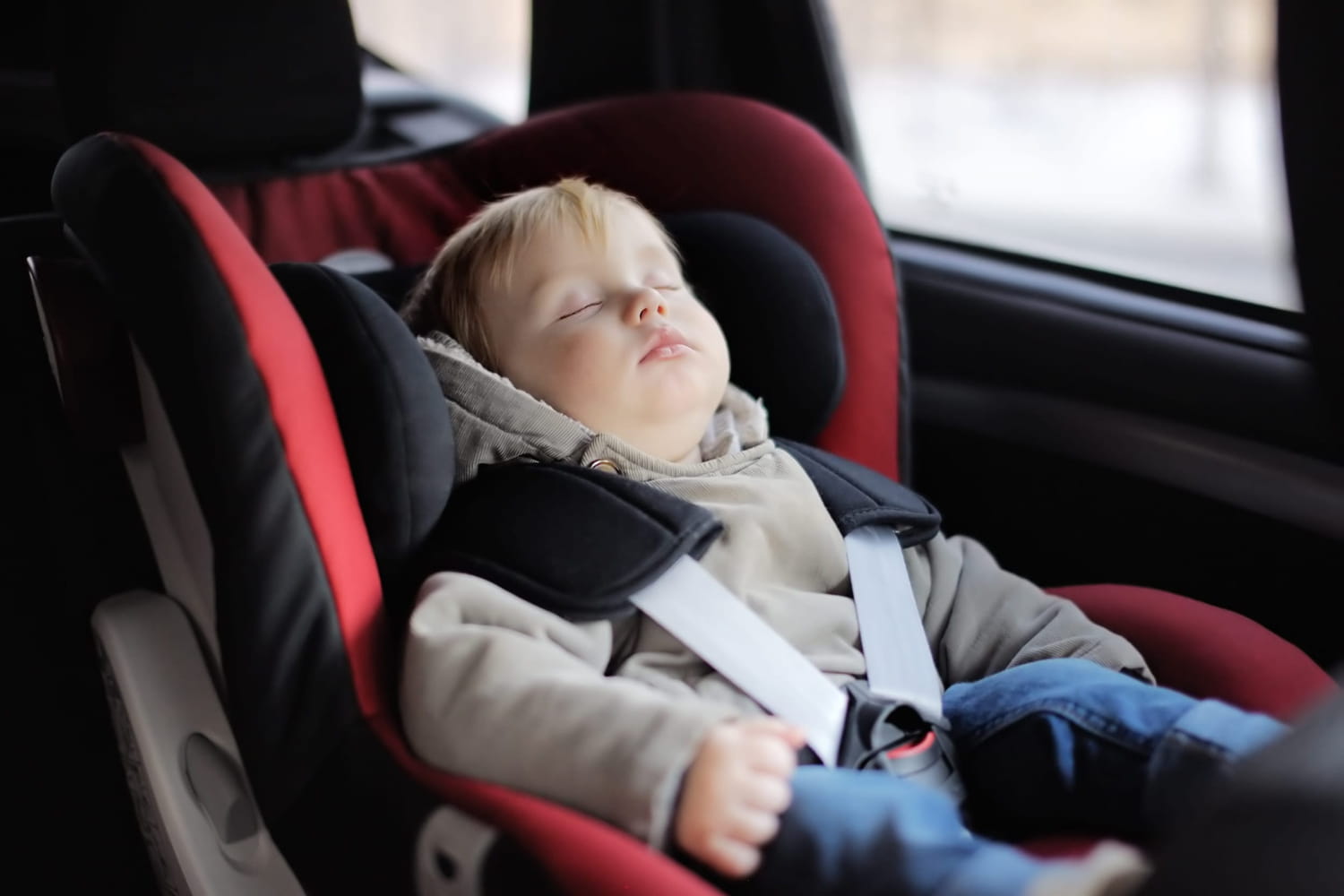
No one is safe from forgotten baby syndrome, which can strike any parent and often has tragic consequences for little ones. How to explain such a cerebral short circuit? What reflexes should you adopt on a daily basis to protect yourself? Decryption and expert advice to avoid the worst.
With the return of the strong summer heat, “forgotten baby syndrome” regularly reappears on the front page of the news. This dramatic phenomenon, where a parent unknowingly leaves their child in a car for hours, exposes toddlers to fatal heatstroke. These tragedies arouse emotion, but above all incomprehension among public opinion.
What is forgotten baby syndrome?
We are talking about “forgotten baby syndrome”when young children, most often infants, die of hyperthermia after being left for several hours in the family car in direct sunlight. For most of them, the parents unfortunately forgot them in their vehicle when they were supposed to drop them off at daycare or with the nanny for example.
Scientists talk aboutan involuntary oversight. The parent is in “a state of hypnosis, a state of autopilot where it is the unconscious which takes the lead”, explained Ilana Waserscztajn, clinical psychologist at BFMTV, which explains why he doesn’t realize it at the time. It can also happen that unscrupulous parents intentionally leave the child in their vehicle while they are away for shopping, administrative procedures or because the child is sleeping.
If “forgotten baby syndrome” makes the news so often, it is because it can affect any parent who, a priori, has a head on their shoulders. “In most cases, these episodes concern adults whose psychological and cognitive functions are perfectly intact“underline the researchers of a scientific study published in 2020 in the Italian journal Rivista di Psichiatria. The explanation would come, according to David Diamond, professor in the department of cognitive, neural and social psychology at the University of South Florida (United States), from the fact that our memory relating to habits, such as taking the same route every day, takes over prospective memory (linked to the tasks that we must accomplish). The phenomenon of the forgotten baby could thus be accentuated by lack of sleep, stress, or too much mental load “which lower the level of vigilance and increase the use of automatisms and routines”.
Forgetting your baby in your car in summer represents a real danger
In the summer, babies are very sensitive to heat and the sun. Inside a closed car, the temperature can rise significantly. According to a scientific study published in 2015 in the International Journal of Current Research, “There can be up to a 55% increase in temperature in the first five minutes and up to 90% within 15 minutes, even if the car windows are partially open.”
“Two to three hours are enough for a child to die.”notes the study. Even if the child survives, psychological consequences non-negligible effects can also occur. As the Consumer Safety Commission reports, “these can take the form of an acute reaction to the feeling of abandonment that such a situation arouses and which will manifest itself over time by anxiety attacks and recurrent nightmares or by latent depression, in the form of withdrawal through fear of the outside world or what could be experienced as a new parental abandonment”.
What to do to avoid forgetting your baby in the car?
To limit the risks of forgetting your baby in the back of the vehicle, authorities and experts advise:
- Place baby in his car seat, strapped in and facing backwards, in the front seat passenger side. Depending on his age of course, we will see him and will therefore be less likely to forget him.
- Leave your phone or purse in the back of the vehicle in order to be sure to have to turn around to retrieve them when getting out of the car and thus see if the child is present.
- Leave baby’s blanket or diaper bag next to usat the front, as a memo.
- You can also place “anti-removal” alert devices. These sensors are attached to the baby’s car seat and are triggered when you move away from it.
- Finally, we try to rest to combat the loss of alertness.