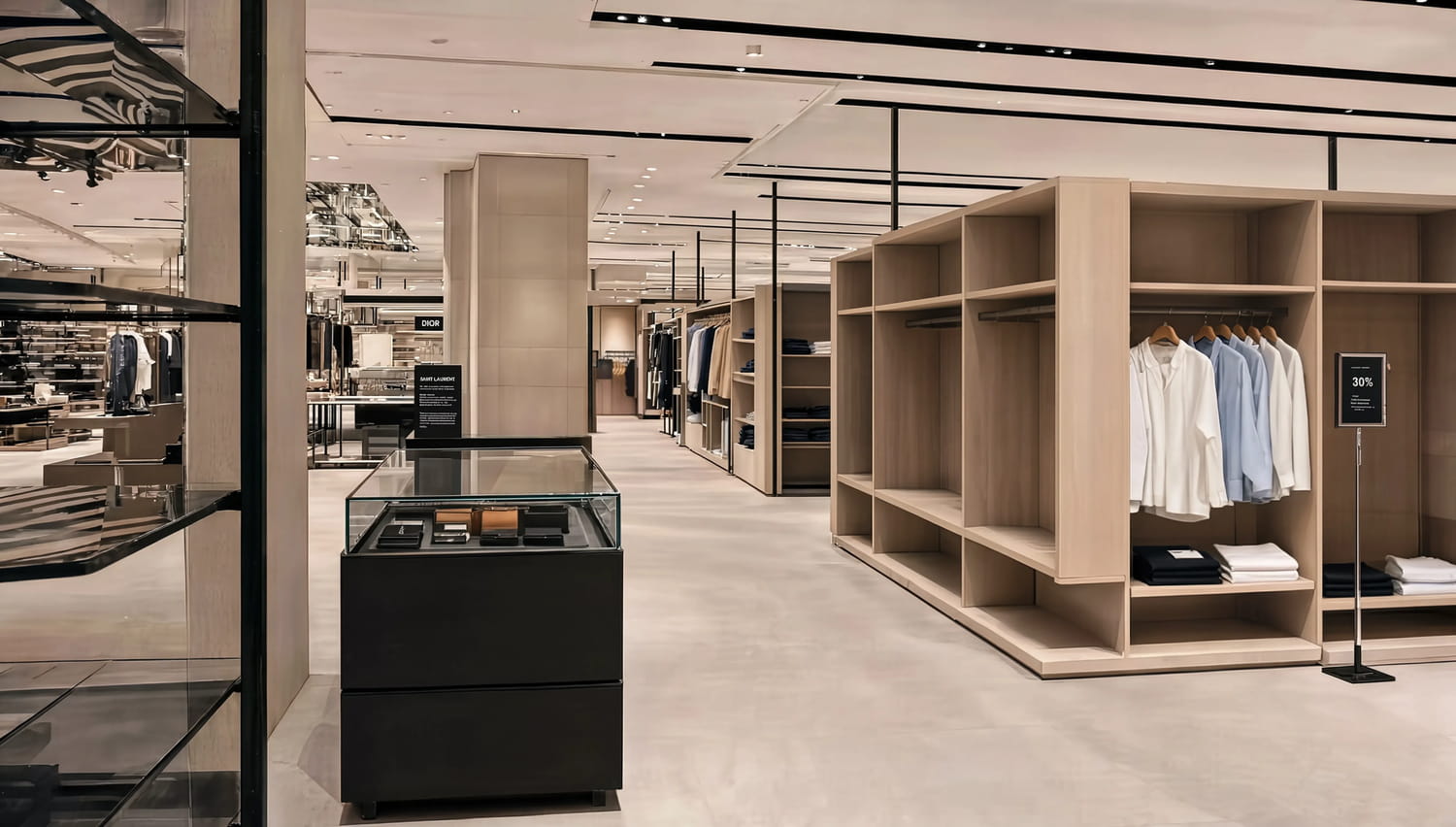
In this Yvelines shopping center, a well-known department store offers a disconcerting spectacle. Even in the middle of the sales, its shelves are empty.
They go there as they have done for years, sometimes decades, with this familiar pleasure of finding a place that resembles them. Then, barely entering the aisles, their gaze stops, incredulous. Bare shelves, deserted racks, entire stands abandoned… The department store in the Parly 2 shopping center, in Chesnay-Rocquencourt, near Versailles (Yvelines), no longer has much in common with the temple of chic shopping that local customers cherished. An atmosphere of the end of the reign floats between the shelves, and the shock is real for those who had made it an immutable event.
“It wasn’t like this before. I have the impression that some departments have closed, it seems very empty“, whispers a retiree loyal to the brand, quoted by Le Parisien, who came to look for a simple straw hat. She notes, disappointed, that the leather goods have been reduced to nothing, that women’s ready-to-wear is withering away and that the shoe area is disappearing visibly. Around her, the same incomprehension can be seen on many faces. Because it is the BHV of Parly 2 which offers this desolate face. height, for a brand which was for a long time one of the locomotives of the shopping center: even in the middle of sales, while the neighboring shops are overflowing with people, it is the only store which seems empty A glaring anomaly in this consumerist ballet And the answer to this mystery, as told by Le Parisien, is found a few kilometers away, rue de Rivoli.
What the regulars of Parly 2 are experiencing is only the shock wave of a crisis born in Paris. The brand’s flagship, the famous BHV Marais located opposite the Town Hall, has been going through serious turbulence for months. End of the Frédéric Merlin era, whose Société des department stores handed over the reins to Karl-Stéphane Cottendin: the Parisian tremors are now spreading to the suburbs. Financial difficulties have weakened ties with suppliers. Due to the lack of resolution, several brands have folded, leaving behind these gaping voids that are obvious. Behind the disoriented customers, there are above all those who are experiencing this slow erosion from within. The employees, in complete anticipation, are openly wondering about their fate. It’s difficult to plan ahead when the future seems to depend on decisions that escape them.
So a nagging question remains. Are these the beginnings of a definitive closure, or a painful transition phase before the new operator brings the shelves back to life? For the moment, no one seems able to decide. And it is this uncertainty, more than the empty shelves, which weighs the heaviest today.