





The God who eludes the experts
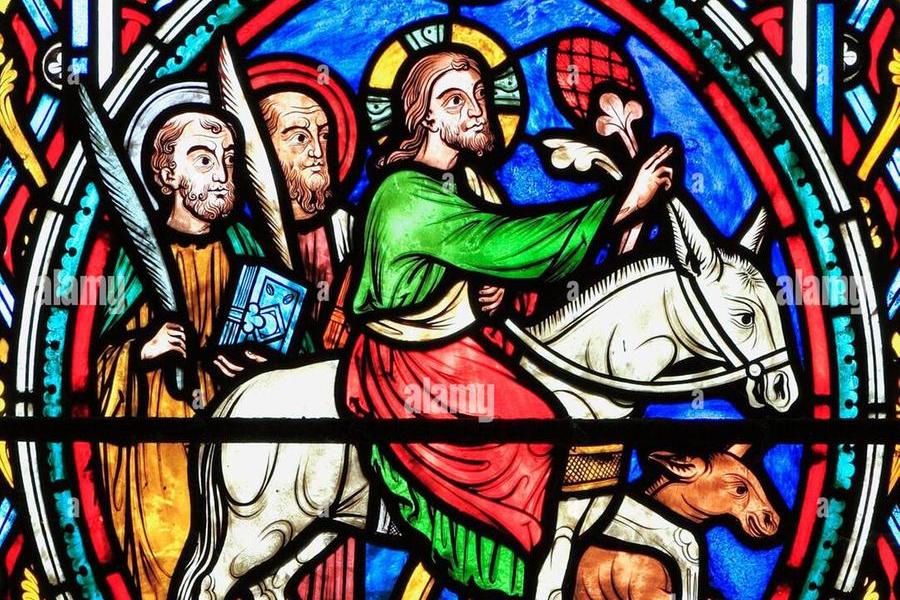
The first reading and this Sunday’s Gospel are united by a very precise thread: meekness. Zechariah (9.9-10) announces a king who arrives in Jerusalem in a completely unexpected way. He does not ride a war horse, he is not surrounded by armies, he does not demonstrate his authority through force. AND a “humble” kingwhich inaugurates a royalty different from that known to men. When, at the end of the Gospel, Jesus invites the disciples to learn from him because he is “meek and humble of heart”, the reader understands that that prophecy finds in him its fulfillment.
The passage from Matthew (11.25-30) opens with a prayer of praise. It is one of the most beautiful pages of the Gospel, because it allows us to glimpse something of the intimacy that binds Jesus to the Father. His words do not arise from a favorable situation. In the previous verses, in fact, Matthew recounted misunderstandings and rejections. Yet Jesus does not allow himself to be imprisoned from disappointment. Looking at events with the eyes of faith, he recognizes that God’s plan is at work right there and for this reason he can say: “I praise you, Father, Lord of heaven and earth”.
The reason for his joy immediately appears surprising: «You have hidden these things from the wise and intelligent and you revealed them to the little ones.” These words should not be understood as a criticism of culture or intelligence. The contrast is deeper. On the one hand there are those who believe they already possess all the keys to understanding God; on the other there are those who remain open to listening and to surprise. The “little ones” of the Gospel are not simply the least educated. They represent all those who do not rely on their own security and who, for this very reason, are available to welcome the gift of God. In the biblical tradition they recall the figure of the Lord’s poor, the anawimwho expect everything from God and not from themselves.
From here the discussion reaches its center. Jesus speaks of the unique relationship that unites him to the Father: “No one knows the Son except the Father and no one knows the Father except the Son”. In the Bible the verb “know“indicates a living and profound relationship, not a simple acquisition of notions. The mystery of God is not an achievement of human intelligence, but a gift that the Son communicates to those who let themselves be guided by him. At this point the final invitation is also better understood: “Come to me, all you who are weary and oppressed”. It is not a marginal addition, but the final consequence of everything that precedes. The God that Jesus reveals comes first of all to those who carry the weight of life and they know their own fragility.
Jesus does not promise a life without effort. He proposes though a new way of wearing them: «Take my yoke upon you». In the Jewish environment, the yoke was an image of the Law and the condition of the disciple. Jesus identifies him with communion with him. The weight becomes light not because it disappears, but because it comes shared. The last word of the passage brings us once again to the figure of the Messiah announced by Zechariah. Jesus does not define himself as powerful or glorious, but as “meek and humble of heart”. This is the concrete form in which God chooses to manifest himself: not through the force he imposes, but through a closeness that welcomes and supports.