




There is a thread that links meditation and civil commitment, spirituality and relationships, inner silence and community building. This is the thread that runs through Vesak 2026, the main Buddhist holiday, which from 22 to 24 May transforms the Fabbrica del Vapore in Milan into an open space for meeting, listening and discussing. The theme chosen by the Italian Buddhist Union — “Freedom and liberation. Two horizons, one breath” — in fact, speaks not only to Buddhist practitioners, but to a society crossed by conflicts, fears, polarizations and the search for meaning.
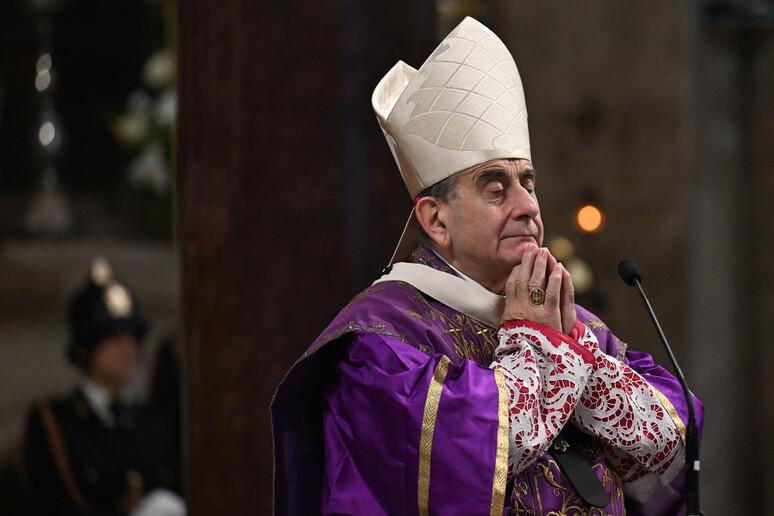
The presence of theArchbishop of Milan, Monsignor Mario Delpiniwho will speak at the inauguration of an event built explicitly in the name of interreligious dialogue. Not a symbolic detail, but a precise message: coexistence between religious and cultural differences is not a diplomatic exercise, but a civil necessity. In a time marked by wars and radicalizations, the Milanese Vesak tries to relaunch the value of the meeting as a concrete practice.
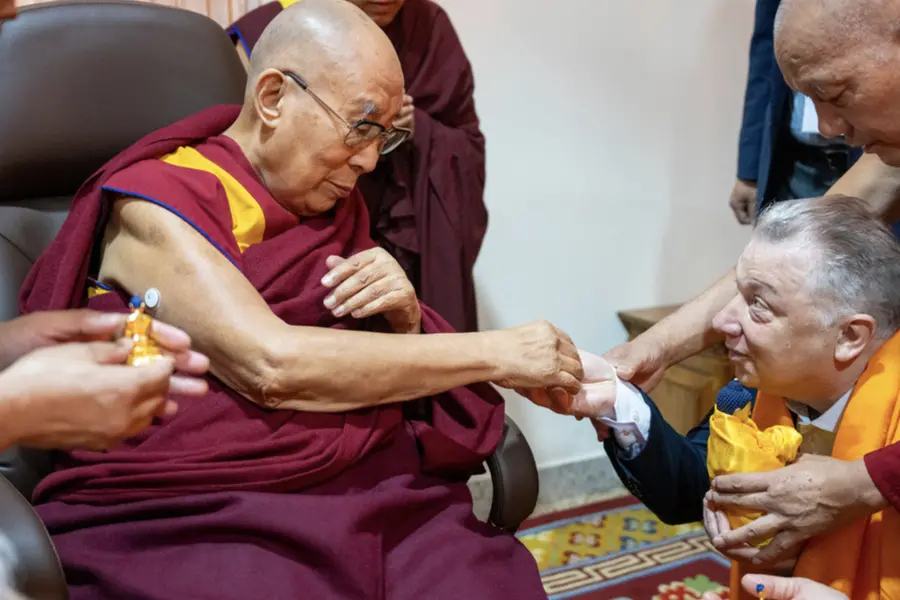
The program, entirely free, intertwines spirituality, culture, social reflection and art. Among the most significant events is the interreligious discussion between the Ven. Thamthog Rinpoche, Imam Izzedin Elzir and Msgr. Bressan on religious pluralism as the foundation of an open society. But we will also talk about freedom of expression in Iran, about fragility, loneliness, attention and care, with very different guests: from Kasia Smutniak to Vito Mancuso, up to Daniel Goleman.
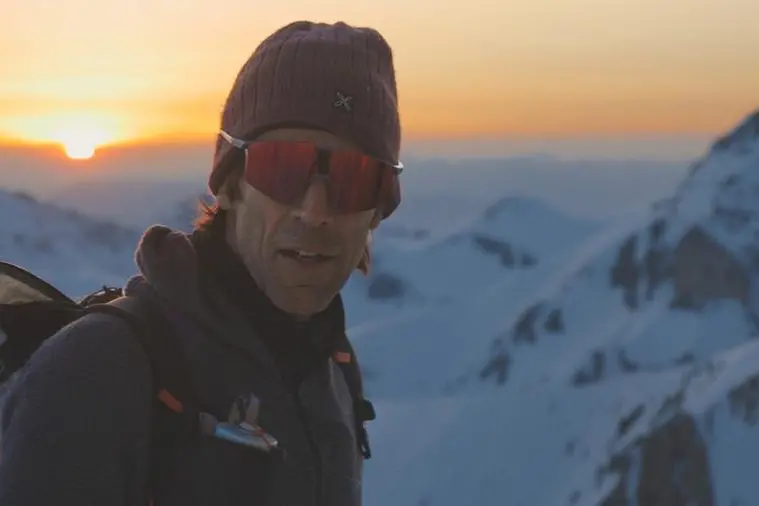
Among the most anticipated appearances there is also Hervé Barmasse, who will discuss the relationship between human beings and nature itogether with Elisa, Livia Giuggioli and Angelo Vaira. A participation that also takes on a particular meaning for the readers of Famiglia Cristiana: the recent in-depth analysis dedicated to the Aosta Valley mountaineer and his commitment to environmental issues was in fact among the most read contents of the site.
Barmasse, moreover, well represents one of the deepest cores of the event: the mountain as an experience of limits, essentiality and relationship with the living. Not an abstract spirituality, therefore, but embodied in gestures, in the body, in responsibility towards the world. It is the same spirit that runs through many Vesak initiatives, from Zen meditations at dawn to the creation of the Tibetan maṇḍala, which will then be dispersed as a symbol of impermanence, up to the blessing of animals, open to all “sentient beings”.
Alongside public meetings, Vesak also showcases the social face of Italian Buddhism through “Dharma in Action”: projects related to care, end-of-life support, deep ecology, research and education. An approach that tries to translate spiritual practice into collective responsibility.
The Italian Buddhist Union, founded in 1985 and now made up of 71 centres, in recent years has financed over 1,450 social and environmental projects thanks to the 8xmille funds. And just as Italian Buddhism consolidates its institutional recognition – with the recent changes to the Agreement with the State – the Milanese Vesak seems to want to relaunch a broader question: what freedom is possible without an internal liberation from fear, selfishness and indifference?
In this sense, the event is not only presented as a religious festival, but as a cultural and spiritual laboratory open to the city. A place where believers of different traditions, lay people, curious people and young people can meet not to erase differences, but to learn to live in them.
For information and reservations: Vesak 2026 – Italian Buddhist Union.