





He stole from his grandfather to “feed” his sloth-hungry belly. And when he tells it, his voice cracks. «My grandfather couldn’t even get out of bed. I went into his room and took money from the drawers to go and play».
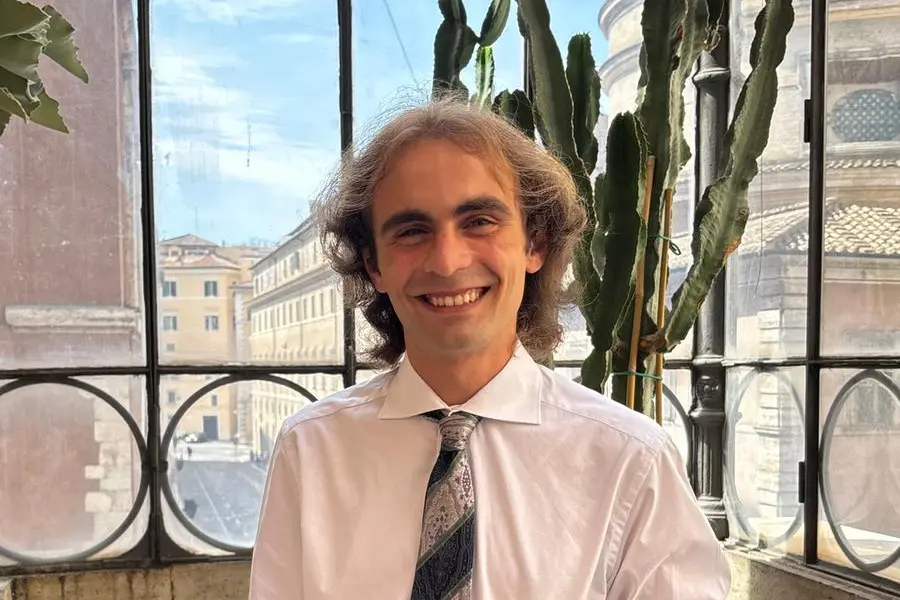
Nicola Bosco is twenty years old, lives in Rome and has a history on his face that seems much older than his age. For months, slot machines occupied every space of his life. The days passed in windowless rooms, where time melts and reality loses consistency. He would play for fourteen consecutive hours. The family tried to stop him. He couldn’t stop himself.
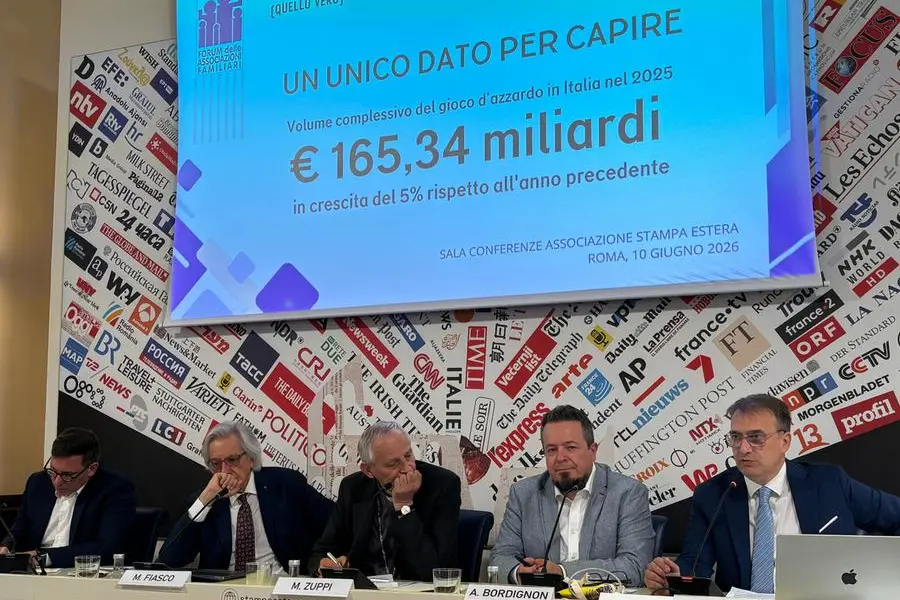
His testimony was one of the strongest heard during the conference “Betting on the future (the real one)”, promoted by the Forum of Family Associations in Rome, where a document signed by almost eighty third sector organisations, healthcare bodies, foundations, associations and civic entities was presented, including Christian family.
But Nicola is not just an individual story. It is the human face of a phenomenon that in the last thirty years has become a gigantic economic, social and cultural fact.
Italy is now one of the largest gambling markets in Europe. Over 160 billion euros moved every year. A figure that continues to grow while the number of families overwhelmed by debt, separations, depression and addictions also grows.
“We cannot remain indifferent to all this,” said the president of the Family Associations Forum, Adriano Bordignon. «Gambling is not a problem that only affects those who gamble. It involves families, communities, territories. It consumes relationships, generates fragility and especially affects those who experience situations of greater vulnerability».
This is precisely the key to understanding that emerged during the conference. Gambling is not just a health issue. It’s a social issue. Even anthropological.
For this reason the document presented in Rome does not limit itself to denouncing the phenomenon. It puts forward precise proposals: a national framework law that puts public health at the centre, the drastic reduction of supply, the effective fight against advertising, the safeguarding of the regulations adopted by Municipalities and Regions, the restoration of the National Observatory abolished by the budget law and a strong investment in prevention and in the accompaniment of families.
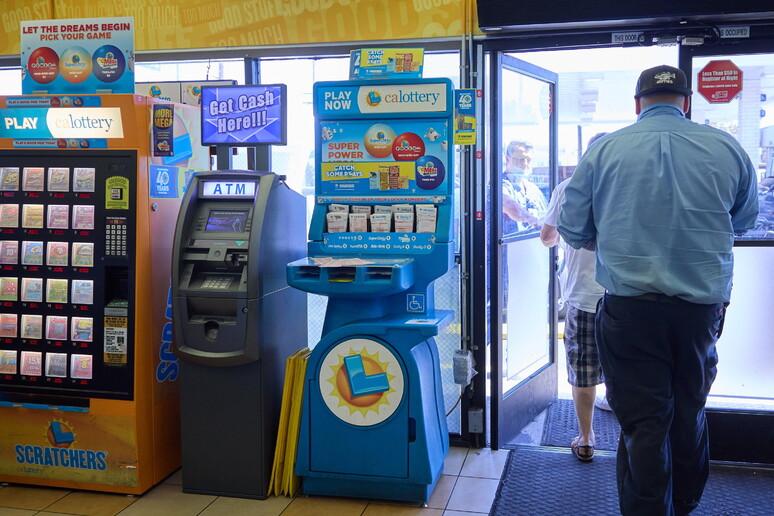
«Our country has been transformed into a widespread casino», we read in the document. An expression that photographs a reality before everyone’s eyes: slot rooms, sports betting, scratch cards, online platforms accessible twenty-four hours a day.
The sociologist Maurizio Fiasco, president of Alea, the association for the study of gambling and risky behaviour, and one of the leading Italian scholars of the phenomenon, invited us to look beyond simplifications. «We are not faced with a neutral form of entertainment», he explained. «Contemporary industrial gambling is designed to capture attention and prolong people’s stay. A significant part of the income comes from those who develop problematic forms of addiction.”
According to Fiasco, the issue concerns the economic model that supports the sector. A system that profits from fragilities and thrives on the promise of an immediate solution to economic and personal difficulties. A reflection also taken up by Cardinal Matteo Zuppi, president of the Italian Episcopal Conference, who placed the theme within an even broader horizon. «We need a constituent spirit»he stated. Not a simple technical table, but a shared path capable of involving institutions, politics, healthcare, associations and the educational world.
For Zuppi, gambling is one of the new forms of slavery of our time. A slavery that not only produces economic losses but relational impoverishment, isolation and loneliness. The president of the CEI insisted above all on the role of new technologies. If gambling once had recognizable places, today it enters homes through a smartphone. It hides behind applications, digital platforms and mechanisms that make everything immediate.
“We need to find a common algorithm that overcomes the algorithms that produce addiction,” he observed. A challenge that particularly concerns the new generations. The experts present at the conference drew attention to the loyalty mechanisms present in video games, loot boxes and digital reward systems that early accustom us to the logic of gambling. But if the problem is big, a message of hope also emerged during the morning in Rome. Flora, 68 years old, a former player, brought it, describing the path that helped her get out of an addiction that had devoured over one hundred thousand euros and risked destroying her dearest loved ones. Nicola brought it.
At a certain point in his testimony he stopped talking about the slots. He talked about people.
He recounted the night he stood in front of a car from eleven in the evening until one the following afternoon. He recounted his mother’s desperate phone calls. The shame. Depression. The desire to disappear.
Then something changed.
«The groups of the Italian No Gambling Network helped me», he explained. He doesn’t talk about magic formulas. He doesn’t talk about shortcuts. Talk about listening. Talk about relationships.
It’s about someone who chose to stay by his side when he himself could no longer see a future. «The immense value of immateriality saved me», he says. «A sincere look. One word. A shoulder that supports». Perhaps this is the image that remains after the Rome conference. On the one hand, an economic system that transforms hope into consumption and fragility into profit. On the other, a network of families, associations, healthcare workers and volunteers trying to rebuild what gambling breaks.
Because the opposite of gambling is not just a stricter rule. It is a community that chooses not to leave anyone alone.