






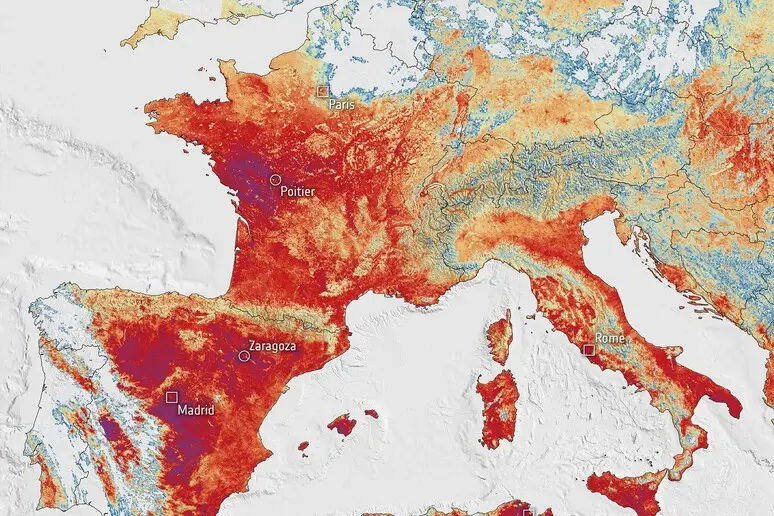
Against the heat, Italy discovers climate refuges. In the hottest weeks of summer 2026, when the African anticyclone renamed Charon squeezes the peninsula in its fiery grip, Italian cities are transformed into survival laboratories. It’s not just a question of thermometers rising above forty degrees. It is the discovery, sometimes belated, that heat is not democratic: it kills elderly people alone in homes without air conditioning, it affects children in schools without cooling, it affects those who have nowhere to go when the sun becomes a threat.
In this context, many local administrations have developed “hot plans” that go beyond the rhetoric of emergency communication. In Bologna, Florence, Turin, social services and family doctors report fragile people, isolated elderly people, chronically dependent people to health facilities. They are contacted periodically. In some cases, nurses take medicines, shopping and hot meals directly home. It’s not enough, of course. But it contains.
The most significant passage, however, concerns a word that until a few years ago was unknown to the Italian administrative vocabulary: “climate refuges”. They are public, free, air-conditioned or shaded spaces.
Libraries, parks, museums, community centers transformed into oases for those who don’t have air conditioning at home. Milan has mapped 116. Florence fifty-three. Bologna twenty-four. It doesn’t seem like a small thing until you think about urban density, the number of blocks where there is no cool space accessible to everyone.
This participatory map effort arises from an essential ethical question: what does it mean to live in a city that kills you with heat? Rome has launched the “RESPIRO Project”, coordinated by La Sapienza Universityto identify not only the shelters that already exist, but the potential ones, i.e. spaces that could become so with small interventions. It’s an admission of truth: urban heat is a matter of infrastructural injustice.
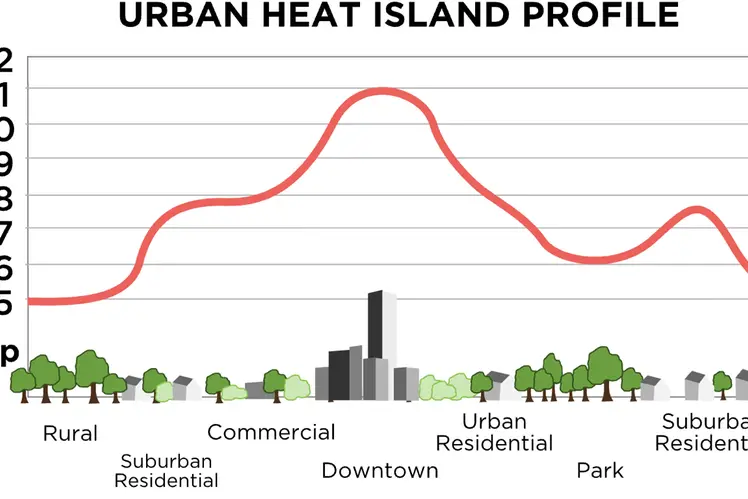
Because the heat doesn’t affect everyone the same way. Urban heat islands, the phenomenon whereby cities are significantly hotter than the surrounding countryside, are caused by the widespread presence of concrete and asphalt, impervious spaces that absorb the sun and return it at night. Those who live in gray suburbs, without green spaces, without shade, suffer more than those who live in neighborhoods with centenary trees and historic gardens. It is climate injustice even before it is a health issue.
There depaving, the removal of asphalt from public spaces to replace it with flowerbeds, gardens, lawns, represents the structural response. Genoa has included it in the urban plan. Milan and Bologna have already started it in some neighborhoods. It is not a luxury aestheticization: it is a resilience strategy that reduces the urban island effect and creates spaces where the human body can breathe.
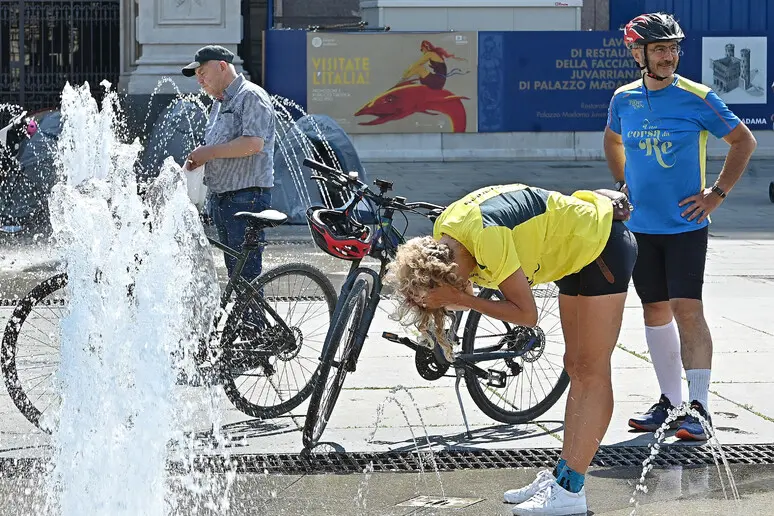
Yet, between the map of climate refuges and concrete access there remains a chasm that the plans do not completely fill. Many citizens are still unaware of where these spaces are located. A toll-free number, 1500is active by the Ministry of Health from 9am to 5pm from Monday to Friday. It is a lifeline limited by its very structure.
What emerges from the plans of Italian cities is an Italy that is learning, slowly and with difficulty, that extreme heat is a civic challenge, not just a meteorological one. Emergency medicine is not enough. We need urban strategies capable of redesigning public space, of bringing back green where there was concrete, of transforming libraries and parks into night nurseries for those who have nowhere else to go.
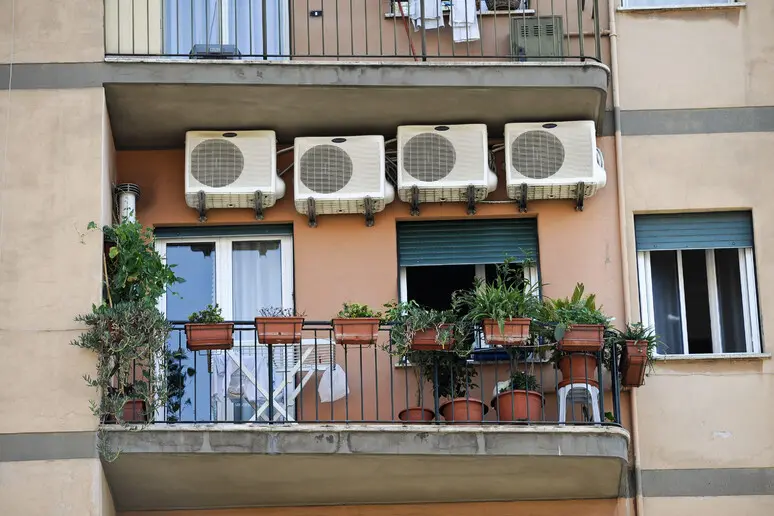
The true measure of a hot plane is not the number of shelters mapped. It’s whether those shelters reach those who need them most. And if the city, day after day, becomes less hostile to those who live there.