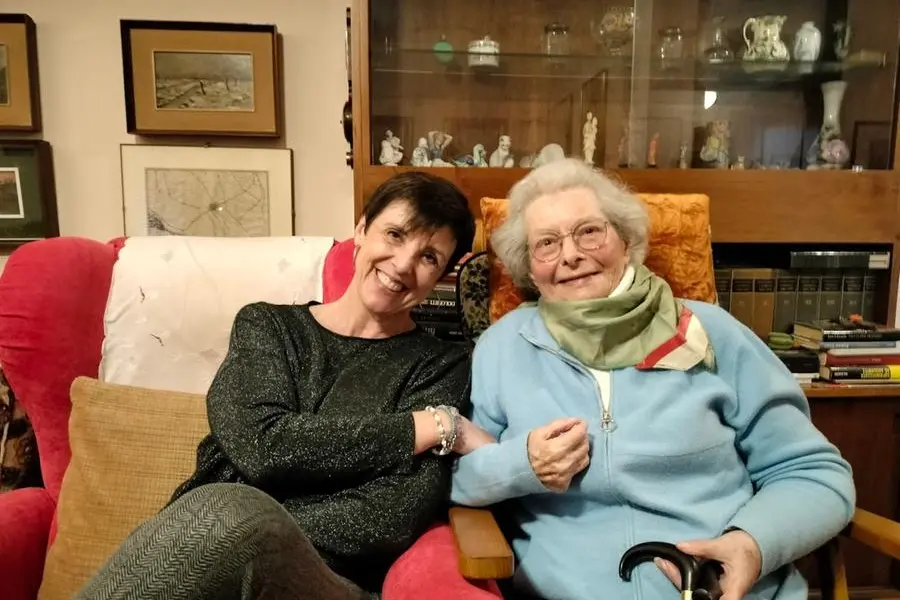
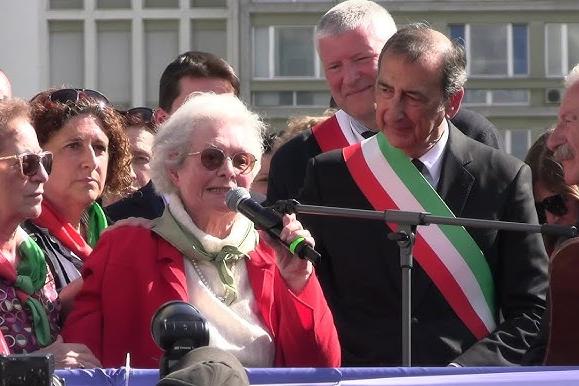

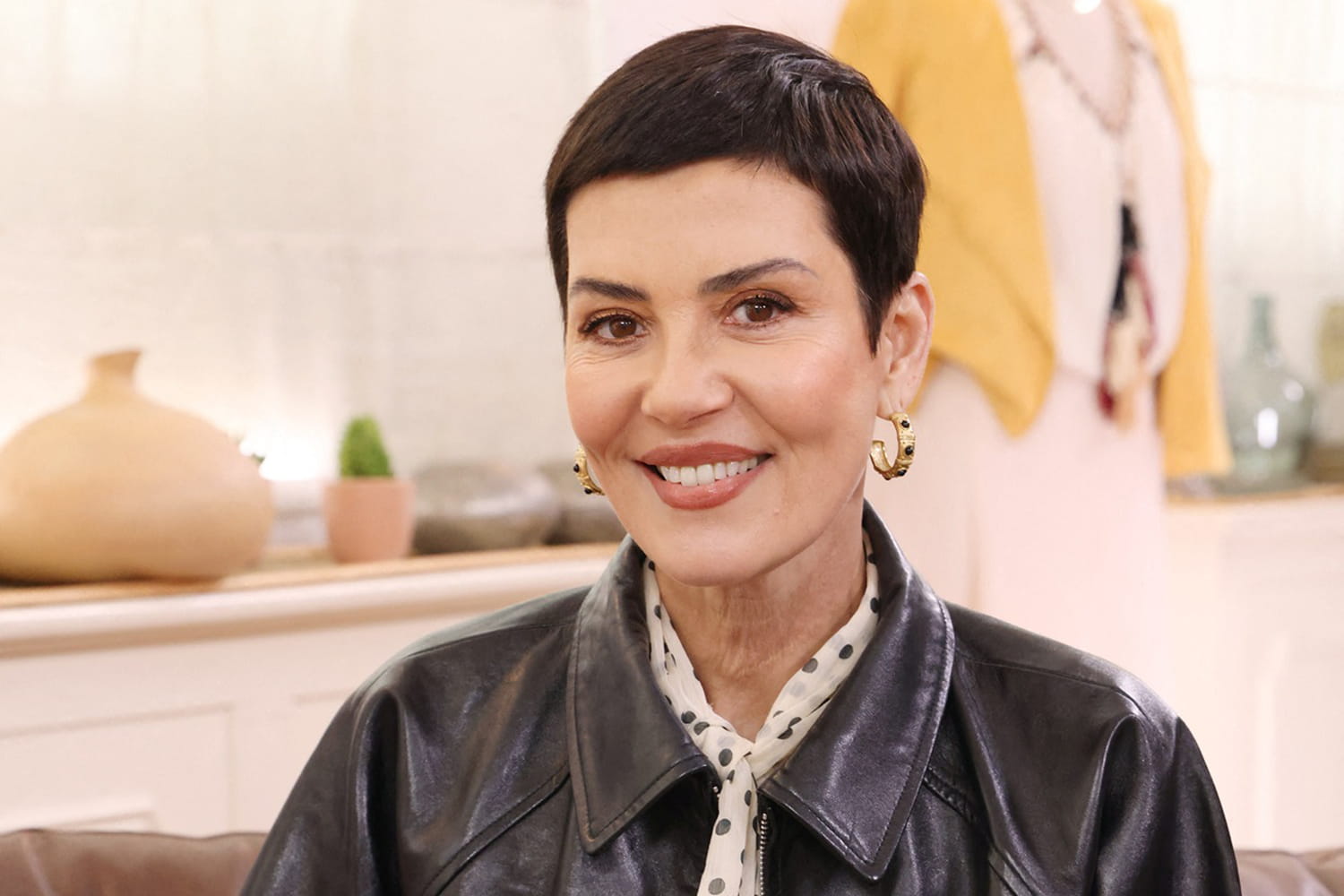


Sandra Gilardelli is 100 years old, she was 18 when she joined the Resistance as a partisan relay in the mountains of Verbano. We met her in Milan, where she lives alone after the death of her husband Michele Fiore, former partisan leader with the name “Mosca”, known in the same Brigade, the “Cesare Battisti”, in 1944. With Sandra Gilardelli there was also her daughter, Michela Fiore, who took up her parents’ historical legacy by personally committing herself to keeping the memory and ideals of the partisan struggle alive, also as secretary of the Stadera-Gratosoglio section of the Anpi. Sandra is a very lucid woman, who never misses a celebration and continues to go to schools. Hers is the story of a normal girl who, like many other young people, in Italy occupied by the Nazi-Fascists, chose to make her contribution to the fight for Liberation. «My father was an anti-fascist», begins Sandra Gilardelli, «and from an early age he passed on to me the value of freedom. He had not taken out a Party membership card, despite the inconvenience this caused him. For work, he was a partner in a paper industry, he had to travel, but they seized his car, and he couldn’t get a train pass. My brother Giuseppe, who was seven years older than me, wanted to join the French Resistance, but was intercepted in Switzerland and locked in a labor camp until the end of the war. I lived in Milan and attended the Parini classical high school. It was a terrible situation, everything was working badly, even the alarms were late and there was no time to run to the shelters. The most terrible scene was seeing a building set on fire in Piazza Cavour from which people, to escape the flames, threw themselves from the windows. Even today, when I think about it, I can’t breathe». At a certain point the Gilardelli family decided, like many Milanese, to evacuate, first to Gorgonzola and then to Piedmont, to Pian Nava, in the mountains above Lake Maggiore. «Already on 8 September we helped the fleeing soldiers to change their uniforms into civilian clothes. Our road led to Switzerland and was less patrolled than the lakeside. Even though we were safe, from afar we could see the flashes of the bombings on Varese and Milan, worried about my father and my brother’s father-in-law who were commuting to Milan returning on Fridays. We understood that there were armed boys in the woods and, when I came across two of them, I timidly approached and asked: “I want to help you, what can I do?”. They told me to show up early the next morning at the headquarters in Premeno, where the partisan leaders gave me the third degree to verify that I wasn’t a spy. «There was a doctor there, Paolo, who asked me what I wanted to do. And I replied: “Everything!”. As his first task he ordered me to get him wound disinfectant. I had no idea how to do it, but he said “You make do!”, a word that stayed with me for a year and a half. I took as many packs of Streptosil as I could get to the pharmacies, but they were nothing. The doctor needed large quantities. My sister-in-law then got in touch with an uncle who was the director of a pharmaceutical company in Milan who sent us the hospital boxes via my father. I was 18 years old and, despite not even knowing how to apply a plaster, I even found myself assisting the doctor during a very complex operation». In the villa where she lived, the other women of the family also lent a hand, making socks for the partisans: «In the early days, no one in Pian Nava knew that I had joined the Resistance», continues Sandra. «To be safe, I moved early in the morning and late at night. At a certain point it was clear to everyone that I was no longer living the life of my friends, however, although no one had followed my example, I had not been reported, so I started going on missions during the day too: in addition to helping the doctor I carried dispatches to the other CNL commands through the woods». The name of Lieutenant “Mosca” was already known for his heroism and Sandra was curious to know him. «When I met him for the first time he treated me like a child, but he had laughing eyes and I fell in love with his look. He was the first and only love of my life. He too, I discovered later, was not indifferent.” Moscow then took part in the attempt to liberate Cannobio and participated in the Republic of Ossola. One step away from hanging at the hands of the fascists, he was saved by the intervention of a German officer. After a period in a camp in Switzerland, he went to Milan to work for the Allied secret services. Reported, he ended up in San Vittore and from there in Turin prison. After the Liberation he saw his fellow partisans again and met Sandra again, whom he had not forgotten. And from that moment on they never left each other again. «I have always been proud of my parents”, concludes their daughter, Michela Fiore, “I have participated in partisan rallies since I was little and it was natural to recognize myself in those values and then decide to have an active role in the ANPI, as well as following my mother’s activities in schools. After my father’s death I wrote a small volume, based on his stories, so that they would not be lost. Now more than ever it is important to remember the commitment of men and women in the Resistance.”