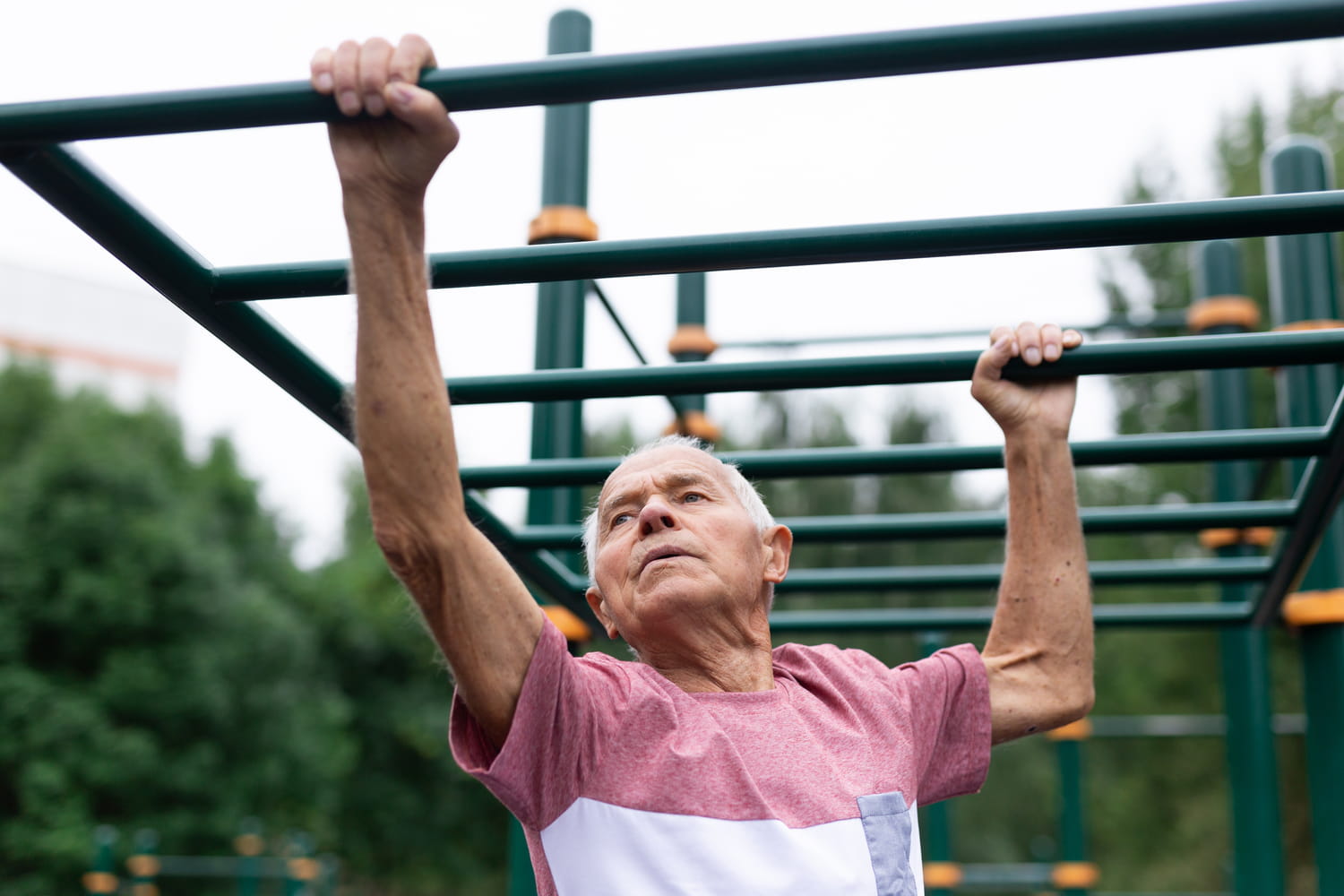
All studies show it: the most important thing when you get older is to preserve your muscle mass. Here is the most appropriate physical exercise to achieve this according to recent Australian research.
After age 65, the body changes. Muscle mass gradually melts away, a phenomenon that doctors call sarcopenia. According to Inserm, this disease affects around 15% of people over 65 in France, and up to 20 to 35% after 75. It leads to loss of strength, balance problems and risk of falls. In 2024, falls will cause nearly 175,000 hospitalizations among seniors in France, according to Public Health France – and more than 20,000 deaths. This is where this new study challenges preconceived ideas: physical exercise does not always protect the muscle. It depends entirely on the type of effort chosen.
Researchers from the University of the Sunshine Coast (Australia), led by Dr Grace Rose, followed 123 healthy adults with an average age of 72 for six months. Three times a week, they practiced one of the following three programs: HIIT (high-intensity interval training, with intense intervals alternating with breaks), moderate exercise (walking on a treadmill at a brisk pace, 30 minutes), or low intensity (balance and stretching). Result: all three groups lost fat. But only one managed to preserve his muscle mass: the one who did HIIT. The walking and low-intensity groups lost some muscle along with some fat – precisely what seniors are trying to avoid.
The mechanism is simple. HIIT works better because it works the muscles more, sending them a strong signal to maintain rather than melt away, explains Dr. Grace Rose in ScienceDaily. It is the muscular demand – and not the duration of the effort – which triggers this preservation mechanism. Walking, recommended for seniors especially for the brain, does not generate enough intensity to achieve this. Concretely, the HIIT practiced in the study consisted of short intervals of very intense exercise – running, cycling or step – during which breathing becomes difficult and conversation impossible, followed by recovery phases.
For seniors unaccustomed to this type of effort, the good news is that the intensity can be adapted: climbing stairs quickly, pedaling hard on a stationary bike or doing a series of squats can be enough to reach this intensity threshold, provided you feel that the effort is really difficult. 45-minute sessions three times a week fulfill this challenge while being well supervised by a sports coach.
An important clarification before getting started: HIIT is not suitable for everyone. People suffering from cardiovascular diseases, joint problems or uncontrolled hypertension should consult their doctor before changing their exercise program. And for those who are not yet active, starting with moderate exercise remains an essential first step.