






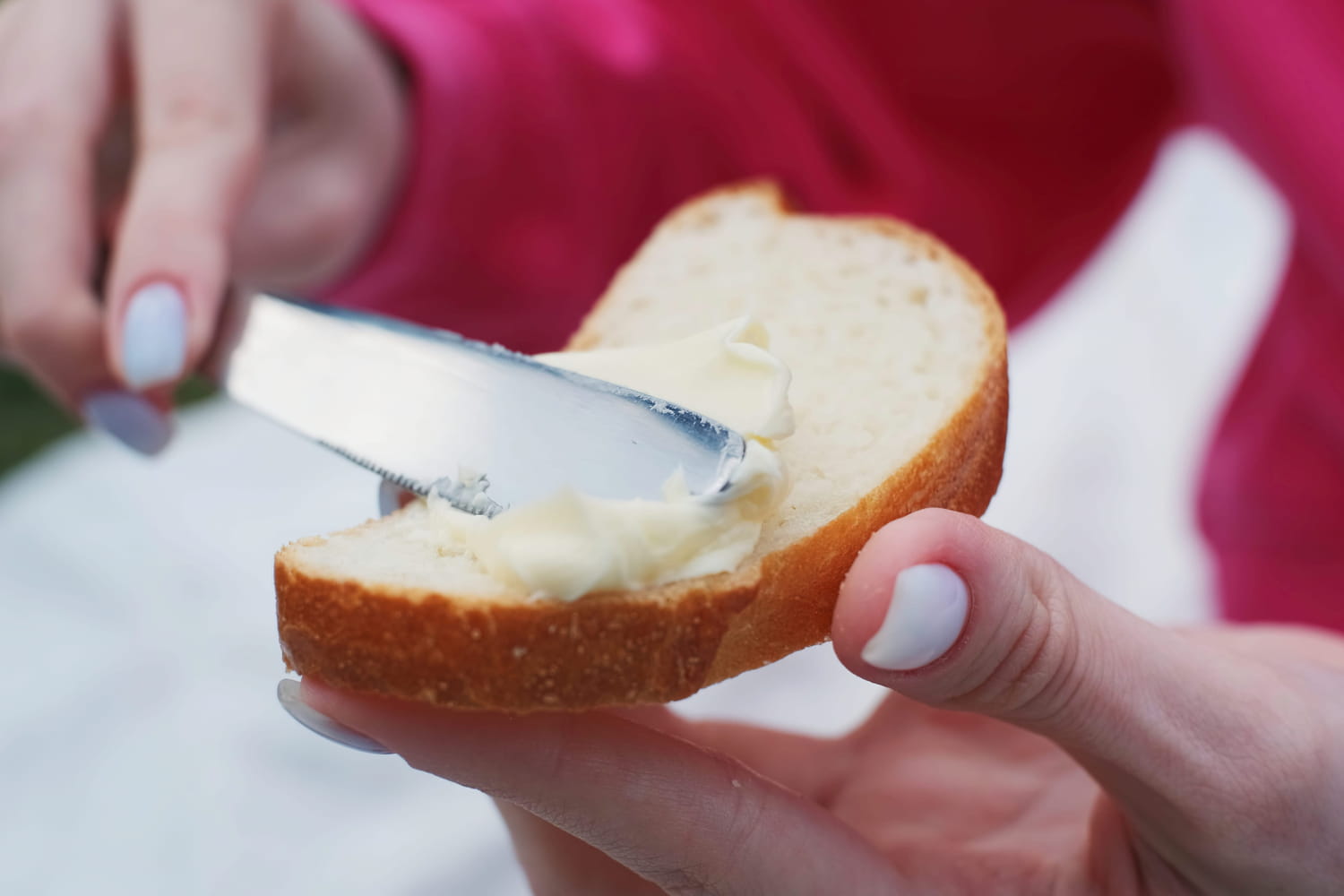
We think we should stop eating butter with cholesterol, yet it is recommended by experts.
Butter is a real institution in France. Whether it is spread for breakfast or melted on pasta, it is part of the daily life of the French. We consume almost 8 kg of it per year. However, as soon as a blood test shows a cholesterol level that is too high, we tend to ban it from the diet because it is considered too fatty. Is this really justified? “Absolutely not“, according to Dr. Bernard Schmitt, a nutritionist we interviewed on the subject.
Contrary to popular belief, butter is not the fattest product in our cupboards. In fact, with 16% water in its composition, it is lower in calories than vegetable oil which contains 100% fat. Above all, having cholesterol does not mean that you have to banish it. “Butter, in moderate doses, has absolutely no impact on cholesterol levels because 70-80% of blood cholesterol is produced by our own liver and only 20-30% comes from food.“, reestablishes Dr. Schmitt. He estimates that a maximum consumption of 15 to 20 g of raw butter per day (the equivalent of two hazelnuts), to which we can possibly add 15 g for cooking (for those who like to cook with butter), remains safe for the arteries.
While many butters are available on the shelves, one type stands out in cases of cholesterol: classic butter with 82% fat from the Bleu-Blanc-Cœur (BBC) sector. For what ? Because the cows’ diet (rich in grass and flax) modifies the structure of the milk. According to Dr. Schmitt, BBC butter contains “twice as much” polyunsaturated fatty acids (omega-3) than standard butter. These good fats are essential because, as demonstrated by a study published in the medical journal Plos One, the presence of a high level of omega-3 helps minimize cardiovascular risk. Prefer unsalted butter to semi-salted butter because excess sodium promotes high blood pressure, a risk factor which, combined with cholesterol, further weakens the arteries.
Compared to butter, margarine is often presented as a “healthy” alternative, but Dr Schmitt recalls that margarines are “ultra-processed” foods which do not provide “no superior health effects compared to butter“. As for Ghee (clarified butter), very fashionable, it is certainly free of lactose, but it is also more concentrated in saturated fats and less nutritious because it loses its proteins and certain vitamins during cooking. It therefore does not present any major benefit for cardiovascular health compared to good raw butter.
In summary, you can keep your knob of butter in the morning, preferably marked “Bleu-Blanc-Cœur”, to benefit from its richness in vitamins A, D and E. For the rest of your fat needs, diversify your sources of lipids. For example, Dr. Schmitt advises reserving butter for raw consumption and using vegetable oils for the rest: “rapeseed oil and walnut oil” for seasoning thanks to their richness in omega-3, and olive oil for daily cooking. A simple balance to protect your arteries without sacrificing taste.