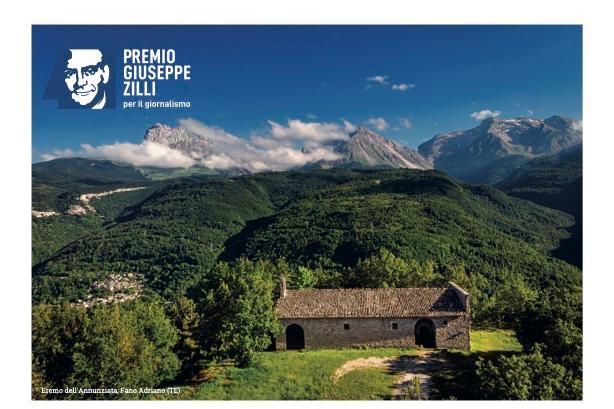
There is a small town in the Abruzzo Apennines that, every summer, tries to remind Italy of a truth as simple as it is forgotten: good journalism is not born from noise, but from listening. He doesn’t live by speed, but by verification. It doesn’t chase consensus, but reality. It is from Fano Adriano, among the slopes of the Gran Sasso, that the voice of the Giuseppe Zilli Awarddedicated to the Pauline priest who led it from 1954 to 1980 Christian family transforming it into one of the most authoritative Italian weeklies, making information an authentic service to people.

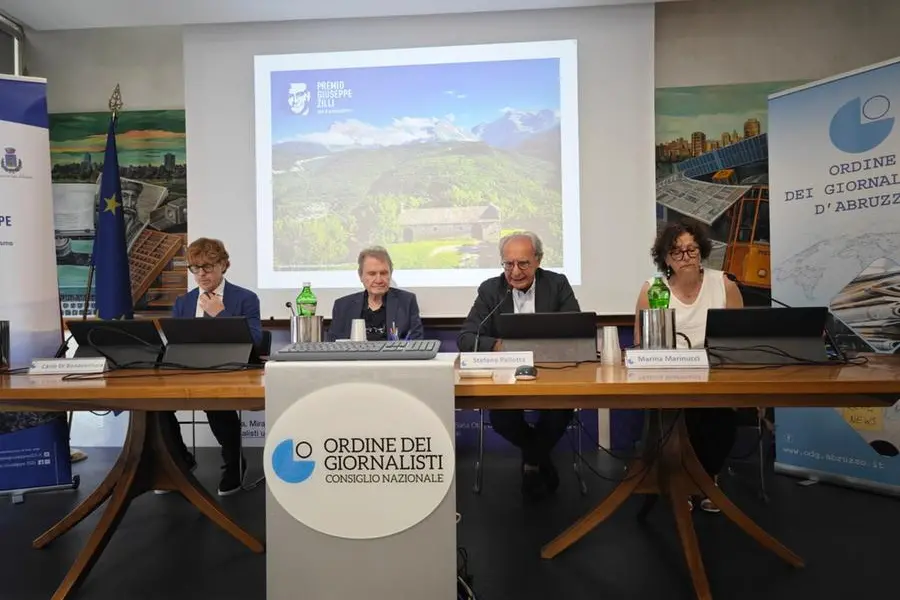
The fifth edition of the Award, whose winners were announced on 6 July at the headquarters of the National Council of the Order of Journalists in Rome, arrives at one of the most complex moments for the profession. Wars also fought with information, artificial intelligence, propaganda, algorithms, polarization and social networks are profoundly changing the way we talk about the world. In this scenario, the recognition dedicated to Don Giuseppe Zilli takes on a meaning that goes beyond the celebration of the individual winners: it becomes a public reflection on the very meaning of the profession of journalist.

To receive the Giuseppe Zilli Award 2026 I am Lina Palmerini for paper journalism, Vincenzo Morgante for television, Liala Antonino for web journalism and Sonia Filippazzi for radio. The Lifetime Achievement Award goes to the historian Franco Cardini, while the Special Award was awarded to the University of Teramo. A memorial recognition will instead be remembered by Sandro Galantini, the historic director of the Award, who passed away last May after having contributed decisively to the growth of the event.
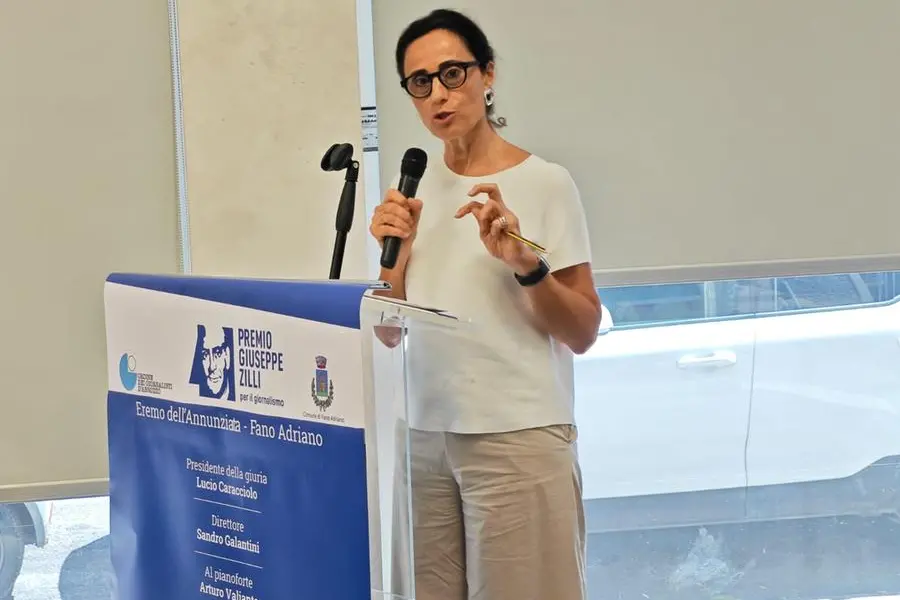
Leading the jury is Lucio Caracciolo, director of Limes, who during the Roman presentation preferred to replace the expression “duty of truth” with another perhaps even more demanding one: “intellectual honesty”. A nuance that speaks well of our time. «We are involved not only in military wars, but also in an information war», he observed. For this reason, he added, initiatives such as the Giuseppe Zilli Award restore dignity to a profession subjected to the pressure of real-time communication and digital bubbles.
These are words that seem to dialogue directly with the legacy left by Don Giuseppe Zilli. Born in 1921 into a family of shepherds in Fano, Adriano, a priest of the Society of Saint Paul, Zilli understood well in advance that information could not be a simple chronicle of facts nor an instrument of power. Instead, it had to give voice to the least, accompany the changes in society and the Church, educate readers to understand the complexity of reality.
During his twenty-six years at the helm of Christian familythe weekly magazine experienced a period of extraordinary editorial growth, distinguishing itself for a rigorous, modern style that was deeply attentive to the dignity of the person. He was also the promoter of the birth of the monthly Jesus and contributed to the development of Periodici San Paolo, leaving a mark that is still recognizable today in Italian Catholic journalism.
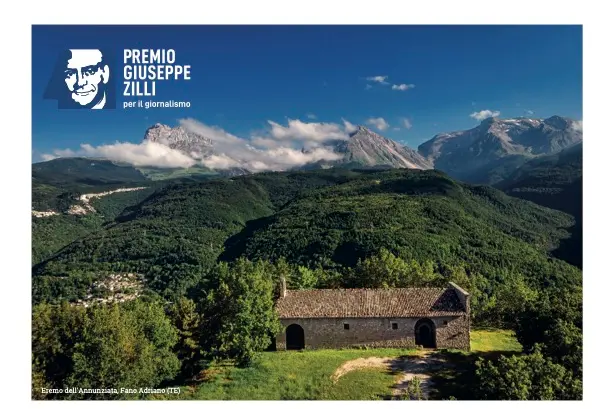
It is therefore not surprising that the entire event is built around the themes of civil responsibility for information. THEThe programme, scheduled from 17 to 19 July, will alternate moments of cultural reflection, meetings on professional ethics valid for the training of journalists, geopolitical insights, cinema, spirituality and memory. The final ceremony will take place in the Hermitage of the Annunziata, a symbolic place that seems to remind us how silence and contemplation can still help to understand a world often overwhelmed by the frenzy of news.
«Deontology is not a set of rules for journalists, but a pact with citizens», Stefano Pallotta recalled. A statement that brings the profession back to its original vocation: not to produce content, but to build trust.
It is the same belief recalled by the president of the Order of Journalists of Abruzzo, Marina Marinucci, according to whom Giuseppe Zilli was ahead of his time because he placed the most fragile at the centre, respect for human dignity and inclusive information when these themes had not yet entered the lexicon of ethics.

Ultimately this is the true legacy of the Giuseppe Zilli Award. Not only to reward excellent names in Italian journalism, but to remember that, in the age of artificial intelligence, manipulated videos and digital speed, the quality of information continues to depend on ancient virtues: doubt, study, responsibility, the courage to verify and the freedom to tell even what is not convenient to tell.
From a small town in Abruzzo comes a lesson that speaks to the entire country. Because the mountains retain a precious characteristic: they force you to look up. And it is perhaps precisely what Italian journalism needs most today.