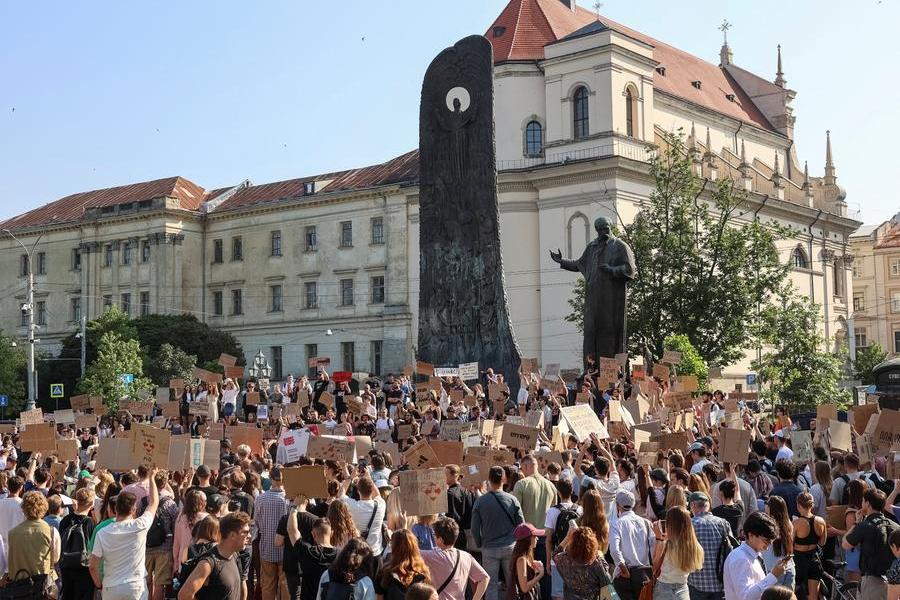
For the second day in a row, thousands of Ukrainian citizens gathered in the center of Kyiv, in the square in front of the Ivan Franko Theater, near the presidential palace, and also in other cities of the country such as Lviv, to protest against President Zelensky’s decision to fire the very popular Defense Minister, Mykhailo Fedorov. An action carried out as part of a new government reshuffle, which also led to the resignation and replacement of the prime minister.
On July 14, the Ukrainian Parliament accepted the resignation of Prime Minister Yulia Svyrydenko. Two days later, a new Cabinet of Ministers was appointed, headed by Serhii Koretskyi, a politician, official and business manager, who has been CEO of the Ukrainian state gas company Naftogaz since May 2025. A choice linked precisely to Koretskyi’s experience in the energy sector during the war, in preparation for a new, heavy winter with the country’s energy structures still in the crosshairs of Moscow’s attacks.
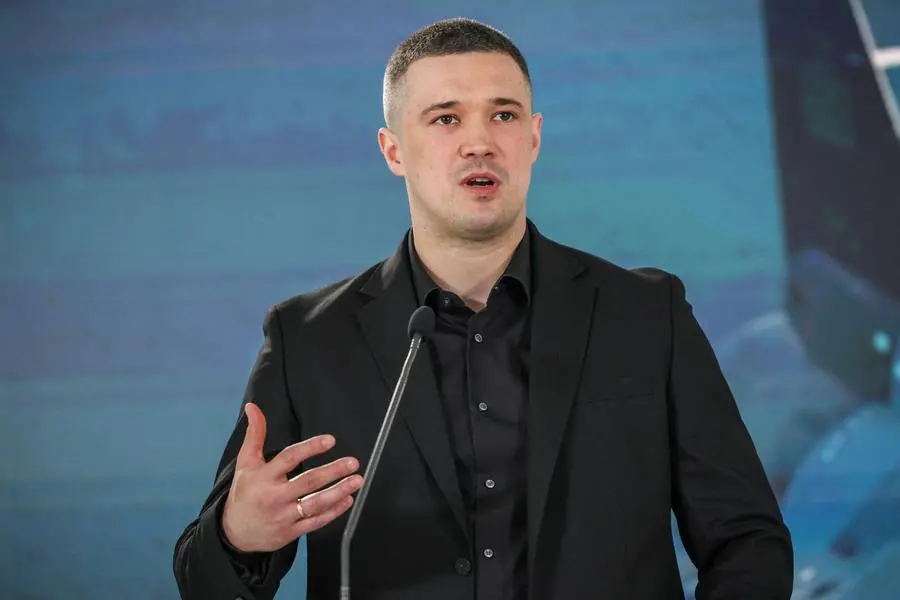
Former Ukrainian Defense Minister Mykhailo Fedorov, 35 years old.
(REUTERS)
Yevhen Khmara, who worked in the Ukrainian Security Service (SSU), was designated as interim Defense Minister in Fedorov’s place. As Zelensky explained, Khmara headed the SSU’s Alpha Special Operations Center, as responsible for long-range operations. “We have agreed that Khmara will also supervise the long-range operations of the Security Forces: this is a priority.”
The news of Fedorov’s dismissal immediately triggered a widespread reaction because it was deemed completely incomprehensible, given the significant goals he achieved in his just six months at the helm of a strategic ministry, of crucial importance in a country that has been at war for over four and a half years. Many members of the armed forces also demonstrated in the square, concerned that the change at the top of the ministry could have negative repercussions on the progress of the conflict and on the war efforts made so far by the Ukrainian army, in a particularly delicate moment of the conflict.
Originally from Vasylivka, a town in the Zaporizhzhia region now occupied by the Russians, after his studies Fedorov, 35, founded a digital marketing agency. He worked for Zelensky’s production company until he joined the current head of state’s election campaign in 2019, managing his digital sector. During Zelensky’s presidency, he became the first Minister for Digital Transformation of the country, a new ministry that has given great impetus to technological progress, in particular with the development of the application and digital portal of the Ukrainian Government (Diia) which allows the digitization of all citizens’ personal documents, greatly simplifying and streamlining bureaucracy and administrative practices.
With the “Drone Army” programwhich he launched with the support of the Kyiv Government’s fundraising platform, Fedorov was also the main one architect of the change of pace in the war, promoting a new strategic approach based on the use of drones capable of hitting targets in Russian territory even at great distances. Last January he was called to lead the Defense.
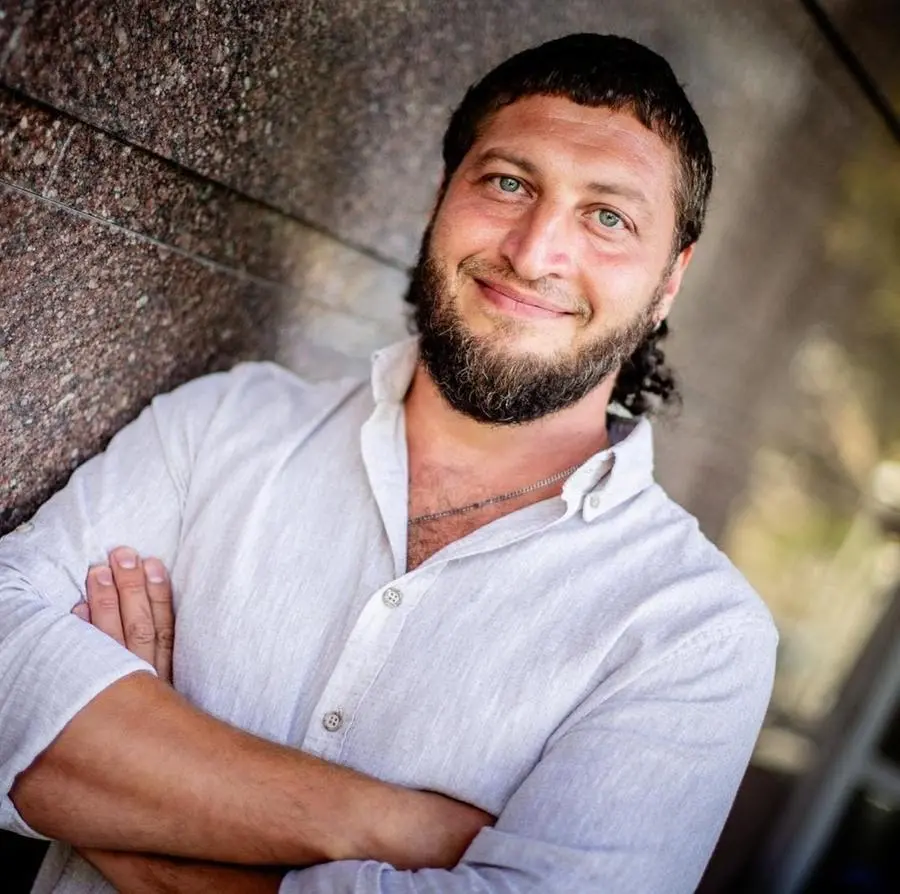
Ukrainian human rights activist Boris Zakharov.
(ANDRE HIRTZ)
«Fedorov was a successful Defense Minister, who promoted a series of reforms that were positively evaluated by many soldiers and volunteers. According to a significant part of Ukrainian society, it has met expectations both in the fight against corruption and demonopolization of defense procurement, and in the reform of the contract military service system. In particular, soldiers have obtained greater opportunities to receive fair remuneration based on their actual merits and results achieved during service.” Commenting is Boris ZakharovUkrainian human rights activist, analyst, historian, president of the humanitarian association Human & Law. «At the same time, however, it has not been able to substantially improve respect for human rights in the context of military service, where numerous critical issues continue to exist both for soldiers and for citizens subject to military service».
Between Fedorov and the commander-in-chief of the Armed Forces of Ukraine, Oleksandr Syrskyi, there was a conflict, which the two never hid, continues the activist. «According to many experts, the reasons for this contrast can be different. Some believe it was linked to reforms, demonopolization of the defense sector and the fight against corruption. Others hypothesize that it concerned the redistribution of financial flows in the defense procurement sector.”
According to Zakharov, however, the main reason for the dismissal is another. «During his mandate, Fedorov became one of the most popular government representatives and acquired considerable political autonomy. In political circles he has begun to be considered as a possible protagonist in future presidential elections, which should take place after the end of the war. Already today many Ukrainian politicians are looking at the post-war scenario. I think Fedorov’s growing political influence may have turned him into a potential competitor within the current majority. For this reason, his dismissal can also be interpreted as Zelensky’s attempt to eliminate possible future political competition.”
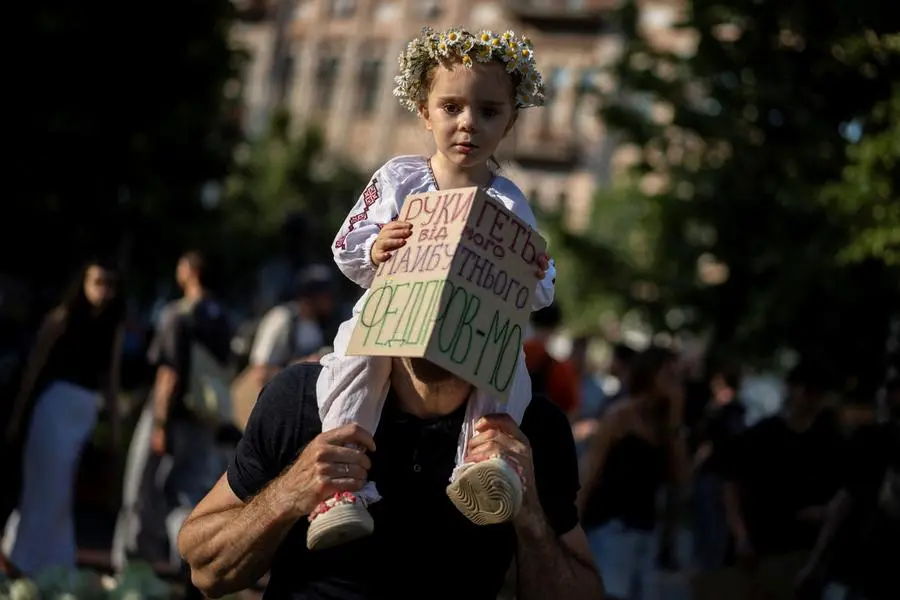
A man with a little girl on his shoulders in the protest demonstration in Kyiv against the dismissal of Fedorov.
(REUTERS)
According to the activist, «The Government’s resignation was arbitrary. As in the previous reshuffle, this decision was not adequately justified. No convincing explanations were given that the members of the Government had not lived up to their responsibilities. On the contrary, they were perceived as competent technocrats.”
In this whole affair, what emerges forcefully is, once again, the great strength and maturity of Ukrainian civil society which, even in times of war, partial law, fear of attacks, does not give up exposing itself, making its voice heard. exercising the right to demonstrate and express dissent. As Zakharov recalls, today’s protests are reminiscent of last year’s, when they were provoked by a bill that would have given control over anti-corruption bodies to the Attorney General. Then, the mass protest was successful: at the end of July a new law was approved which restored the autonomy of the two bodies (National Anti-Corruption Office and Specialized Prosecutor’s Office).
«When a significant part of the population believes that power goes beyond democratic standards or the principles of good governance, Ukrainians take to the streets to demonstrate peacefully», underlines Zakharov. «However, I cannot fully share the position of a significant part of civil society that these events constitute, in themselves, a sufficient reason to organize mass protests in the streets. First of all, Fedorov has always remained a loyal member of President Zelensky’s team. As a member of the National Security and Defense Council, he also participated in the adoption of decisions regarding the imposition of sanctions, the legitimacy of which, in my opinion, raises serious doubts. For this reason I consider the current situation above all as a manifestation of the political struggle within the current majority.”
While Fedorov’s ouster is worrying, Zakharov says, it is not the most serious problem facing Ukraine today. «In my opinion, there are much deeper violations of the principles of the rule of law, which deserve even greater public attention. I am referring in particular to the practice of imposing personal sanctions against persons under the jurisdiction of Ukraine or friendly states. Decisions in my opinion adopted arbitrarily, without adequate judicial procedure, and which involve a significant limitation of fundamental rights in violation of the Constitution and the international obligations of the State”.
As much as the anti-corruption bodies, «I am convinced that they must be independent, but at the same time they cannot remain without adequate democratic control. It is for this reason that I cannot fully support the mass protests, either last year or this year, while recognizing the right of citizens to demonstrate peacefully even in times of war and considering this reaction as the expression of a living and active civil society.”