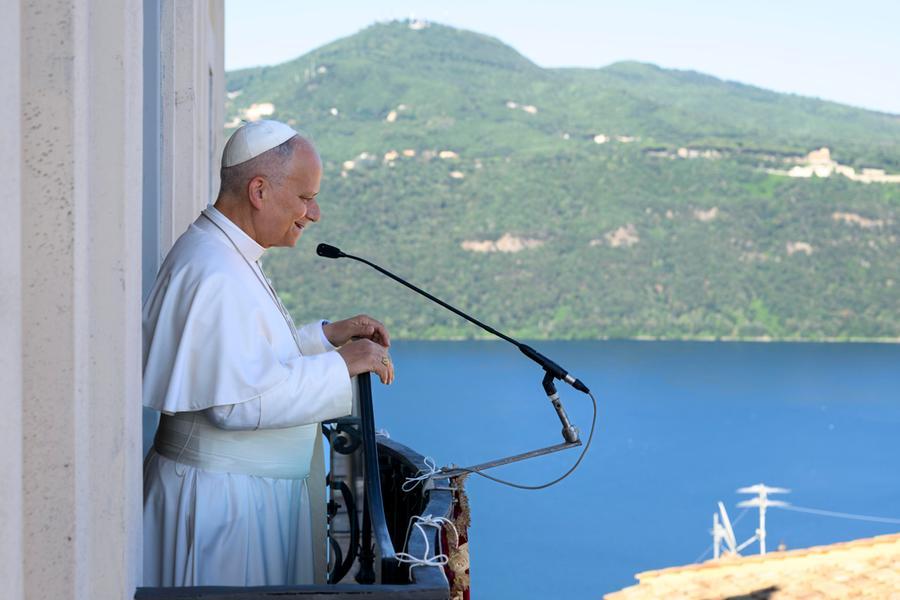
The Pope’s return to Castel Gandolfo for the summer reopens an almost four-century long page of pontifical history, intertwined with archaeology, architecture and memory of the modern papacy.
The stay of Leo 10 May 1626, When Urban VIII Barberini he spent the first stay of a Pontiff in the Lazio town, starting a summer custom that would be consolidated over the centuries. Since then, Castel Gandolfo has become the symbolic place of papal “rest”, a short distance from the Vatican but immersed in the landscape of the Alban Hills.

From Roman origins to the papal residence
The Pontifical Villas are located in an area of extraordinary historical stratification: the ancient villa of the emperor Domitian (81–96 AD) extended here, the “Albanum Domitiani”, a monumental complex that occupied approximately 14 square kilometers up to Lake Albano. In medieval times, a castle was built on the Roman ruins by the Genoese Gandolfi family, which then passed to the Savelli family until 1596. Subsequently, after the family’s economic difficulties, the fiefdom was incorporated into the assets of the Holy See in 1604.
It was precisely on this basis that Urban VIII Barberini began the transformation of the fortress into a papal summer residence: the works were entrusted to the architect Carlo Maderno, while the pictorial decorations to Simone Lagi. In the following centuries, the complex was expanded and enriched thanks to the interventions of popes such as Alexander VII, with the contribution of Bernini, Clement XIV with the purchase of Villa Cybo and Paul V with the restoration of the aqueducts.
A long period of abandonment marked the residence after 1870, with the end of the Papal State: for about sixty years the Pontifical Villas were no longer used as a summer venue.
The return to the twentieth century and the scientific rebirth
The original function was restored with the Lateran Pacts of 1929, which brought the Popes back to stay in Castel Gandolfo during the hot months. In those years, important restorations and connections were carried out between the gardens of the complex, including the Giardino del Moro, Villa Cybo and Villa Barberini.
In 1934, the Vatican Astronomical Observatory, entrusted to the Jesuit Fathers, was also transferred to the complex due to the growing light pollution in the Roman area which made observations of the sky impossible.

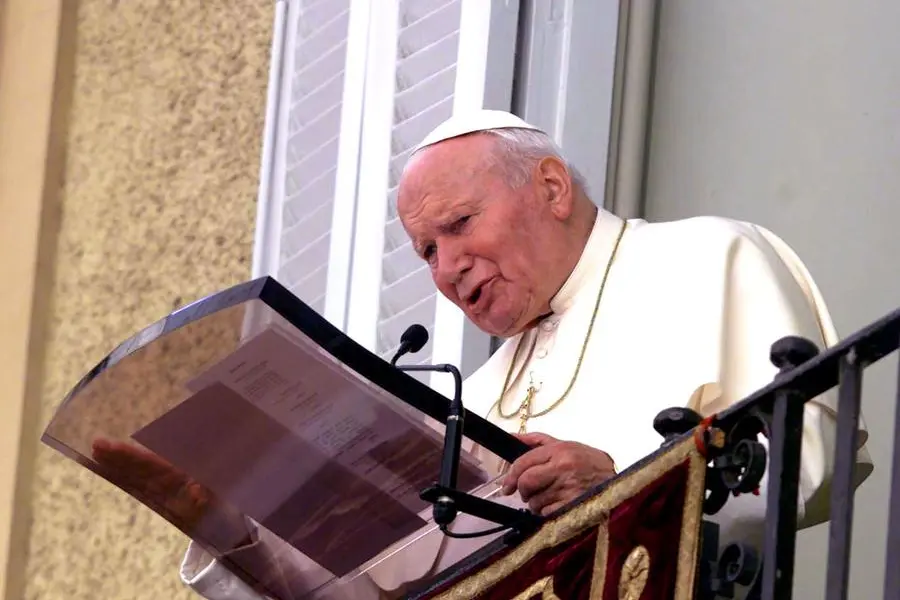
Saint John Paul II recites the Angelus in Castel Gandolfo in 2001
John Paul II and Benedict XVI: the “summer home” of the Popes
In the second half of the twentieth century, Castel Gandolfo permanently became the summer residence of the Popes. John Paul II spent long periods there every year, maintaining intense pastoral activity even during the holidays: famous audiences, Sunday Angelus from the loggia of the Apostolic Palace and continuous contacts with faithful and delegations.
Benedict XVI has also deeply linked his name to the residence, where he also stayed in the months following his renunciation of the pontificate in 2013, before moving to the Mater Ecclesiae Monastery in the Vatican. His presence marked the last chapter of the long season of the Popes in Castel Gandolfo before its transformation into a museum.
Pope Francis’ turning point
A decisive turning point came in 2016, when Pope Francis decided to transform the Apostolic Palace into a museum centre, opening the papal apartments and the gallery with portraits of the Popes from the 16th century to the present day to the public. The intervention was part of his pastoral approach, oriented towards sobriety and the valorisation of spaces as shared cultural assets.
Furthermore, Francis himself has chosen over the years not to use Castel Gandolfo for his summer holidays, preferring to stay in the Vatican even during his rest period.

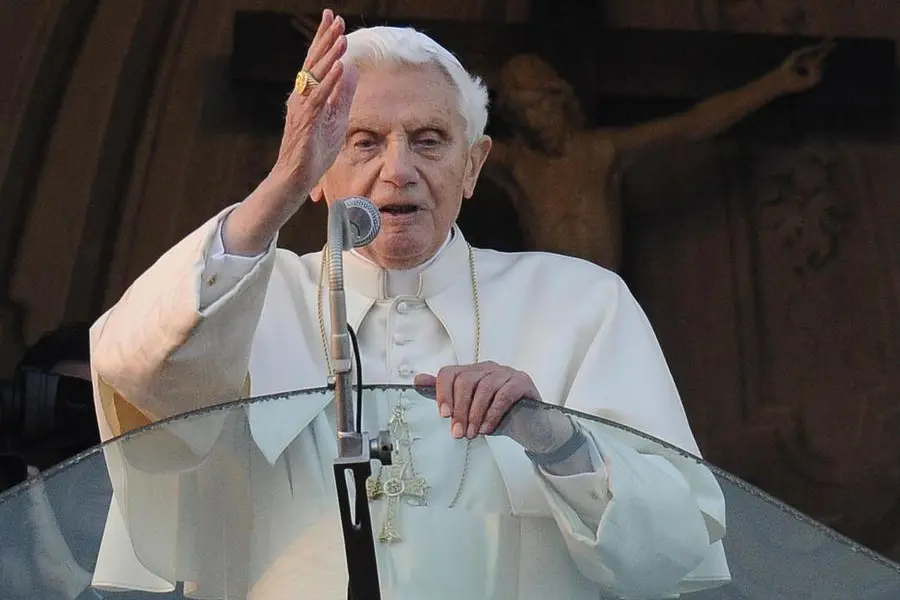
Benedict XVI in Castel Gandolfo on 28 February 2013 after renouncing the papacy
(HANDLE)
The return of the papal “holiday”
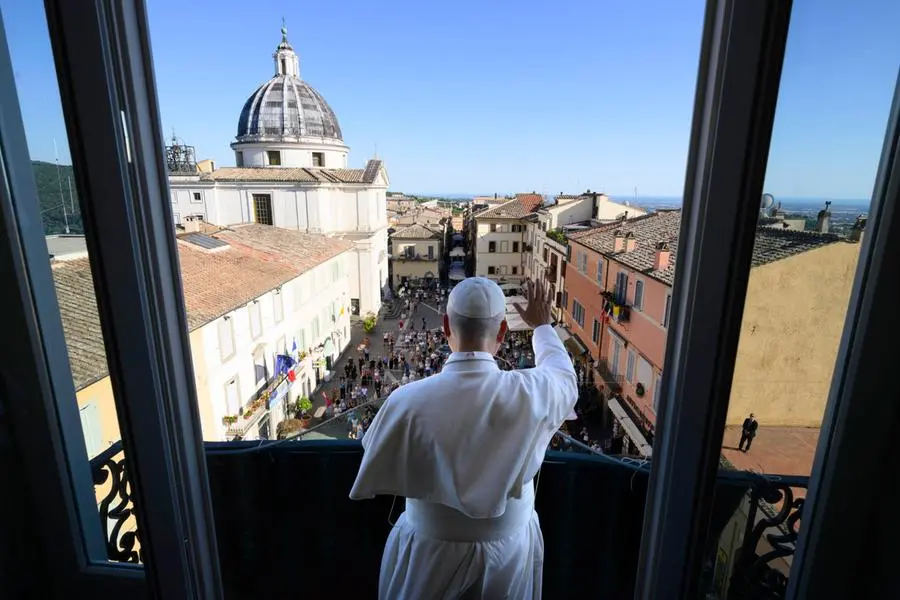
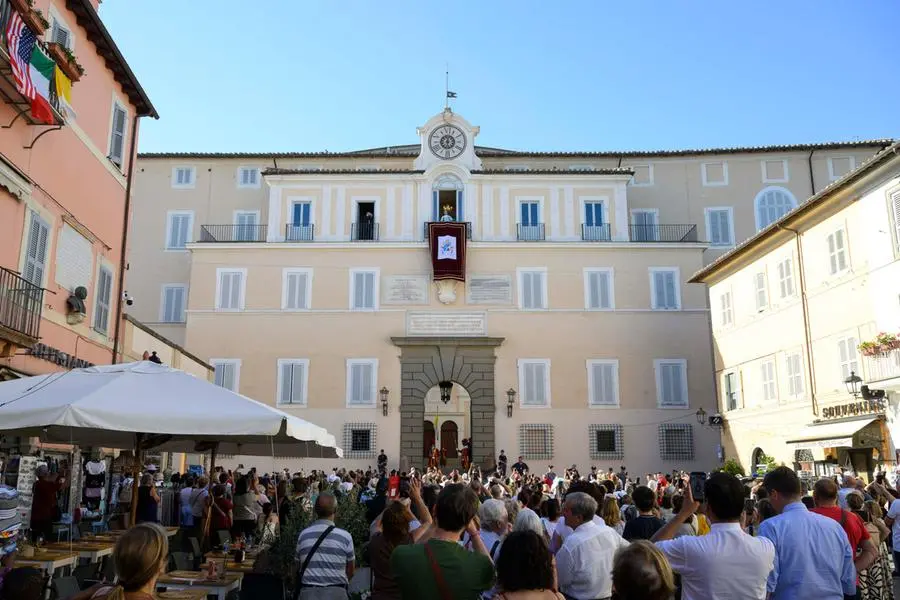
Now the decision to reopen the Apostolic Palace as a summer residence marks a return to tradition. Leo XIV will stay in the Pontifical Villas from 5 to 27 July with the suspension of general and private audiences while the Sunday Angelus is scheduled in Piazza della Libertà.
Already last year, Prevost had spent sixteen days at Villa Barberini
rest, from 6 to 22 July, during which some were not missing
public commitments such as celebrations in “Borgo Laudato si’” for the
first Mass on the custody of creation, then the Masses in the pontifical parish of San Tommaso da Villanova and in the Cathedral of Albano. The period was also characterized by some meetings, such as the one with the Ukrainian president Volodymyr Zelenskyreceived at Villa Barberini, and from telephone calls with the Prime Minister of Israel Benjamin Netanyahu or with Mahmoud Abbas, president of the State of Palestine.
In recent years the complex had been progressively enhanced as a cultural and spiritual space, also through initiatives such as the Borgo Laudato Si’, commissioned by Francis in 2023, which affected some areas of the gardens.
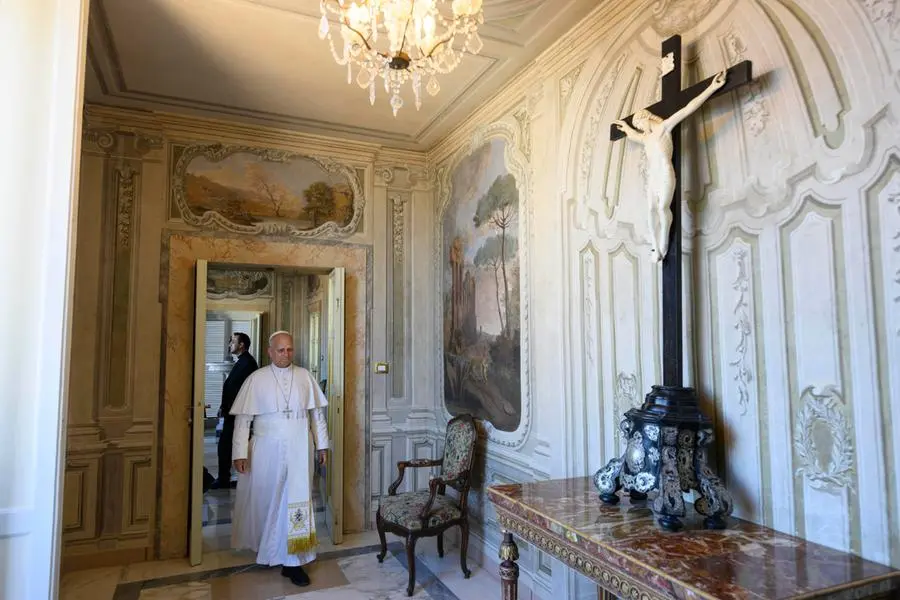
«I hope to do some sport»
The last stable presence of a Pope in Castel Gandolfo dates back to Benedict XVI, before his retirement. Today, with the return of the papal holidays, the town of the Castelli Romani returns to being not only a place of memory, but a living space of the pontificate, in continuity with a history that began almost 400 years ago on the slopes of Lake Albano.
Pope Leo arrived on Sunday afternoon after reciting the Angelus in St. Peter’s Square: «Thank you, I am very happy to be here among you and to be able to spend the next few weeks resting, praying, reading and hopefully doing some sport here in Castel Gandolfo», he said, greeting the crowd outside the Apostolic Palace which he took possession of, «it is always an important moment of meeting. I’m happy that you are all here, thanks for the welcome and for being brothers and sisters, I give you my blessing, let’s say a prayer and see you for the Angelus and then perhaps a few other moments.”