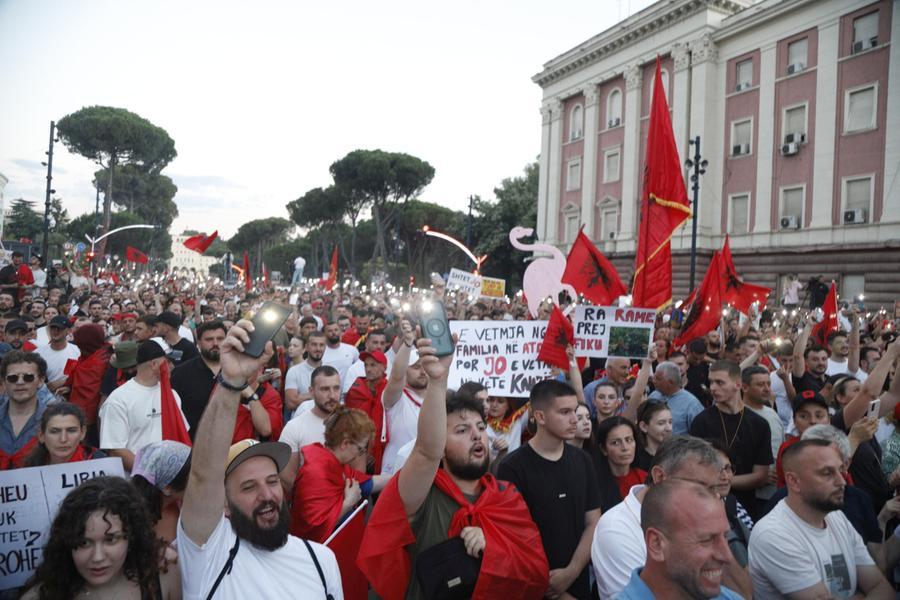
In Albania they already call it the “flamingo revolution”. For over a month, thousands of people, especially young people, but also entire families have been taking to the streets every evening Tirana and in coastal cities. It is not the usual protest linked to parties or electoral deadlines. It is a civil and spontaneous movement, born from a very concrete concern: defend the territory from the assault of concrete and ask for transparency on the choices that will change the face of the country.
It all started from the lagoon Nartain the prefecture of Vlora, and in particular from the area of Zvernec. We are talking about a very delicate ecosystem, a protected area where rare species such as pink flamingos and the curly pelican nest. Bulldozers and excavators have appeared right here to start the first construction sites of a luxury mega-resort. According to data released by the Tirana government itself, we are talking about a colossal investment of 4 billion dollarswhich sees important American financial groups at the forefront, including those attributable to Jared Kushner and Ivanka Trump.
To unblock work in an area protected by environmental constraints, parliament approved an ad hoc law, special law 21 of 2024. The provision loosens protections for so-called “strategic investments”, triggering a reaction from scientists, environmentalists and residents, who see the coast being sold off to large elite tourism chains. But Narta is not an isolated case. Similar tensions are recorded in the north, between the peaks of Theth National Park (Scutari) and in Rrijoll, near Velipoje, other areas of great naturalistic value ended up in real estate development plans contested by local communities.

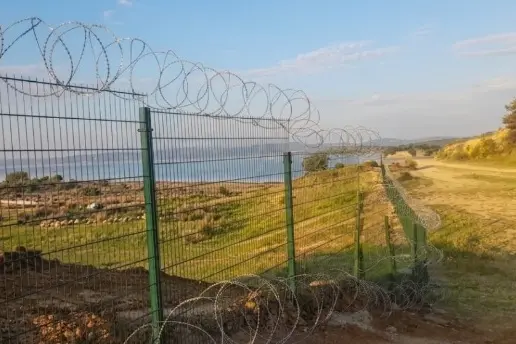
The mobilization grew week after week, until it became one of the largest mass demonstrations in the country’s recent history.
The culmination last June 20th in Tirana, when a stream of over two hundred thousand people marched behind the slogan “Albania is not for sale”. Among the national flags, handmade signs and foam rubber flamingos stood out, which became the symbol of the revolt. The civic committees accuse the political leaders of managing public heritage as a private affair, without any comparison with those who have lived in that territory for generations.
As the days passed, the climate progressively worsened. In front of roadblocks and garrisons around parliament, the police intervened in riot gear, using water cannons and tear gas to disperse the crowd.
A few days ago there were clashes near the institutional buildings when some groups of demonstrators attempted to block the MPs’ cars; the reaction of the police was clear, with a wave of stops and arrests which especially affected very young people, fueling strong controversy over the methods of containing dissent.

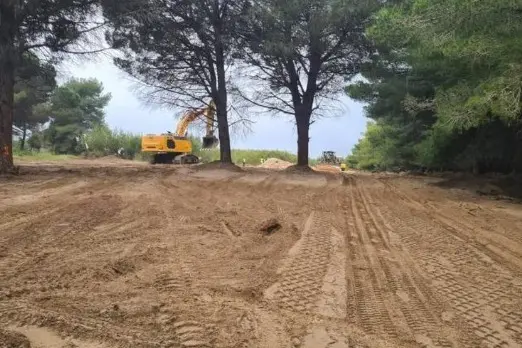
The case has now crossed the Balkan borders. The European Parliament formally recalled the Albanian government, remembering that the protection of the environment and natural reserves is a fundamental and non-negotiable requirement for the path to entry into the European Union. Meanwhile, the protest has also reached Italy. The large and deep-rooted Albanian diaspora has mobilized with demonstrations in Milan and Genoa, determined to act as an international sounding board for the requests of their compatriots.
The Albanian affair touches on an issue that concerns many countries today: the difficult balance between economic growth, territorial protection and social justice. It is the challenge of “integral ecology” that he focused on Pope Francis in his encyclical Laudato yes. In the text, the Pontiff invites humanity to listen to a single, dramatic call: “The cry of the earth and the cry of the poor”.
A warning that today, from the threatened shores of the Narta lagoon, asks politicians not to sacrifice the dignity of communities and the beauty of Creation on the altar of financial profit alone.