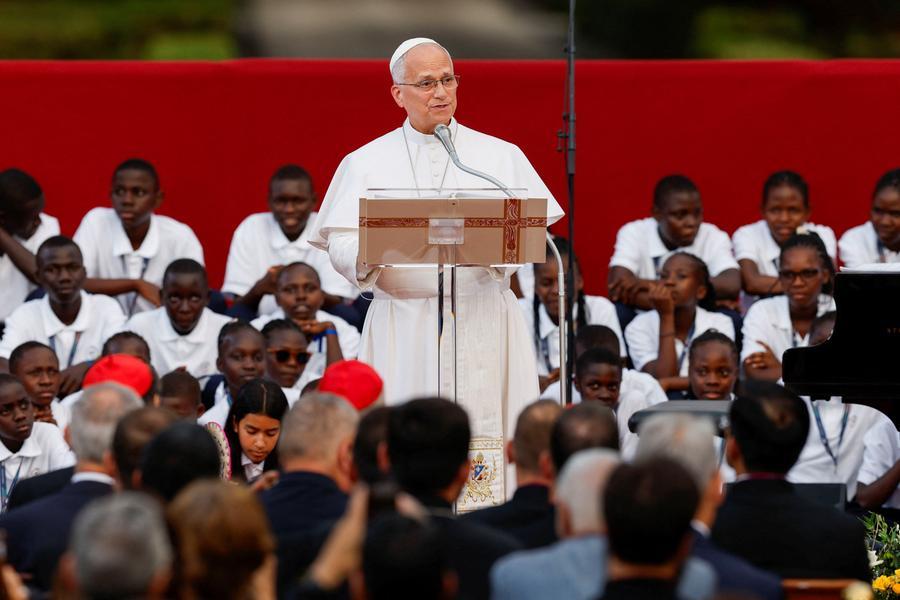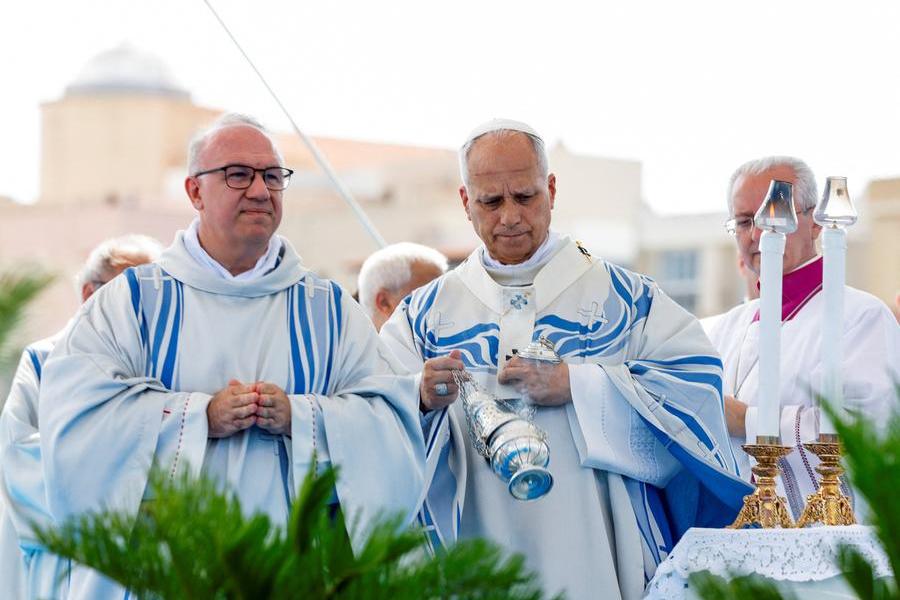
«There are those who choose not to be close and those who decide not to decide. The dead in this sea are victims of both decisions made and decisions not made. Disinterest in the common good and corruption in the places of origin, a global economic system that generates poverty and exclusion, the fear that fuels prejudice and contempt, the idea that such problems do not concern us, the criminal calculations of those who profit from the plight of othersthe slow and difficult transition from a mere management of emergencies to the development of organic and shared policies”. It is a harsh indictment that Pope Leo addresses to institutions and politics. From the stadium near the port of Lampedusa, the Pontiff, starting from the parable of the Good Samaritan, recalls the temptation to pass by which makes us less human and condemns our brothers to death.
He arrives on the island, as he himself points out, «in the footsteps of Pope Francis, who on 8 July 2013 wanted to come to Lampedusa on his first trip as Successor of Peter» and recalls that the apostles themselves sailed in the Mediterranean « and experienced the hospitality of the
inhabitants of its islands and coasts, a crossroads of civilizations for millennia.

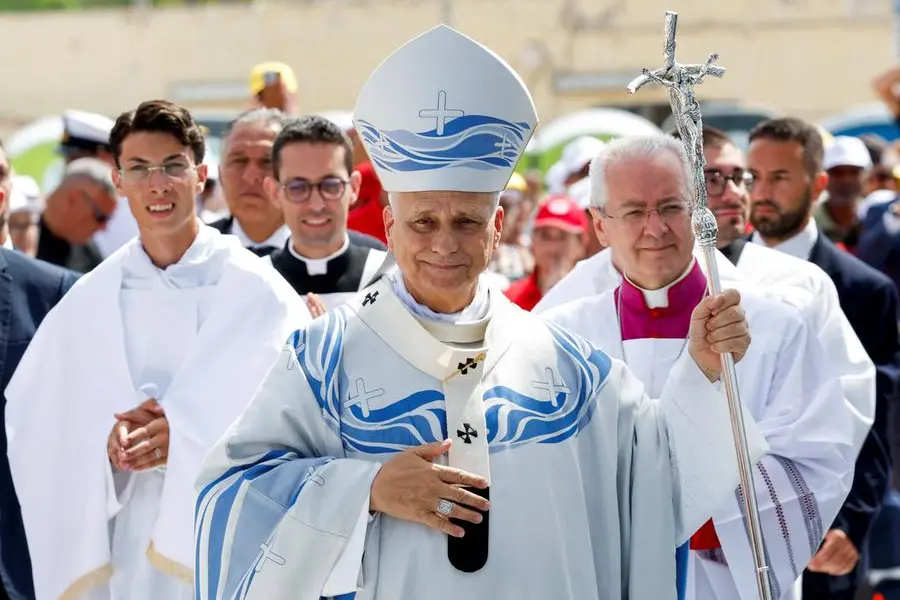
The Gospel resonates where people meet, people welcome each other, their stories intertwine, different cultures engage in dialogue. Instead, it becomes silent, where everyone makes an island of themselves, where contact is avoided, exchange is interrupted.”
Taking up the image of the parable, the Pope underlines that «today Lampedusa and Linosa are on a dangerous road like the one that went down from Jerusalem to Jericho». A road that has «seen not just one, but thousands of human beings fallen into the hands of bandits who take everything away from them, beat them bloody and go away, leaving them half dead». He speaks of the dead, of those who “did not make it to where they hoped” and who challenge us “no less than those who disembarked, in need of attention and rescue”.
The Pope thanks the people of Lampedusa for their humanity, for the closeness with which they welcomed the migrants, for the «miracle of compassion», He thanks «the volunteers, the associations, gathered in the “Lampedusa Solidarity Forum”, the civil institutions, the Coast Guard, the Mayors and the administrations that have succeeded one another over time; thanks to the deacons, priests, nuns, doctors, psychologists, educators; thanks to the security forces and to all those who, with or without the gift of faith, have chosen to love together”, he underlines. He thanks the migrants who also showed solidarity with each other during the journey. But then also calls Europe to its responsibilities.

«Europe», he says, «has a unique potential, which derives from its history and its culture, and therefore an equal responsibility. Due to its geographical position and its institutional structure, Europe is able – in this area – to face the crisis in an organic way, including first aid in a long-term strategic plancapable of welcoming, protecting, promoting and integrating migrants and, at the same time, working for development, so that no one is forced to emigrate. All this while ensuring respect for the dignity of every person. It is a task of public institutions but also of all civil society and the Church.”
Point the finger against those “who are afraid of contaminating themselves in contact with others, thus denying – even in the face of suffering and death – the common origin in God, the infinite dignity of every human being and the call to love without limits». And he recalls, responding both to Catholics, especially Americans, who make faith an element of identity and to Lefebvrians who refuse dialogue, that we must “recognize and affirm that religious affiliation must never become a reason for discriminationalmost as if faith has boundaries and is not instead a universal call to salvation. Where there were walls of separation, Christ broke them down.”
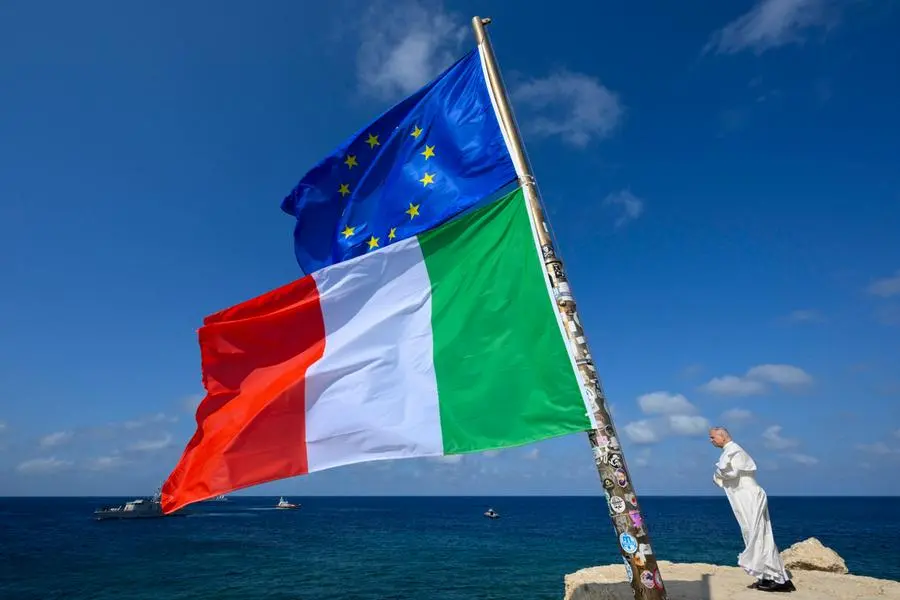
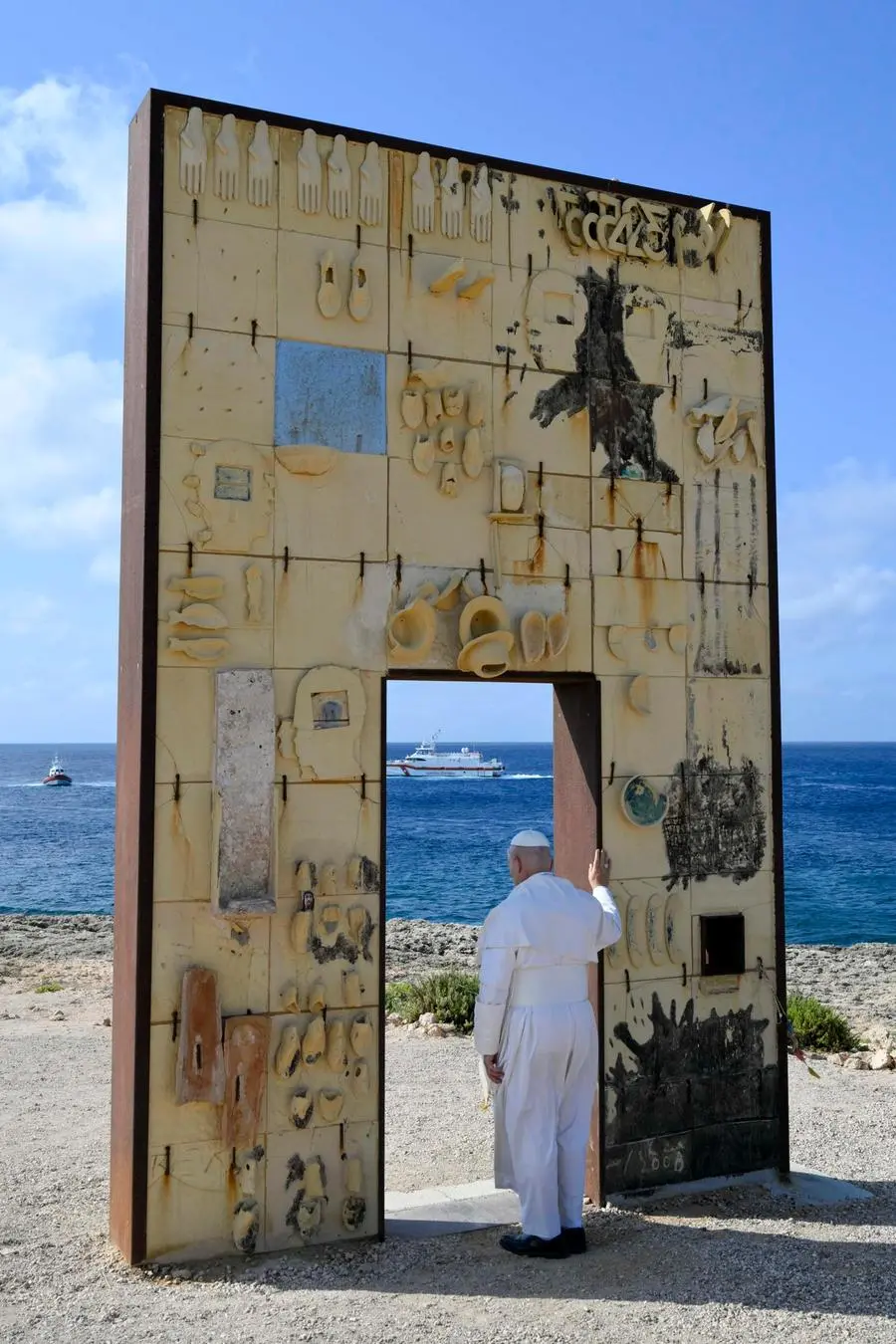
Pope Leo XIV praying in front of the “Gate of Europe” during the pastoral visit to Lampedusa
(HANDLE)
Only those who allow themselves to be carried by Christ’s dynamics of compassion, by the dynamics of “mercy”, begin to live differently, to be citizens differently, to work differently. At that time the civilization of love can truly arise, the one envisaged by my holy predecessors John XXIII, Paul VI and John Paul II. Together with a large number of prophets and martyrs of the last century, they understood that, to the depths of the human heart and the horrors of war, only mercy can respond with new beginnings. Now, on the shoulders of these giants, we have entered a millennium in which to give spiritual, cultural, legal, political and economic form to the civilization of love. The enormity of the pain we observe helps us grasp the radical nature of this call.”
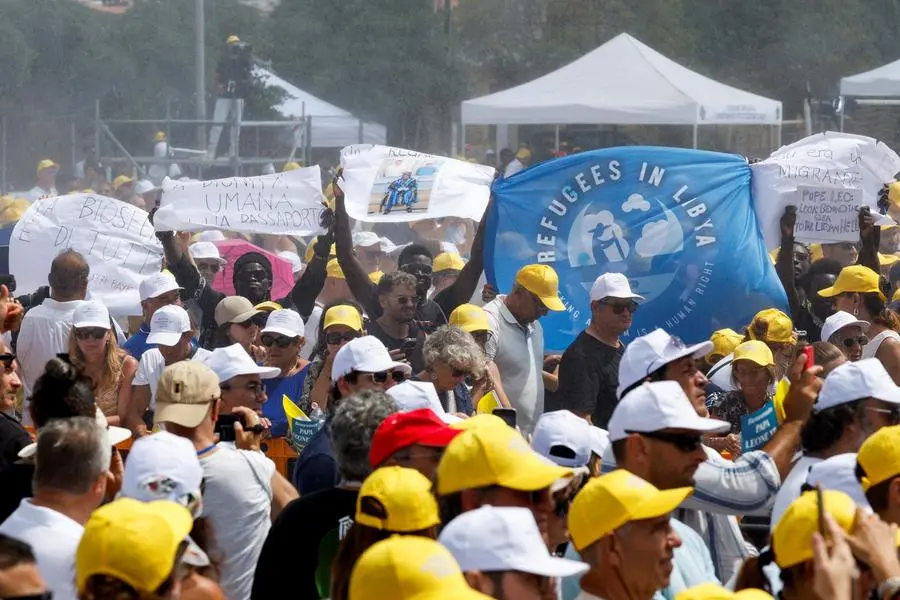
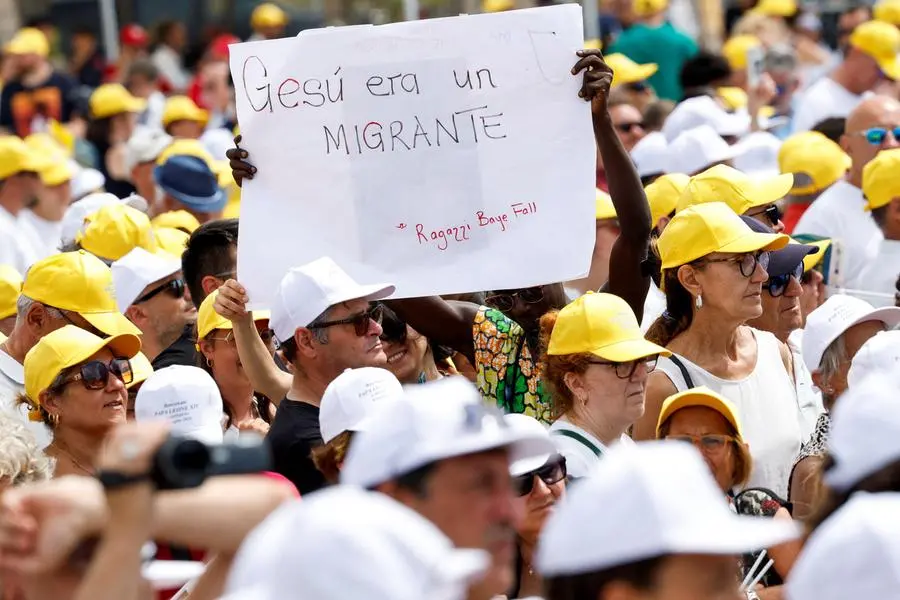
Some faithful display banners with messages while participating in the Mass celebrated by Pope Leo during his visit to Lampedusa
(REUTERS)
And if we can take the Samaritan as an example, we must recognize that today we have even more means than him to “give historical concreteness to hope. He “came near him, bandaged his wounds, pouring oil and wine on them; then he loaded him onto his horse, took him to an inn and took care of him”. We also have to recognize that “the civilization of love does not arise from a single and spectacular gesture, but from a sum of small and tenacious loyalties, which stem dehumanization”.
He remembers his recent words in Tenerife and applies them also to Lampedusa: in both islands «the culture of hospitality has a tourist vocation, which – unfortunately – can feel threatened by migratory routes and develop in indifference, or even in opposition to their dramatic aspects. For many, in fact, holiday is just distraction, lightness,
carefree. So it seems that an invisible wall must be built between the sea of castaways and that of holidaymakers.” And he exhorts: «Have the audacity to think differently. Little by little, with creativity, you will be able to ensure that anyone who spends a period, even a restful one, on this island can become more human by measuring themselves with your charity, with what the sea has taught you, with the encounters that have educated you. There is authentic rest, in fact, where the meaning of life is rediscovered; and true well-being when the economy is just and fraternal. In this economy, care for creation and social friendship come together in a synthesis that humanity is looking for today.”

Finally, in front of the four thousand present at the mass (eight thousand are residents of Lampedusa), he indicates the Madonna of Porto Salvo «patron saint of Lampedusa. Perhaps you know that Saint Augustine loved to describe human life as navigation in a stormy sea and his destiny as a safe and secure port” and hopes that «may this venerated Image speak to you again with the strength of the past, when those who transmitted its devotion to you relied on the intercession of the Virgin with radical sincerity. We all have a safe haven in Godand every Christian community is called to be a reflection of this on earth. And may you, the community of Lampedusa and Linosa, never lack the breath of faith, hope and charity: “O’sha!”».