



MumyMumy
  • News
  • Female Empowerment
  • Business
  • Politics
  • Career
  • Culture
  • Parenting
  • More
    • Web Stories
    • Popular
    • Pregnancy

Subscribe to Updates

Get the latest women's news and updates directly to your inbox.

Trending Now
The new Ferrari Luce: revolutionary, even too much so

The new Ferrari Luce: revolutionary, even too much so

27 May 2026
this island is the cheapest to live in “incredible luxury”

this island is the cheapest to live in “incredible luxury”

27 May 2026
Reduce your taxes by hosting a parent: what you need to know

Reduce your taxes by hosting a parent: what you need to know

27 May 2026
How to choose the right air conditioning?

How to choose the right air conditioning?

27 May 2026
This is the swimsuit shape that best reduces belly and cellulite, according to stylists

This is the swimsuit shape that best reduces belly and cellulite, according to stylists

27 May 2026
Facebook X (Twitter) Instagram
  • Privacy
  • Terms
  • Advertise
  • Contact
Facebook X (Twitter) Instagram Pinterest Vimeo
MumyMumy
  • News
  • Female Empowerment
  • Business
  • Politics
  • Career
  • Culture
  • Parenting
  • More
    • Web Stories
    • Popular
    • Pregnancy
Subscribe
MumyMumy
Home » Magnifica Humanitas: in the age of artificial intelligence only education in critical thinking can save us
Parenting

Magnifica Humanitas: in the age of artificial intelligence only education in critical thinking can save us

By News Room27 May 20264 Mins Read
Share Facebook Twitter Pinterest LinkedIn Tumblr Reddit Telegram Email
Magnifica Humanitas: in the age of artificial intelligence only education in critical thinking can save us
Share
Facebook Twitter LinkedIn Pinterest Email

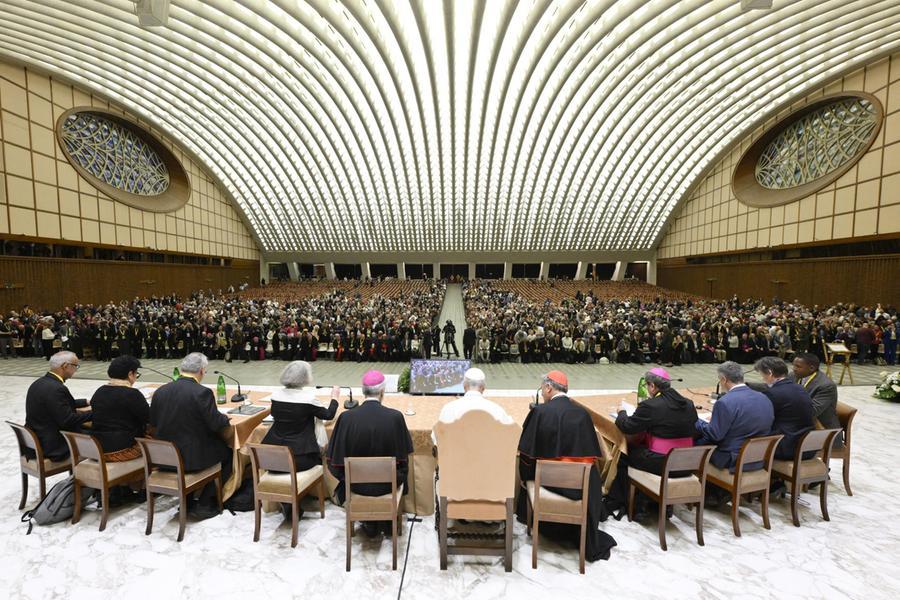
Among the many passages of the encyclical Magnificent Humanitas of Pope Leo XIX intended to spark debate and reflection for a long time, one in particular seems to identify the “question of questions” of our time and appeal to anyone who has a responsibility towards the new generations in various capacities.

We report it literally, in all its prophetic force: «The speed and ease with which an answer or a summary is obtained risks extinguishing the desire to ask questions… We must educate ourselves to fast from AI and protect our young people from the promise of the perfect machine, from that subtle seduction that makes human thought seem useless precisely when it is most necessary».

“It makes human thought seem useless precisely when it is most necessary”: these are words of extraordinary depth that cannot fail to have an echo in all of us. The point is this: technology, like any scientific progress, is not a bad thing, on the contrary, it should be welcomed positively. And Pope Leo returns to this concept clearly several times, to immediately silence any specious accusation of obscurantism. However, science and technology are never neutral: «We cannot consider AI morally neutral. There is no need for a more moral AI if this morality is decided by a few.” An idea – this of the non-neutrality of sciences – also supported by Nobel Prize for Physics Giorgio Parisi in an interview commenting on the encyclical: «Every technology brings with it an implicit philosophy, a system of values ​​incorporated into the choices of those who design it. In the case of Artificial Intelligence it is even more evident: a system learns from the examples we provide it and those examples are never a neutral sample of the world. They contain our choices, our forgetfulness, our prejudices, and the machine then returns them, often amplified… I would add something that concerns us scientists: even the claim of absolute neutrality is an illusion, and persisting in defending it ends up weakening the credibility of those who flaunt it. Recognizing that technology embodies values ​​is not an accusation. It’s the first step in consciously deciding what values ​​we want it to embody.”

The aspect that Pope Leo warns us about Magnificent Humanitas is that science and technology themselves cannot decide which values ​​to adopt, in other words they cannot decide what is good and what is bad. So that man remains human – another leitmotif of the papal document – it is necessary that man does not abdicate the ethical responsibility of establishing the boundaries, limits and boundaries within which research must move. If man abdicates this task, he loses himself.

The next question prompted by Prevost’s words is: Will man today and especially tomorrow still be able to discern good and evil, just and unjust, human and inhuman? Or will he be narcotized, if not enslaved by a technique that, as in a dystopian nightmare, will have taken over? In order for this nightmare not to come true, it is necessary that consciences – especially young ones, especially those in training – are educated, trained, cultivated, nourished. The critical spirit, the intelligence that knows how to analyze things beyond the surface is not an innate nor obvious fact, but the fruit of a laborious path that leads man to maturity. We are the ones who have to tell Artificial Intelligence in which direction it should go, what values ​​it should incorporate, to quote Parisi: this will be the greatest ethical commitment of the next decades. The risk is to settle for pre-packaged (and almost always interested) answers, extinguishing the questions, the thirst for knowledge and understanding…

It is then understood that education becomes the challenge of challenges, the mandatory task of every parent, teacher, politician… Let us therefore ask ourselves how much energy, capital and resources we allocate to a humanist, philosophical education, aimed at building analytical skills and a critical spirit, to evaluate with full knowledge of the facts what truly benefits or harms man.

On the other hand, the creators of artificial intelligence seem to have been the first to realize the need to accompany scientific research with the ability to think: all the large companies committed to developing AI are full of figures with a philosophical background, often the founders themselves are philosophers (Alex Karp of Palantir, Reid Offman of OpenAI, Amanda Askel of Anthropic…).

They do not seem to have adequate awareness of the priority of ethics and critical thinking over technology those ministerial programs that tend to reduce humanistic and philosophical training in favor of technical knowledge, certainly necessary, but, as we have seen, incapable of guiding man towards good.

Yet, we are the homeland of the Renaissance and Humanism…

Share. Facebook Twitter Pinterest LinkedIn Tumblr Email

Related Articles

The new Ferrari Luce: revolutionary, even too much so
Parenting

The new Ferrari Luce: revolutionary, even too much so

27 May 2026
Enrico Rava: «Miles Davis’ sound decided my life»
Parenting

Enrico Rava: «Miles Davis’ sound decided my life»

27 May 2026
Ideas from schools to break down barriers, the Samsung contest rewards the “Active Balance” project
Parenting

Ideas from schools to break down barriers, the Samsung contest rewards the “Active Balance” project

27 May 2026
AIL legacies for a future without blood cancer
Parenting

AIL legacies for a future without blood cancer

27 May 2026
Why do we sometimes find ourselves doing things we don’t want to?
Parenting

Why do we sometimes find ourselves doing things we don’t want to?

26 May 2026
Jesus: a radical revolution – May 27
Parenting

Jesus: a radical revolution – May 27

26 May 2026
Latest News
this island is the cheapest to live in “incredible luxury”

this island is the cheapest to live in “incredible luxury”

27 May 20260 Views
Reduce your taxes by hosting a parent: what you need to know

Reduce your taxes by hosting a parent: what you need to know

27 May 20260 Views
How to choose the right air conditioning?

How to choose the right air conditioning?

27 May 20262 Views

Subscribe to Updates

Get the latest women's news and updates directly to your inbox.

Popular Now
Why IBM Thinks Most Enterprise AI Strategies Will Fail Without Trust News

Why IBM Thinks Most Enterprise AI Strategies Will Fail Without Trust

News Room27 May 2026
Magnifica Humanitas: in the age of artificial intelligence only education in critical thinking can save us Parenting

Magnifica Humanitas: in the age of artificial intelligence only education in critical thinking can save us

News Room27 May 2026
Can you really protect your savings with gold in times of crisis? Business

Can you really protect your savings with gold in times of crisis?

News Room27 May 2026
Most Popular
The new Ferrari Luce: revolutionary, even too much so

The new Ferrari Luce: revolutionary, even too much so

27 May 20260 Views
this island is the cheapest to live in “incredible luxury”

this island is the cheapest to live in “incredible luxury”

27 May 20260 Views
Reduce your taxes by hosting a parent: what you need to know

Reduce your taxes by hosting a parent: what you need to know

27 May 20260 Views
Our Picks
How to choose the right air conditioning?

How to choose the right air conditioning?

27 May 2026
This is the swimsuit shape that best reduces belly and cellulite, according to stylists

This is the swimsuit shape that best reduces belly and cellulite, according to stylists

27 May 2026
Why IBM Thinks Most Enterprise AI Strategies Will Fail Without Trust

Why IBM Thinks Most Enterprise AI Strategies Will Fail Without Trust

27 May 2026

Subscribe to Updates

Get the latest women's news and updates directly to your inbox.

Mumy
Facebook X (Twitter) Instagram Pinterest
  • Privacy Policy
  • Terms of use
  • Advertise
  • Contact
© 2026 Mumy. All Rights Reserved.

Type above and press Enter to search. Press Esc to cancel.