




It is a film from 1927 that gives us an appointment in 2026: Metropolis by Fritz Lang imagined the future and assigned it a date, today. We look at it again in the year in which we perceive a strong fear of machines which, like humans, speak, write and have a human face.
Upon closer inspection, this is the centenary year: the film was in fact finished in 1926 and the first public screening was in Berlin on 10 January 1927. At the time it lasted over two hours but a few weeks after its release it was “shortened” for distribution. For decades almost a quarter of the film was lost. After the re-release with the soundtrack by Giorgio Moroder (1984), the decisive restoration of 2001, in 2008 a copy of the complete original was found in Buenos Aires which allowed, two years later, to show it as the director’s initial intentions.
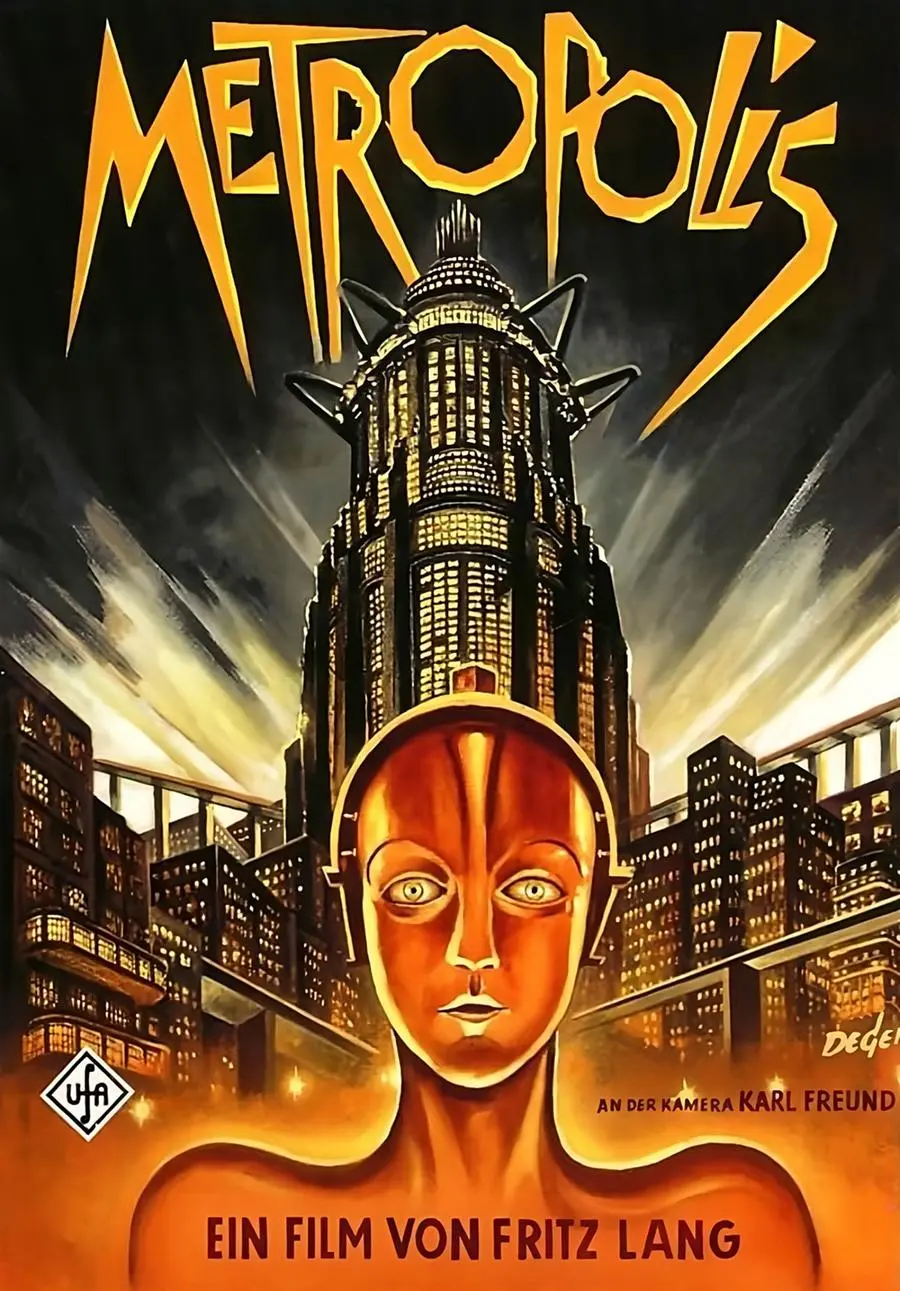
A German poster for the film.
Lang shoots the film in Weimar Germany, between 1925 and 1926, when Ufa (the main German production company) dreams of competing with Hollywood and tries to Metropolis the most ambitious coup: over a year and a half of filming, tens of thousands of extras, an army of technicians. The screenplay is by Thea von Harbou, the director’s wife and a successful writer (the novel underlying the film was published in installments in a popular magazine): she was responsible for the mystical and sentimental character of the story, and the conciliatory ending – the heart that reunites head and hands – which Lang, more disenchanted, did not love.
On a technical level, the film opened paths that cinema would follow for a century: the director of photography Eugen Schüfftan developed a system of mirrors (later known by his name) to bring actors and city models together in the same frame, just as the transformation of the automaton into Maria’s face (with the rings of light rising up the metal body) is among the most imitated sequences of all time.
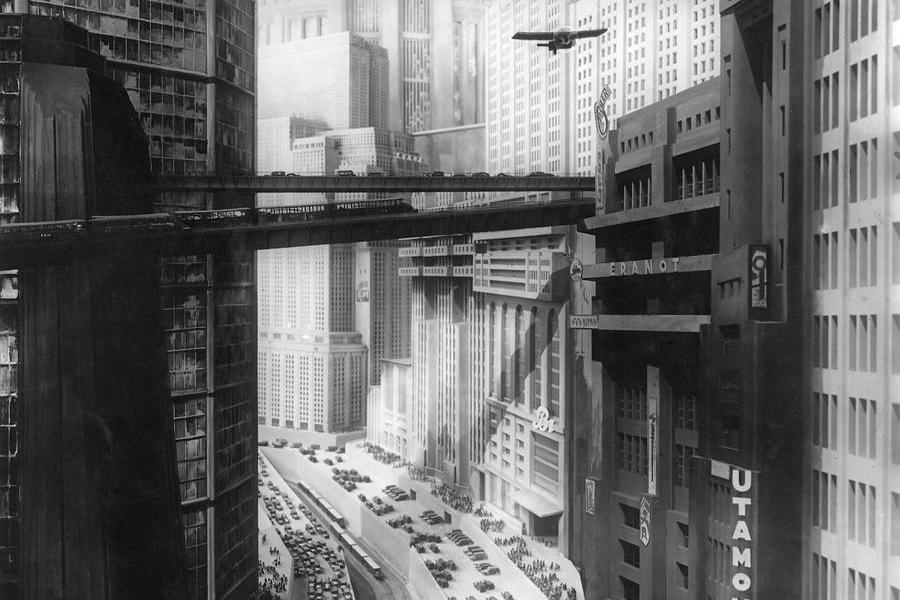
And then the city: the set designers Otto Hunte and Erich Kettelhut built skyscrapers, suspension bridges, vertical arteries crossed by cars and airplanes, ideas that Lang had conceived while looking at New York in 1924. Behind those sets you can sense the futurist utopias of our architect Antonio Sant’Elia, the Art Deco, the dream of a vertical metropolis: visions that today are no longer science fiction but our cities.
Yet, when it appeared, it was a fiasco. The most expensive film ever produced in Germany, which almost bankrupted Ufa, received no awardsfound the public lukewarm and often ferocious critics. The consecration would come later: in 2001 Metropolis will be the first film included in the UNESCO “Memory of the World” register, alongside Gutenberg’s Bible and Beethoven’s Ninth. Not without a shadow: that dream of reconciliation at the basis of the film was admired in Germany by Nazism, which was preparing to impose its opposite. Von Harbou herself then joined it, while her husband Lang, of Jewish origins, took the path of exile.
And the Catholics? At the time, structured Catholic film criticism did not yet exist – it was born encouraged by the encyclical on cinema “Vigilanti cura” by Pius Only later, for example in “Civiltà Cattolica”, the work was recognized as a poem on the soul of modern man.
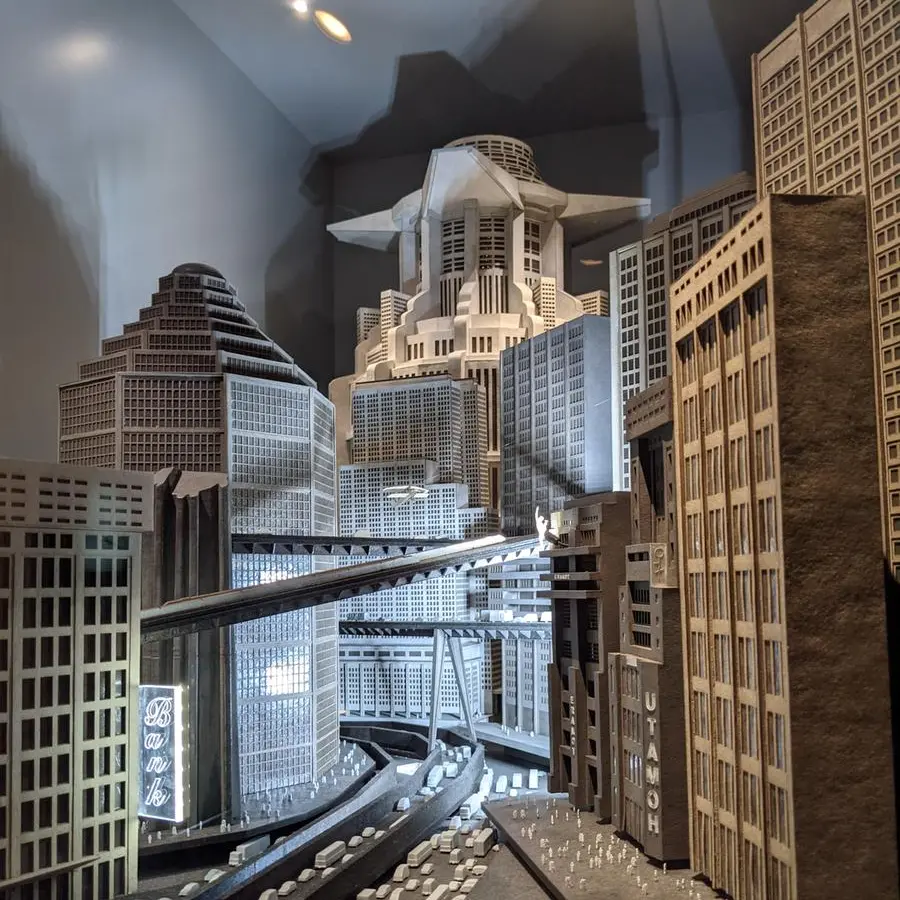
The model of the upper part of the city, preserved in the Berlin Film and Television Museum.
Metropolis does not imagine a better future, but the reverse of a dream: an inverted utopia, in which technical progress exists, is prodigious, but requires the payment of an inhuman price. The city shines above and devours below; man is reduced to an interchangeable gear with no nameand, a number sewn on the suit. In the film the future is not a promise but a warning.
The two-story city
Lang creates a city on two levels: at the top the towers, the gardens, the light; below the machines, the men bent over the gears, the grueling work shifts. Above you enjoy the privileges, below you struggle to make them possible. And those above don’t know – or don’t want to know – about those below.
But there are those who cross these floors. First of all Freder, the son of the master Joh Fredersen (the man who governs Metropolis from above, the mind that plans everything). The tycoon’s eldest son lives comfortably in luxury until, one day, he notices what is happening underground and is shocked. Then there is Mary who gathers the workers’ children underground, speaks with the workers in the catacombs, announces the arrival of a mediator, invites them not to give in to the revolt. He descends from above, she ascends from the depths; in their meeting the film seeks fulfillment.
The question of the film is timely: do we consider who makes our comforts possible? While we are scanning our screens, do we know who extracts the minerals to make our devices with their bare hands and in conditions of almost slavery? While we consult AI programs, do we know who in poor countries for starvation wages manually labels the data so that the machine learns? There are still many who “live below”, the discarded, as Pope Francis called them, who we do not see.
The film is enclosed in a phrase repeated at the opening and closing: “The mediator between the brain and the hands must be the heart.” The brain plans, the hands execute, but the brain and hands do not touch each other: an abyss opens between the two, and a third term is needed to mediate: the heart.
It is an intuition with a Christian flavor: “There is only one mediator between God and men” (1 Tim 2.5): in the New Testament that mediator has a face, he is Christ, the Son made man. Lang does not name him but seeks, in his own way, a heart that reconciles what selfishness has divided. And this is what Freder does by going down where the men are worn out by fatigue, taking the place of a worker at the machine, experiencing suffering.
The false Maria and our machines
This is where the film becomes prophetic and touches us closely. In Metropolis there is in fact another machine, which is not used for production but for deception: the scientist Rotwang builds an artificial creature and gives it the face of Maria, the woman who keeps hope alive in exploited workers.
The false Mary appears like the original – she seduces and harangues the crowd – and no one can distinguish her from the copy anymore. It is the threat of our times: it is not the machine that calculates the danger, but the machine that resembles manwhich takes on a face and a voice to persuade us, deceiving us.
That robot that “replicates” Maria is the progenitor of a lineage. C-3PO descends from him Star WarsKubrick’s HAL9000, the replicants of Blade Runnerall the machines that pretend to be human in many science fiction films.
But the “children” of the false Maria are not at the cinema today. They are infinite and worry us: think of artificial intelligence that writes “human” texts, imitates the voice of those we love, creates faces of people who don’t exist. Lang has staged – with an automaton and the face stolen from a girl – our current vertigo: we no longer know if the person speaking to us is authentic.
And there’s more: the false Mary today does not limit herself to deceiving, but decides in place of men, guides their choices, ignites their anger. Can the machine decide for us?
Lang questions us. Who are the masters of the city today? No longer the lords of the chimneys, but the few who own data and algorithms, the infrastructures on which everyone’s life passes: Joh Fredersen no longer governs from a tower, but from a city made of servers in a remote desert; wealth returns to accumulate in a few hands; the new raw materials our information. Who are the new underground workers? They have already been mentioned, let’s add those who deliver parcels and dinners to us, those who carry out micro operations in front of a screen millions of times, those who discover they have lost their jobs because AI is now doing it. The underground has not disappeared: it has changed address.
And who can the real Mary be today? Who keeps a promise alive, those who educate to distinguish the authentic face from the virtual copy, those who teach – at school, in the family, in the parish – that a man is not a given; who does not abandon people to fear of the “new” or to resignation, but activates their hearts. And Freder, the master’s son? Those who, being “above”, choose to come down and despite having power and comfort, and do not take their eyes off those “below”, making ethical and responsible choices.
The heart, mediator
In Metropolis the workers, deceived by the fake face, destroy the machines and almost cause the death of their children in the city that floods: blind anger saves no one. It is not by turning off the machines that we save ourselves, even today. The way is another.
Leo XIV in his first encyclical Magnificent humanity states that Artificial Intelligence brings with it “new challenges for the defense of human dignity, justice and work”. The Pope’s text opens with the biblical image that also inspired Lang’s masterpiece: «The magnificent humanity created by God is found today faced with a decisive choice: build a new Tower of Babel or build the city where God and humanity live together». In the film, the owner’s skyscraper bears exactly that name – New Tower of Babel – and Mary, in the catacombs, tells the workers that same parable. A century separates the two works but the question is the same.
To the workers who break the machines, and we often worship them uncritically, the encyclical indicates a third way: “Disarming does not mean giving up technology, but preventing it from dominating humanity.” Don’t turn off the gears, therefore, but keep your heart alivebecause – writes Leo To protect ourselves, we need the heart, a magnificently human faculty.