





The case of the young man of Ecuadorian origin who was stabbed and killed on a platform of the Milan Certosa station is bringing back into the news a topic which has made the news several times in Milan over time: that of the so-called “pandillas”, which are a particular type of youth gangs, not to be confused with those which the jargon calls “baby gangs”.
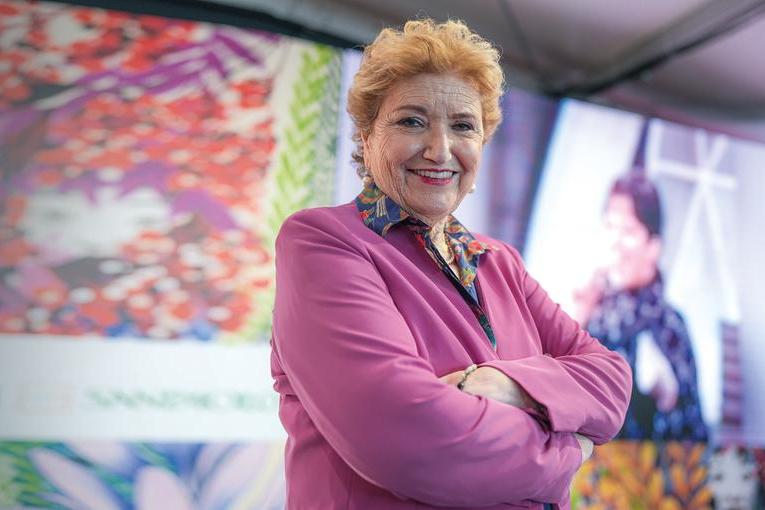
While waiting for the investigations to verify what happened, i.e. whether, as is hypothesized, it really was a case of mistaken identity, whereby the killed boy would have been attacked by members of a “gang”, with whom he had no ties, confused with a member of a rival gang, we asked Franco Gabrielli, former police chief, author with Carlo Bonini of Against fear, manifesto for democratic security (Feltrinelli)in which the topic of security is addressed starting from its complexity, trying to avoid the opposite simplifications that often accompany it in public debate, a book in which a chapter is dedicated to the city of Milan.
PANDILLAS AND BABY GANG, SUBSTANTIAL DIFFERENCES
«The first thing that must be said is that Milan has a significant and positive experience of combating these phenomena, because in Milan there have been important investigations that have highlighted this reality which is too often confused with the very different phenomenon of baby gangs. If baby gangs are extemporaneous phenomena of youth aggregation, in any case of deviance, which must be contained and in my opinion even before understood and defused from a social point of view, the so-called pandillas are a different thing precisely from a technical point of view. They are realities which are influenced by aspects of integration, cultural aspects, these are models borrowed from similar, but more violent, realities that originate in other countries, Latin America in particular.
These are very complex phenomena on which some beautiful volumes have also been written, for example Pandillas, which narrates the investigations carried out by the Milan Police, and there we see precisely that this type of gang has specificities that are foreign to the extemporaneous aggregations that we call baby gangs: here there is a ritual, some patterns, an organization, some structures that define hierarchies, methods of presence in the territory, with which the territory is also marked: these are very complex situations that must be addressed with a method that cannot be resolved into slogans or saving recipes”.
TRANSCRIME REPORT, DEFINE THE GANGS
Gabrielli helps to understand the differences he talks about the relationship The youth gangs in Italy, created by Transcrime, the inter-university research center on crime and innovation of the Catholic University of the Sacred Heart, Alma Mater Studiorum University of Bologna and University of Perugia, which in 2022 attempted a “classification” of the concept.
WHAT IS A BABY GANG
Those that are called baby gangs in newspaper headlines are, according to the report, «the type most present on the national territory and numerically largest: groups «characterized by weak ties, a more fluid nature, without a defined structure, does not present a clear hierarchy or a defined organization and often not even specific criminal purposes. The crimes most frequently committed by this type of gang are occasional violent or deviant activities.”
According to the data collected: «Almost all of these groups are involved in cases of fights, beatings and injuries. A third of the groups are involved in robberies or thefts in public streets, often to the detriment of peers.” Or even “acts of bullying”, carried out by almost one in three groups commits acts of bullying”, and there are recorded: “threats with cutting weapons and sexual violence”. Marginal instead: more complex crimes, such as drug dealing, or commercial establishments.” In these groups we are looking for: “an answer to a state of social isolation, dissatisfaction with one’s condition or inability to relate to one’s peers”.
According to the report: «in almost half of the cases they are gangs made up mainly of Italians, and less than one in three is made up mainly of foreigners. The age ranges from 15 to 17 years, but a quarter is older, up to 24 years: “In less than half of the cases the members are in a situation of socioeconomic hardship”.
PANDILLAS IN ITALY
The case of the “pandillas” is very different. The report defines them: «groups with a defined structure and which are inspired by criminal organizations or foreign gangs, such as maras, pandillas, American gangs, Nigerian brotherhoods or groups from the French banlieues». They are easier to recognize and classify than other groups, they are characterized by the presence: “of identifying symbols, a structured or semi-structured organization and operational continuity over time”. Their birth has often been associated “with the difficulties of integrating young or very young recently immigrants”. This type of gang, which is back in the news today, especially of South American origin, was particularly active in the early 2000s in the urban areas of Milan and Genoa.” Some names are remembered: «Latin Kings, Latin Forever, Comando or Ñetas10».
While the baby gangs are generally small, less than ten people, the pandillas are larger, they have: «a variable number between 10 and 40 members with an age between 15 and 17, mainly young people of foreign origin (first or second generation) and are often in a situation of marginality or socioeconomic hardship. The level of organization of some of these gangs in some cases includes the presence of a real internal hierarchy.” Among the criminal activities most often associated with this type of gang are brawls, beatings and injuries, acts of vandalism and disturbance of the peace”.
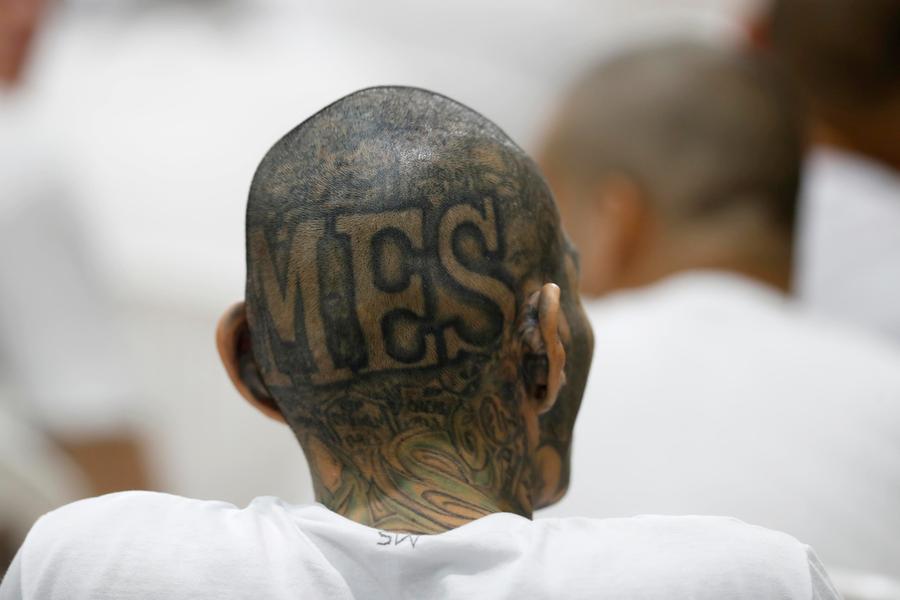
The father of the attacked boy would have recognized thanks to a tattoo a leader of the MS13, a gang that the Transcrime report in 2022 described in Italy as follows: «This gang, mainly made up of Salvadorans, is currently present in Italy mainly in the cities of Milan and Genoa. Part of a larger gang system present in different continents, the MS13 is described by the results of the questionnaires as a gang made up of more than forty members, mainly minors aged between 15 and 17, both male and female, and with members in a situation not of marginality or hardship”. Even if what emerges from Milano Certosa today suggests a more mature age leading up to 24 years.
THE PHENOMENON IN LATIN AMERICA AND ITS ORIGINS
In 2023, the Italian Caritas dedicated a Dossier entitled: Gangs, maras and pandillas to the phenomenon in Latin America, which is much more aggressive, violent and deep-rooted than the Italian one. Youth gangs, a transnational phenomenon, in which the historical origins are thus reconstructed.: «In 1980 the civil war began in El Salvador, which for twelve years pitted the government, supported by the United States, against the guerrillas of the Farabundo Martí National Liberation Front1. A conflict characterized by extreme violence which caused over 75 thousand deaths and approximately 400 thousand Salvadorans forced to emigrate to the United States. The gang phenomenon originated in the 1980s in Los Angeles (USA), a city then known as the “gang Mecca”, which became a destination for many families from the Northern Triangle2. It is the name used to refer to the three Central American countries of Guatemala, Honduras and El Salvador. In such a difficult context, the teenagers and young people of these families were the first to band together to protect themselves from other urban gangs, most of them of Mexican and African American origin. These young people started new gangs, some of which gained much power and expanded. Among the best known, the “Barrio 18” and the “Mara Salvatrucha””.