




Actors’ masks, hostages locked in a room but “treated well”, escape into the sewers. It looks like a scene from The paper house and instead it happened in Naples. The film-like robbery of 16 April at the Crédit Agricole branch in Piazza Medaglie d’Oro, in Vomero, immediately made the rounds on social media: videos of the attack were circulating and, in the comments, many wondered if it was all true or a hoax.
«It is now a pervasive theme», explains Daniela Cardini, professor of theory and techniques of television language at the IULM University of Milan. «We can no longer – or perhaps we no longer want – to separate reality from fiction. The question is not just “am I looking at something real or fake?”, but “with what attitude am I looking at it?”. The moment it is true – but I perceive it as if it were a film or a series – what changes in my attitude towards that news story?”.
The distance becomes increasingly narrower: not only does reality end up seeming like fiction, but it is often fiction that affects us more than real facts. «Let’s think about the news cases, about feminicides: we perceive them with horror, of course, but also with a sometimes unjustified distance. If, however, the same story is told to us in a film or series, it affects us much more deeply”, adds the teacher.
Not emulation, but “osmosis”
After hearing about the Naples robbery, the reference to the TV series was immediate. Is it emulation? «I would rather speak of osmosis», explains Cardini, «of superposition of planes. The point is permeability: there is no longer a gap between what is real and what we experience daily through the screen». Talking about emulation, therefore, is misleading. When it occurs, it concerns borderline cases. Some scholars speak of “bad fans”. «They are those who imitate characters like Walter White or other fiction antiheroes. But they do it because they have a problem with the perception of reality. Normally we all have protection mechanisms: we know it’s fiction and we know that in reality we would face consequences, such as prison.”
The antihero and the fascination of crime
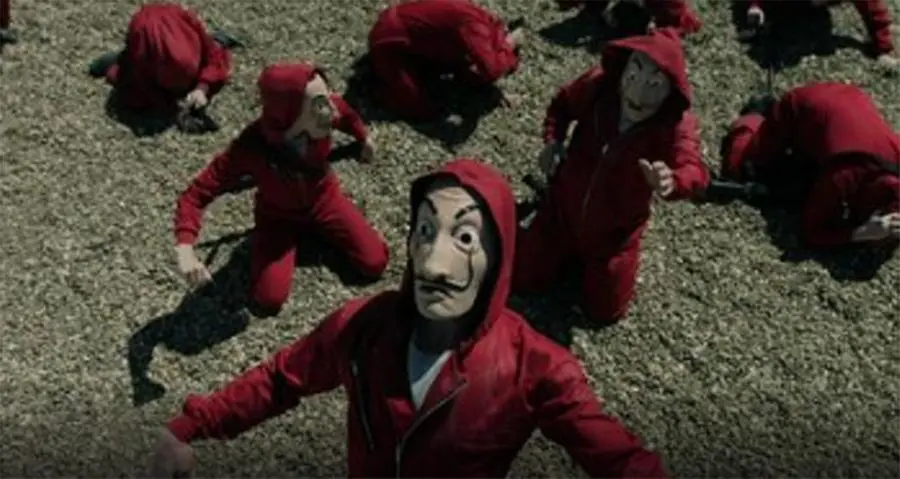
We cannot, however, ignore the role of series as The paper house who contributed to building an iconography of the robber. «There is an image of the antihero that is now recognisable», continues Cardini. «But it doesn’t just come from series. It already existed in the news.” The reference is to figures such as Renato Vallanzasca: «He was the “gentleman bandit”. How can such a figure exist? Yet, it existed. Women wrote to him in prison saying “I want to marry you”. It wasn’t fiction, it was reality. But it was told in a fictionalized way».
The mechanism of the robbery at the Crédit Agricole branch in Naples was similar: some hostages said they were “treated well” by the criminals. «It’s incredible», underlines Cardini. «It is a typically fictional language. What does “they treated us well” mean? You were the victim of a robbery.” This reaction perfectly explains how pervasive the imagery is today. «It’s as if that robbery, for those who experienced it, had become a scene from a movie. So it doesn’t just apply to those looking from the outside: even those inside end up reading it through the same codes.”
When reality surpasses imagination
It is no longer fiction that imitates reality, but often the opposite. «It is a reality that surpasses imagination», observes the teacher. «You imagine a robbery like this in the movies, not in real life. And yet it happens. And it is described as something “well done”, almost with admiration». The result? A reality that seems already seen. «It’s like when we look at an actor and say: “he seems real”. Here the opposite happens: it’s true, but it seems like a film».