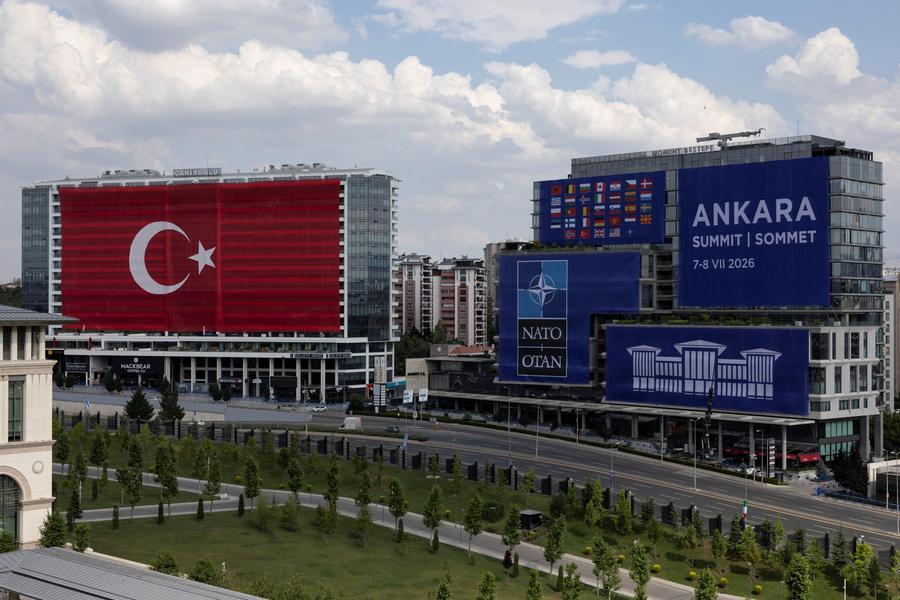
Between very strict security measures and arrests of activists and opposition members, Turkey is preparing to host the 32 heads of state and government of the member countries of the Atlantic Alliance in its capital, Ankara, for the summit on 7 and 8 July. On the eve of the summit some basic points have already been drawn up. First of all, the NATO summit represents a challenge for Europe which must redefine its role and centrality within the Alliance, faced with an America that is increasingly withdrawn and dissatisfied with the Organization, founded in 1949 under the aegis of the United States: Donald Trump is showing himself to be increasingly clearly impatient with the Alliance (and with some allies in particular, such as Italy).
An intolerance that has worsened with the war between the USA and Israel against Iran: the US president has complained several times about the lack of help from the allies in the war against Tehran. A few days ago on Truth he defined it as “ridiculous” for the United States to continue their “one-way” relationship with NATO. On the eve of the summit, Trump has returned to attack the Italian Prime Minister Giorgia Meloni in particularposting on Truth a meme photo of him with the Prime Minister and the comment: “Restraining order needed.”
Regardless of Trumpian utterances, one thing is certain: Europe comes to Ankara with the intention of showing itself strong, ready to take on the responsibility of leading a new North Atlantic Treaty Organization taking the place of the United States, as requested by Washington, which is proceeding with its disengagement. The European member countries aim to demonstrate that they are keeping the commitments made last year, at the NATO summit in June 2025 in The Hague, which set the annual investment of individual states in defense and security expenditure at 5% of GDP by 2035 (except Spain which signed the final declaration but refused to reach the 5% objective).
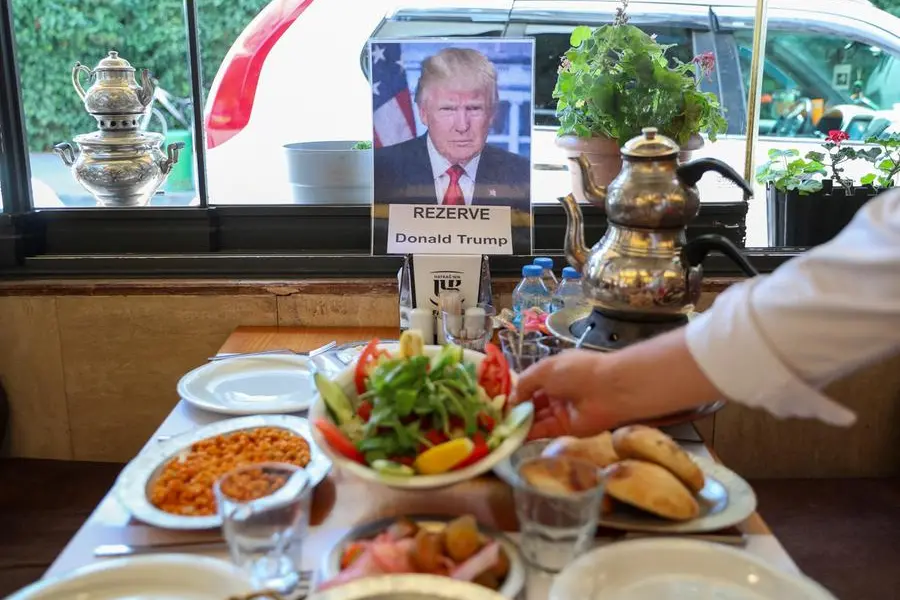
The seat symbolically reserved for Donald Trump in a restaurant in Ankara.
(REUTERS)
In addition to the allies, NATO partner countries will participate in the Ankara summit. Despite the complaints and discontent, Trump will be present and have a bilateral meeting with Ukrainian President Volodymyr Zelensky, invited to the summit, to discuss possible ways out of the war. “The battlefield has clearly frozen over the last two months and neither side is making much progress,” a US official told Reuters. “The president feels a real urgency to try to put a stop to this.”
Russia declares itself available for a political-diplomatic solution. But on the field its heavy pressure on Kyiv continues, massively attacking all of Ukraine and in particular the capital, with raids targeting residential neighborhoods and the civilian population. After the terrible offensive on the night between 1 and 2 July, which caused the death of 31 people and injured over one hundred, last night a new attack with missiles and drones caused the death of 14 civilians, while over 70 people were injured according to the latest toll. Of the drones launched by Moscow – Kyiv reports – the vast majority were neutralized. While none of the ballistic missiles have been intercepted: a confirmation, according to Zelensky, of the need for Kyiv to receive more missiles for the Patriot systems to strengthen its air defense, as he declared in a message on X on Sunday 5th.
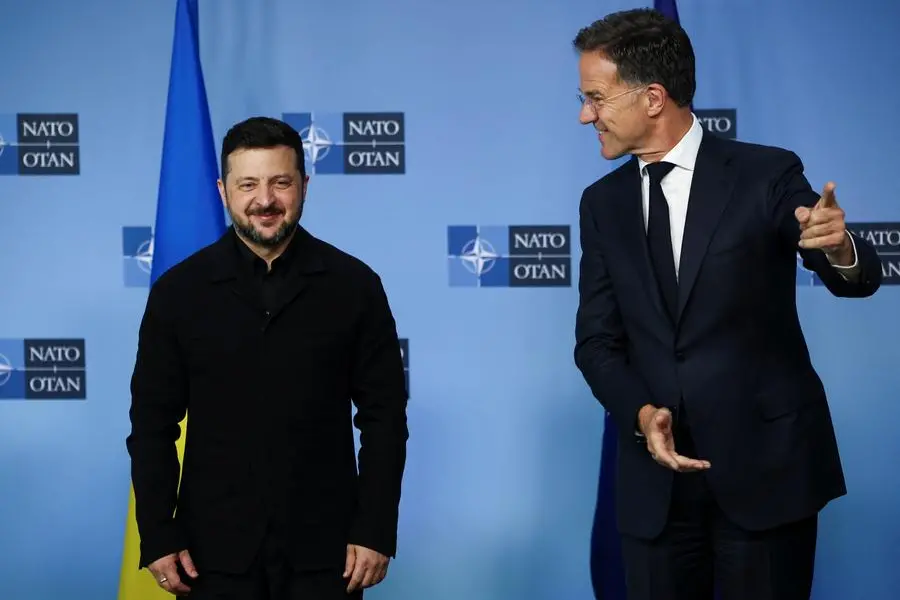
NATO Secretary General Rutte and Ukrainian President Zelensky in Brussels on 18 June.
(REUTERS)
Moscow for its part continues to reiterate that it wants to achieve its objectives, which are irreconcilable with those of Ukraine. But it went even further, fueling military tensions with Poland. “Warsaw would do well to think about its own security,” said Kremlin spokesman Dmitry Peskov, accusing the country of providing military support to Kyiv. A threat that will certainly not fail to be discussed at the NATO summit in the next two days, where one of the key words will certainly be deterrence.
After the topic of allies’ spending on defense and security, the other priority of the summit is the dossier of the war in Ukraine. Which for NATO means increasing the production of the European defense industry, a theme particularly dear to the Secretary General of the Alliance Mark Rutte, convinced that – as he declared a few days ago in an interview with the Financial Times – rearmament is good for employment. It is no coincidence that the actual summit will be preceded by the defense industry forum on Tuesday 7th.
During the summit, a new military aid package for Kyiv of 140 billion euros over two years is expected to be approved. But the focus will also be on the attempt to mend the rift between Trump and his European allies: the US president declared that he agreed to participate in the summit only because he was explicitly asked by Turkish president Erdogan. In addition to the bilateral meeting with the Ukrainian president, in Ankara Trump will also meet Syrian President Ahmed al-Sharaa: the US president has repeatedly hoped for Syria’s possible involvement in the war against Hezbollah in Lebanon, but the leader of Damascus is not willing to let his country enter a new conflict.