Spreading moisturizer on your skin after a sunburn is a good intention, but not all treatments are equal on a damaged skin barrier. Precautions and advice with Dr Isabelle Gallay, dermatologist.
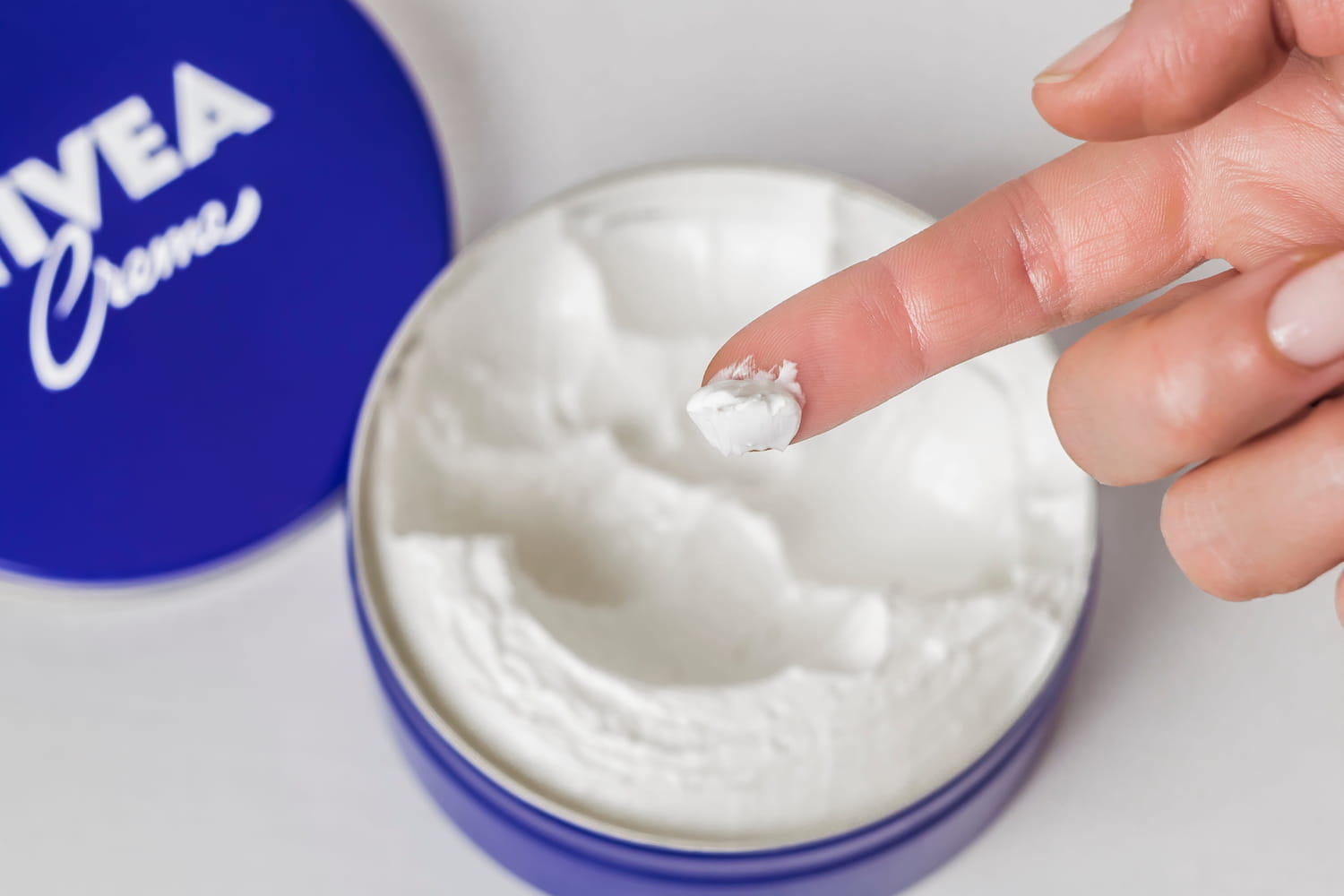
An afternoon at the beach, a few hours of inattention… and here is the red and burned skin. “The sun is an attack on the skin. And the skin is our barrier”immediately reminds us of Dr Isabelle Gallay, dermatologist and member of the National Union of Dermatologists-Venerologists. Once this barrier is reached, it must be repaired intelligently. We may be tempted to turn to the timeless blue Nivea® cream, economical and available in all supermarkets, to heal these burns but this is not a good idea according to the dermatologist.
Nivea® cream, in its classic version, is first and foremost a daily moisturizing treatment. Its mission: to nourish and soften healthy skin, preserve its comfort and fight against dryness. On intact skin, “nothing will happen, because the skin barrier is effective”explains the dermatologist. But this is not the case when the skin is damaged, such as during a sunburn. Here, caution is required.
“When we damage the barrier, we must restore it, but without further aggravating the condition of the skin”explains Dr. Gallay. This means avoiding creams containing substances likely to be irritating. Like Nivea® cream? “Yes, exactly.” replies the dermatologist. “In this cream, there are a lot of molecules, and some can be harmful”she explains, citing in particular “conservatives”, “perfumes” And “limonene”. When the skin is burned, its protective barrier no longer plays its role as a filter. These molecules, which would normally remain on the surface of healthy skin, “will penetrate” in depth, and lead to an increased risk of allergies and irritations. In summary: no Nivea® cream to repair a sunburn.
To soothe a sunburn, the dermatologist recommends “a basic moisturizing cream, preservative- and fragrance-free, which will restore the skin barrier”. The right reflex: “Choose basic formulas with very few molecules and the most basic compositions possible”and distrust if “you see a growing list of ingredients, it’s rather suspicious”. In drugstores, you will find creams from dermatological laboratories in particular. “with ceramides” which will reconstitute this natural protection. And in case of severe, painful burns accompanied by blisters, “you can ask your pharmacist for a local corticosteroid”.
Still, the best creams will never replace prevention. “The best thing is not to get sunburned”insists Dr. Gallay, who “recommends not exposing yourself between 11 a.m. and 4 p.m.. And if we are forced to expose ourselves during the most dangerous hours, “we put on clothes”. One last reflex: “If you already have a sunburn, you should not expose yourself again in the following days”.