





That of Xylella fastidiosa which hit the olive trees in Puglia was one of the most disastrous plant pandemics in recent history, comparable in proportions and virulence to that of Covid-19 which blocked the world causing millions of deaths. In the space of just over a decade, the bacterium – which had never before affected olive trees – has the landscape, the economy and even the identity of a territory have been distorted which for centuries had found its most authentic symbol in the olive groves (even if, to be honest, many countrysides were abandoned even before the pandemic due to the death of those who cultivated them and the emigration that pushes those who inherit those lands to the North and abroad, often reluctantly).
Entire expanses of centuries-old and thousand-year-old trees have been transformed into silent skeletons. Entire countryside has been abandoned and, today, is suffocated by brambles, brushwood and the dead trunks of olive trees which often, especially in summer, burn in fires that are often arson. A pain that did not only concern agriculture.
«Xylella was not only an agricultural but also a social problem», says the mayor of Specchia, Anna Laura Remigion an early summer evening at Masseria Abbracciavento, in Tricase, in lower Salento, «after the death of the olive trees we experienced the abandonment of the land. At first we underestimated the phenomenon, it was difficult to believe that such ancient trees could die. But today a new awareness is born from this tragedy.”
The professor explains the origins of the disaster Donato Bosciaamong the leading experts on the phenomenon, former research director of the Institute for the Sustainable Protection of Plants (Ipsp) of the CNR of Bari and one of the first to identify the cause of the drying out of olive trees. Xylella, he recalls, «is a bacterium already known in other parts of the world and transmitted by insect vectors, such as the so-called spittlebug. A variant hitherto unknown due to its ability to affect olive trees has arrived in Salento.” But, observes Boscia, the severity of the crisis was also amplified by the strong presence of a single crop: «The main cause of the disaster was the almost monoculture that characterized the area. When something comes along that affects that species, the consequences become devastating and the landscape becomes desertified.”
Yet, today a sign of hope arises precisely from that devastation. And it is significant that it is brought by young people who have arrived from outside because, among the post-Xylella evils in Salento, we must also include mistrust, disillusionment, discouragement enclosed in a number which, alone, says a lot: they are approximately 3 million the new trees planted (all varieties resistant to Xylella such as Leccino, FS17, Lecciana and Leccio del Corno), which represent only approximately 14% of the 21 million olive trees compromised or dried up by the bacterium throughout southern Puglia.
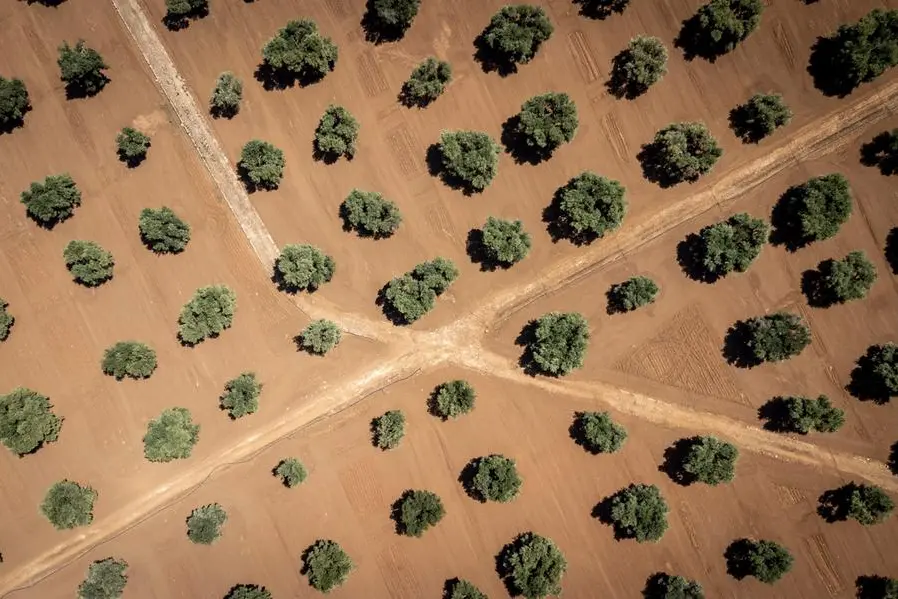
Some olive trees planted in the Salento area
(Gianluca Colonnese)
The lesson of the Dolomites and the promise of VAIA
It was she who picked up this sign of hope GOa benefit company and B Corp founded in the Dolomites after the storm that felled 42 million trees in the mountains of the Northeast in 2018. An experience that taught its founders that even a disaster can become an opportunity for rebirth.
«The Vaia storm was devastating», recalls Federico Stefani, founder and president of the company, «we have not stopped from those millions of trees felled. We recovered them, transformed them into objects and built a local supply chain of artisans who financed reforestation. In six years, there have been over 200,000 trees that, together with our community, we have contributed to planting.”
The meeting with Salento comes in 2021 during an event in Melpignano. Stefani travels through the countryside devastated by Xylella and is struck by that ghostly, almost dystopian scenario: «Walking among those destroyed fields I promised myself that we would do something. Today we are here to prove it.”
From that promise it was born Olive Matteran innovative biobased material obtained from the wood fibers of olive trees affected by Xylella. A project that represents a concrete example of circular economy: what until yesterday was considered waste destined for abandonment or combustion for biomass is recovered, valorised and returned to the community in the form of new material.
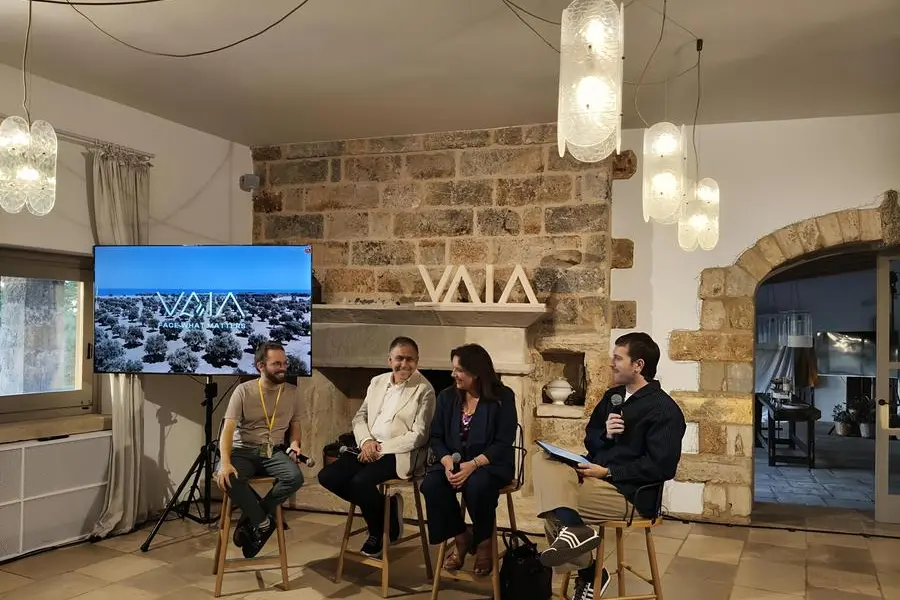
The talk during the project presentation event at Masseria Abbracciavento in Tricase. From left: Federico Stefani, professor Donato Boscia, the mayor of Specchia Anna Laura Remigi
Olive Matter, when an everyday object becomes a gesture of care
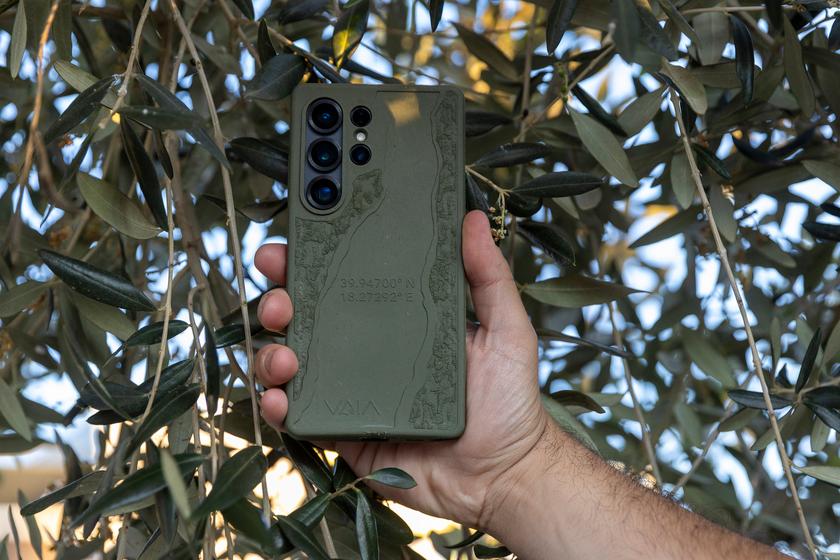
The first concrete application of this material is one smartphone covers produced entirely in Italy. But the true value of the project is not only in the object itself, it is in the history that that object represents. «We started from a cover because the smartphone is the object we use hundreds of times a day», says Stefani, «so we hope that, by touching the cover, smelling it and looking at the texture in which you can still see the small fragments of wood, you remember that we are part of the world and we can all do something to make it better».
A simple and daily choice, capable of creating a direct link between people and a wounded territory. The olive wood, instead of being abandoned or burned, thus comes back to life in a new form and becomes a small tool of regeneration.
The material, developed with the support ofUniversity of Trentoby researchers from CNR of Bari and the University of Salentothanks to an entirely Italian production chain, is made for 77 percent from olive wood and the remaining part from polymers of vegetal origin. Light, resistant and completely recyclable, it preserves the natural grain of the wood and, also through smell, restores the authentic identity of the Apulian olive tree. Available for seven of the most recent smartphone models, the cover contains the story of the Salento landscape in its details. The geographical coordinates of the forest that will be born in are engraved on the back Mirror thanks to the project, almost a sort of “address of rebirth”. Each model also has a different relief, obtained from the texture of the bark of a real Apulian olive tree used in the manufacturing. «So we try to create a sense of belonging to this devastated and now regenerated territory», explains Stefani, «even the colors recall the Apulian landscape, through the olive green, the brown of the earth, the blue of the sea and the beige of the sand».
In fact, each cover purchased contributes to the birth of the first “Forest of rebirth” in Puglia: one square meter of Mediterranean scrub will be regenerated in the Specchia area. It is the heart of the VAIA model: transforming a gesture of consumption into a gesture of careproving that even a small object can become part of a larger story.
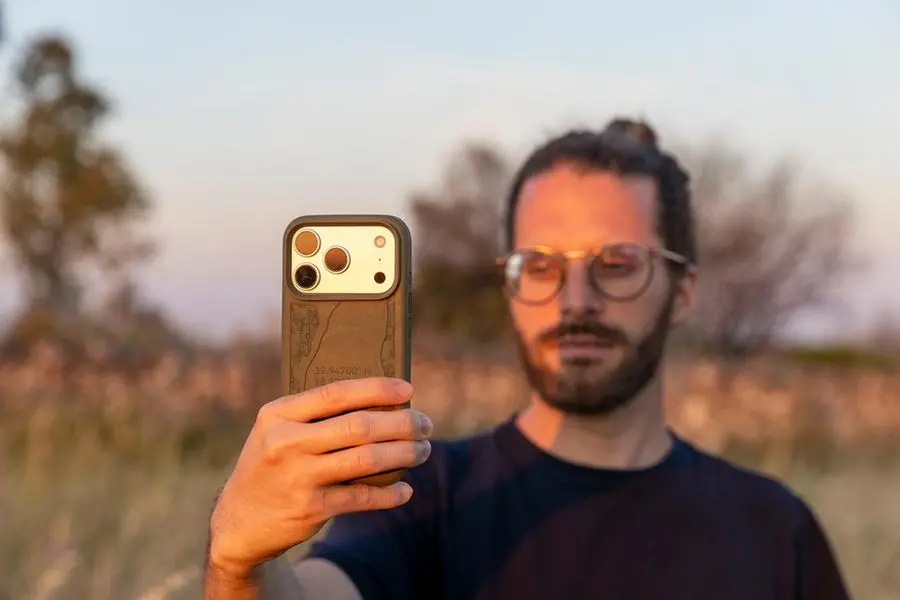
The founder and president of VAIA Federico Stefani
(Gianluca Colonnese)
The “Forest of Rebirth”
Reforestation will follow precise scientific criteria. As Boscia explains, it is not simply a matter of planting trees, but of rebuilding a resilient ecosystem suitable for the climate challenges of the future: «We have agreed with VAIA to concentrate the reforestation quota on public lands, trying to recreate as much as possible the Mediterranean scrub typical of the area», he explains, «various tree and shrub species have been selected, including some varieties of oak and holm oak, capable of adapting to high temperatures and water scarcity».
«VAIA’s regenerative model passes through the recovery and valorisation of the raw material through local supply chains», underlines Stefani during the evening that launched the new product and revealed the project, «we have chosen that each product sold becomes a square meter of Mediterranean scrub». This is where Specchia comes in. The Municipality has made available an area of approximately two hectares destined to become the first “Rebirth Forest” of Salento. A new forest that will arise where Xylella has left its mark.
«When Federico told me about this idea I listened to him with great attention», says the mayor Remigi, «the municipality of Specchia owns around 200 hectares of land in the Cardigliano area, some already reforested and others wooded. There was already a sensitivity towards these issues and we decided to believe in it.” VAIA will manage the planted shrubs for at least the first three years of life, accompanying the plants until they are “weaned” and also providing for the works necessary to bring the water from the underground wells to the surface, where it will be used for irrigation.
The project thus takes on a meaning that goes beyond the environmental dimension. It talks about a community that tries to get back on its feet, of a territory that doesn’t give up and of young people who choose to invest in the South that is increasingly affected by depopulation and emigration.
«This must not just be an occasion», underlines Stefani, «it must become a model».
A model that unites scientific research, business, institutions and citizens. A model in which the wood of dead trees returns to generate life. And in which a smartphone cover can become the concrete symbol of a collective rebirth.
Because VAIA’s challenge in Salento is not just to recover what has been lost. It’s imagining a different future. More diverse, more sustainable and more capable of stewarding creation. Sorry if it’s not much.