





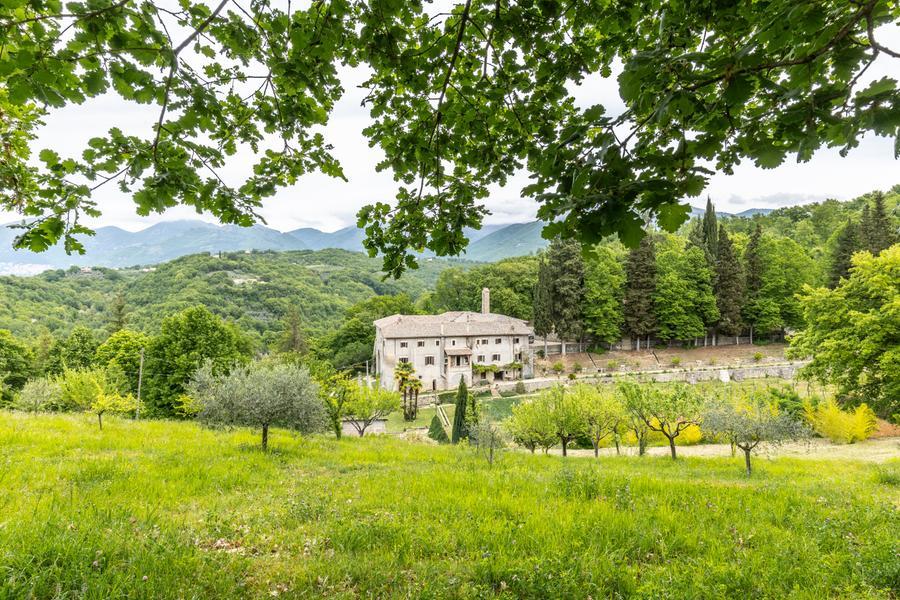
There are roads that are not measured in kilometers, but in changes of light and perspective. The last leg of this journey, which winds between the borders of Sabina until it flows into the heart of Rome, is pure transition: the mineral and intact silence of the Santa Reatina Valley gradually dissolves into the warm tones of the Roman countryside.
It is here, among the silver olive groves, the ancient consular roads and the river banks of the Aniene and the Tiber, that the pilgrim’s steps stop seeking the wild horizon and begin to measure the interior space, preparing for the encounter with the center of Christianity.
My journey crosses the Alta Valnerina along the course of the Nera river.
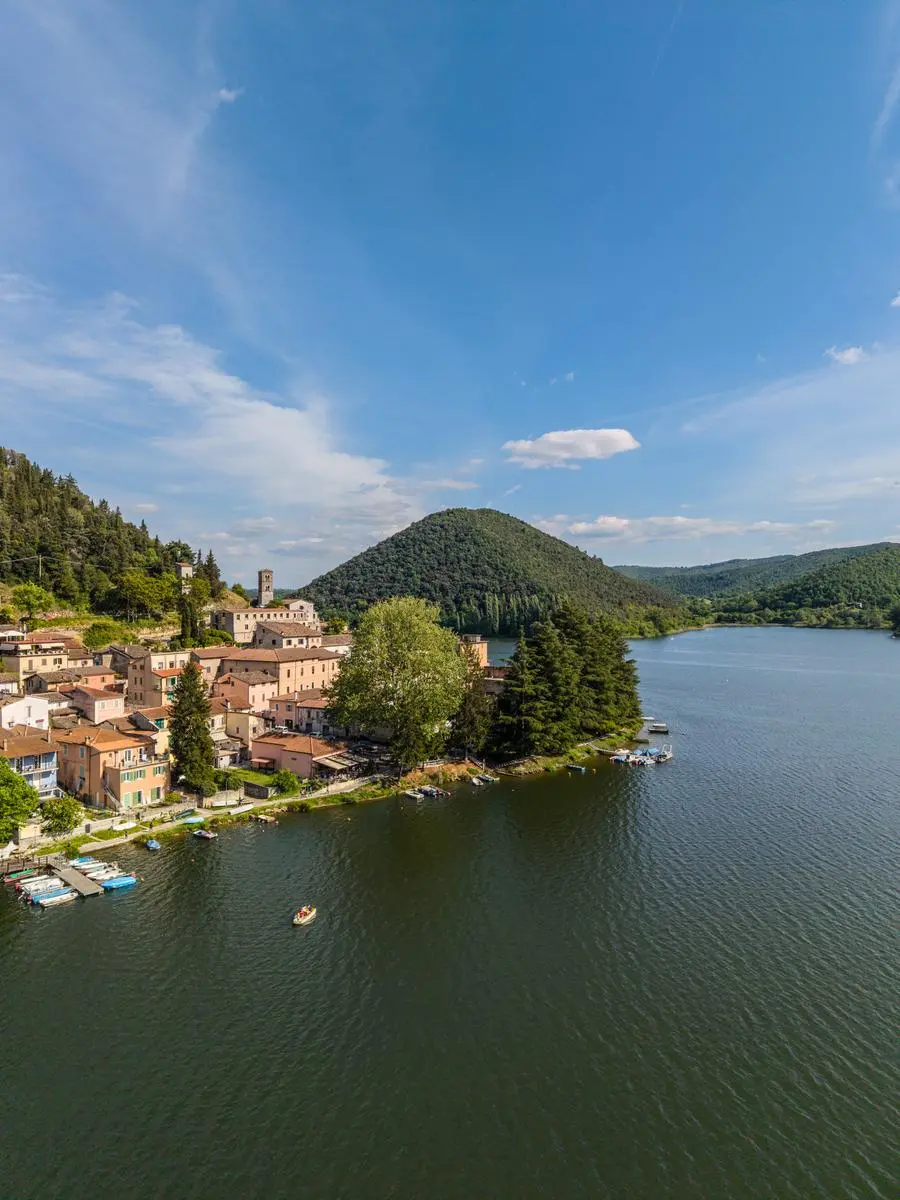
Leaving the Abbey of San Pietro in Valle (www.sanpietroinvalle.com), I follow a wildlife path equipped with shelters for minor fauna, a starting point for a reflection on the radical biocentrism of the saint. In Ferentillo, the hiking guide Sebastiano Torlini, 40 years old, new mayor, points out to me the imposing medieval fortifications that dominate the rock: «The forty fortresses in the area were born as a stone shield to protect the abbey and its contemplative isolation, before being converted into bell towers». After a visit to the Mummies Museum (www.mummiediferentillo.it), the path touches the medieval village of Arrone and suddenly opens up in front of the liquid vertigo of the Marmore waterfall (www.cascatadellemarmore.info). Along the Velino, the passes then arrive at the placid shores of Lake Piediluco.
Towards the scenic village of Labro, crossing the border of Lazio (www.visitlazio.com), I stop in the wooded estate of Sauro Pellerucci, 58 years old. I am won over by his counter-current optimism: digital transformation entrepreneur, theorizes the need to invest in people and human capabilities that cannot be replicated by machines. This is where his altruistic ideas were born, such as the project “I am a good person” (www.iosonounapersonaperbene.it) which challenges the preventative distrust and catastrophic narrative of the media. Sauro explains: «The best news – which never makes headlines – is that no war broke out today. With the PalaSì Cultura&Eventi Association (www.palasi.it) we want to propose an economy of trust. Telling someone “I know you are a good person” is an ethical investment».
In the heart of the Santa Reatina Valley, the first light in Rivodutri welcomes me at the Valchiusa spring of Santa Susanna, from which – following the yellow and blue trail signs – the ascent begins towards the monumental Beech tree of San Francesco under which – it is said – the Poor Man of Assisi found shelter from a violent storm. Descending, the profile of Terminillo shows its glacial cirques still streaked with snow, while the Cima delle Armi dominates Poggio Bustone. Arrival at the sanctuary of San Giacomo (www.santuarivallesanta.com), nestled between limestone crags. Brother Renzo Cocchi, 56 years old, welcomes me into the kitchen together with his cats, Luna and Ruffo, in an atmosphere of Franciscan harmony. His words offer a lesson on Providence: «It’s a serious thing. It must be invoked and not attempted.” I visit the speco primigenio, the original rocky ravine, before admiring the view of the Piana Reatina at sunset. The following morning he leaves from Elio Santori’s Bar Francescano, open since 1958. Elio, 58 years old, remembers when, in 1968, the young Cardinal Karol Wojtyla stopped in the place and picked him up as a child. The Via di Francesco (www.viadifrancescolazio.it) starts again for Cantalice. At the sanctuary of San Felice all’Acqua I intercept Emanuele, 67 years old, Nadia, 69 years old, and Francesca, 62 years old: «We started from La Verna, we aim to see the dome of St. Peter’s, Italy on foot has a different charm… it tastes like Francis». The journey continues towards the Forest sanctuary. After crossing Rieti, the path heads to Fonte Colombo, the “Franciscan Sinai”. I explore the cloister and go down to the Sacro Speco, a narrow karst fissure.
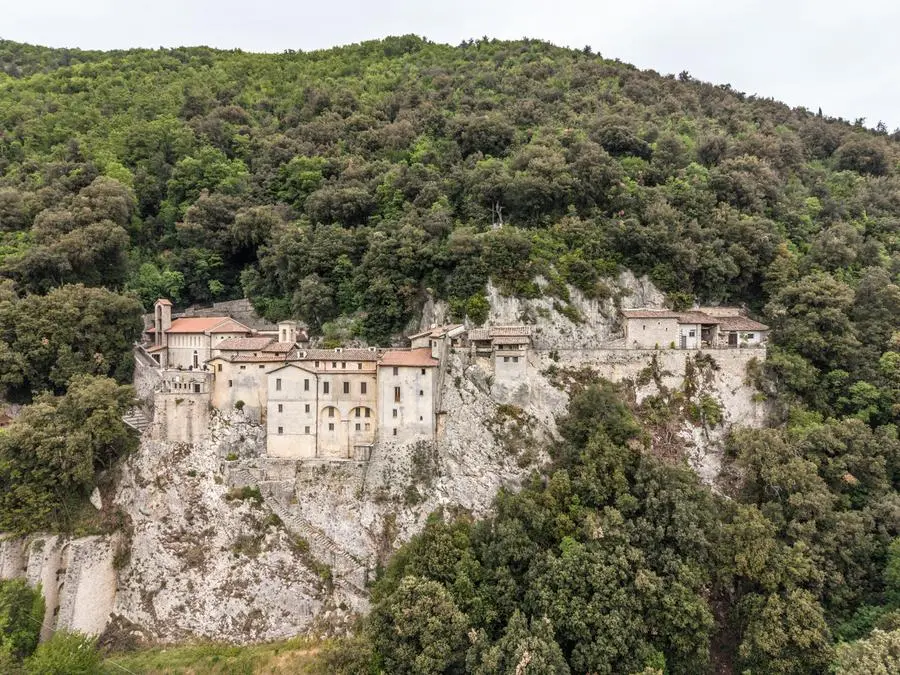
In Greccio (www.oasidigreccio.it) I visit the Sacred Grotto of the nativity scene and I hear the testimony of Brother Giovanni Loche (55 years old): «Greccio is the manifesto of the humility of God who becomes small». From here, the Sabina manifests itself with hills dotted with silver olive trees. The path intercepts the monumental cemetery of Monteleone Sabino and the archaeological area of Trebula Mutuesca (www.museomonteleonesabino.it), with the Roman amphitheater and the Romanesque church of Santa Vittoria. You descend past the ruins of a water mill, then go up towards Poggio Moiano and the small rural church of San Martino, from the tenth century, concluding the stage in front of the Orsini Castle (www.comune.montenerosabino.ri.it/vivere_il_comune/luoghi/luogo_3.html) in Ponticelli.
In Monterotondo, from the Fontana dei Leoni, the path prepares for the final descent towards the Roman countryside. The passes sink into the Marcigliana Nature Reserve (www.romanatura.roma.it), an intact stretch of the Roman countryside which houses the protohistoric site of Crustumerium (www.cultura.gov.it/luogo/parco-archeologico-di-crustumerium). The rural silence is gradually interrupted upon entering Monte Sacro. A staircase leads to Piazza Sempione, where the church of the Santi Angeli Custodi welcomes pilgrims at the gates of Rome.
The last mile follows the Via Nomentana, deviates along the Aniene cycle-pedestrian path and runs alongside Monte Antenne. After passing the Auditorium and Viale Tiziano, you cross the ancient Milvio Bridge, continuing on the Tiber quay up to Ponte Sant’Angelo. Once up the staircase, the perspective axis of Via della Conciliazione appears, at the end of which the imposing St. Peter’s Basilica stands out (www.basilica
sanpietro.va). The Testimonium is withdrawn to Bernini’s colonnade. The stone of the sanctuaries up here seems different, smoothed by the din of the world, but if you close your eyes and listen to your breathing, you understand that the silence you find inside the Sabina rock carries it with you up here. This is the real room that Francesco teaches us to live in.