



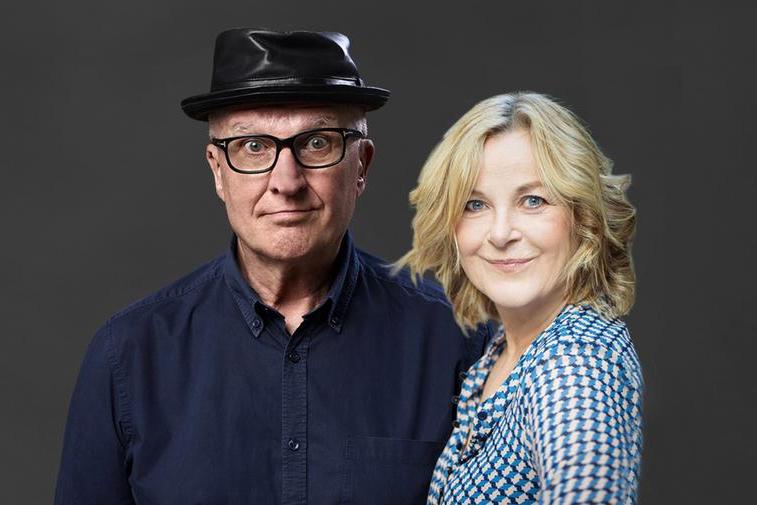
The “third half” is a metaphor borrowed from rugby to define the more commonly known “old age”. In rugby, the third half is a convivial moment, in which the two opposing teams come together to celebrate and socialize after the end of the match, putting aside the rivalries and clashes of the game. An image that suggests an opportunity to reconnect with others and laugh together at our own fragilities. And it is precisely this spirit of sharing, seasoned with a good dose of irony and tenderness, that guides Third Periodthe show based on the novel by Lidia Ravera which made its national premiere at the Teatro Franco Parenti on 20 May and will be on stage until 7 June. On the stage of the Sala Grande we find two champions of Italian comedy, Paolo Hendel and Lucia Vasini, who abandon pure comedy to compete with a new and profound register. We asked Paolo Hendel (who plays Domenico in the show) a few questions to ask us about this new, very human theatrical adventure.
“Third Time”: what is it and how is it told?
«It is a comedy written by Lidia Ravera and Emanuela Giordano, who also directed it, freely inspired by the novel “Il Terzo Tempo”. Assistant director, precious, Claudia Grassi. It is the third part of the life of Costanza, played by Lucia Vasini, who decides to share her life with a nice group of people held together by a strong harmony. Finding myself on stage next to Lucia Vasini is a great pleasure every time. I often risk starting to laugh on stage at his beautiful inventions and improvisations. The game is completed by two young and good actors: Viola Lucio in the role of Dolores, Costanza’s friend, and Marco Mavaracchio in the role of Matteo, son of Costanza and Dom, who is my character.”
What “urgency” pushed you to bring it on stage today?
«The pleasure of staging a great game that entertains, amuses us, makes us laugh and makes us think. It doesn’t seem like a small thing to me, in this ugly world “devastated by a handful of tyrants”, as Pope Leo said. Everyone is free to report these strong words to those responsible. Certainly to those who continue to fuel war after war in every part of the world.”
Is laughing at old age (and the fear of the future) a way to exorcise it or accept it?
«In this comedy we laugh at ourselves, at our fears, at our weaknesses. Of the need we have to face old age by crouching in the present, as the protagonist says, keeping close to each other and rediscovering the desire to share the time that remains and to laugh together at the too many bad things in life to exorcise them.”
Which spectators would you ideally like in the audience and what do you hope they take home?
«In my experience, the more spectators there are in the theater, the better. We males laugh less, perhaps also because it is precisely us males, our weaknesses and our defects, that we laugh more easily, in the theater and beyond…”.