




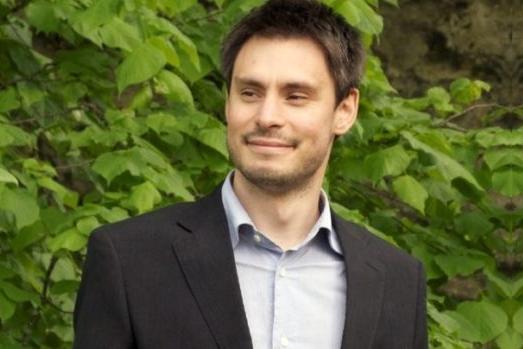
There are the names and numbers of military identification documents: Magdi Ibrahim Abdelal Sharif, Athar Kamel Mohamed Ibrahim, Uhsam Helmi and Tareq Sabyr. They are the kidnappers and murderers of Giulio Regeni, the 28-year-old Italian researcher who disappeared in Cairo on 25 January 2016. Found nine days later, tortured and killed. Free and unpunished, Giulio Regeni’s tormentors were nailed to their responsibilities by the indictment of the Rome Prosecutor’s Office in the trial taking place in the capital.
A life sentence and three sentences of 17 and a half years of imprisonment are the punishment requests formulated by the chief prosecutor, Francesco Lo Voi and by the deputy Sergio Colaiocco. According to the magistrates, those responsible for Regeni’s death are “state men, belonging to the security apparatus”. These are “public officials of the highest rank – a general, two colonels and a major – therefore subjects fully aware of their institutional duties, first of all that of guaranteeing legality and not bending it to illicit purposes”. Life imprisonment was requested for Magdi Ibrahim Abdelal Sharif, considered the material perpetrator of the killing.
“What is being judged here is not the simple suppression of a human life, but the methodical, cold, organized exercise of violence on a defenseless man. What is being judged here is the kidnapping of a person removed from all guarantees”, said the deputy prosecutor Colaiocco. “What is being judged here is prolonged torture as an instrument of domination. And that man had a name, a face, a story: Giulio Regeni, an Italian citizen, a young researcher. A free man”, he explained.
During the long indictment, the autopsy on Giulio’s body was shown in the Rebibbia bunker room. According to the representative of the public prosecution, a long sequence of torture emerges. Colaiocco recalled how the Egyptian medical examiners had only identified a fracture in his right arm. The investigations carried out in Italy, however, would have documented twenty of them: five involving the teeth and fifteen involving the bone structures. A fact which, for the prosecution, highlights the seriousness of the torture suffered. The Prosecutor’s Office also claims that the injuries were caused on several occasions, as Giulio Regeni was interrogated, beaten and subjected to torture for a week, between 25 January and 1 February 2016.
Colaiocco underlined that Giulio Regeni “endured everything clearly. Without sedation. Without narcotics. Without any relief”. An endless agony resulting from a method of annihilation implemented by the tormentors of the Egyptian regime. “A body broken by pain. And it is all of this that the Egyptian regime did not want to investigate. It is for all of this that the Egyptian regime chose to protect the torturers. It did not call its officers to account for the atrocities committed. It chose, consciously, to cover them up”, added the magistrate.
For the prosecutor, “Regeni was deprived not only of freedom and life. He was deprived of his very condition as a human being with rights. He was placed in a space in which law, control, defense and limits no longer existed. A space in which power had taken the form of pure arbitrariness”.
The lawyer Alessandra Ballerini, lawyer for Giulio Regeni’s parents, defined that of the Prosecutor’s Office as an “exceptional reconstruction”. Today he will express his point of view in the chamber.