





Europe has decided to move on. Or perhaps, more brutally, to close a door. With 418 votes in favour, 218 against and 30 abstentions, the European Parliament approved the new regulation on returns, one of the toughest reforms of EU migration policy since the years of the Return Directive of 2008.
The political message is clear: those who do not have the right to remain in the Union must be repatriated more quickly. Less national discretion, less downtime, less possibility of moving from one country to another to escape a deportation decision. The European Repatriation Order is born, intended to make the decisions adopted by a Member State recognizable and enforceable throughout the EU.
It is the old technocratic project of Brussels applied to the most burning issue of our time: making uniform what until now was fragmented. Except that here we are not talking about the single market, banking rules or competition. We talk about men, women, children, families, people pushed to the margins of history in search of a better future.
The regulation introduces new cooperation obligations for third-country nationals who are recipients of a return decision. Those who do not cooperate may suffer consequences: reduction of benefits, restrictive measures, stricter controls. Administrative detention may last up to 24 months, with a possible extension of another six. Two and a half years. A threshold that brings administrative detention closer to a sentence, without calling it a penalty.
Even more controversial is the possibility of creating “repatriation hubs” in third countries, outside the territory of the Union. It is the model that looks at the Italy-Albania agreement and transforms it into a European option (and in fact our prime minister, from the G7, claims victory). Supporters present it as realism. Critics call it “externalization of responsibility”: moving the human cost of the border away from European eyes.
The European right is singing victory. The EPP voted together with the conservatives of Ecr (which also includes Fratelli d’Italia), the “patriots” of Orban and Marine Le Pen and the sovereignists of Afd. A convergence that tells a lot about the new political center of gravity of the Union. Immigration is no longer just a chapter of social or humanitarian policy. It has become the terrain on which Europe’s identity is redefined: security, sovereignty, borders, control.
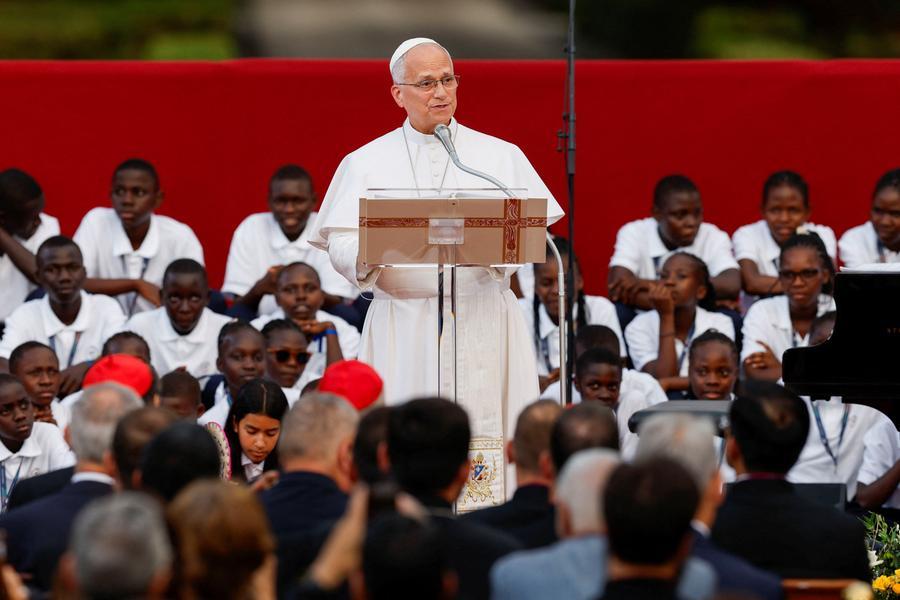
But right here comes the most inconvenient item, the one that does not enter into the electoral calculations. Pope Leo XIV rejected the logic of “remigration”, understood as the expulsion of foreigners because they are foreigners. “Simply saying: we’re sending this migrant away, it’s as if we were washing our hands of the problem, doesn’t seem like a Christian response to me,” he said as he left Castel Gandolfo.
It is a striking phrase because it goes to the heart of the matter. It does not deny the right of states to govern borders. It does not propose the naivety of welcoming without rules. But he refuses the moral shortcut: transforming repatriation into a political wash, into a liberating gesture, into the expulsion of the problem rather than its cause.
Leo XIV reminds us that behind migrations there are wars, violence, persecution, hunger, corruption, environmental collapse. “Many times we don’t recognize the reasons why these people had to leave their countries,” he observed. This is the point that Europe risks forgetting: migrants are not born irregular. It becomes so within a chain of geopolitical, economic and moral failures.
Comece, the Commission of the Bishops’ Conferences of the European Union, has expressed “deep concern” about the new regulatory framework. The president, Monsignor Mariano Crociata, lists the critical points: expansion of detention, limitations on effective appeals, increasing transfer of responsibility to third countries. All elements which, according to the European bishops, raise ethical and humanitarian questions.
Migration, Comece warns, is not a matter of procedures, statistics or border management. It concerns human beings, each bearer of an inviolable dignity. This is why Europe must hold together what politics today tends to separate: security and solidarity. They are not polar opposites. They are the two legs without which the Union is limping.
The new regulation contains formal guarantees: respect for fundamental rights, prohibition of refoulement towards countries where there is a risk of torture or persecution, attention to minors and the vulnerable. But the question is whether these guarantees will stand the test of reality. Who will really control the hubs in third countries? Who will guarantee that the appeals do not become a simulacrum? Who will prevent long detention from producing desperation instead of order?
There is an ancient paradox in European history. The continent that has built the most refined legal edifice of human rights is also the one that today tries to manage fear with increasingly harsh tools. It is understandable: public opinions demand control, states demand effectiveness, democracies fear the advance of populism. But politics, when it chases fear, rarely defuses it. More often it legitimizes it.
The vote in Strasbourg therefore does not close the game. He opens it. Because the real question is not just how many migrants Europe will be able to repatriate. It’s what idea of itself Europe wants to save as it repatriates.
If the Union reduces migration to a problem of public order, it betrays a part of its history. If, however, it knows how to combine legality, regular channels, asylum, international cooperation and respect for human dignity, then it can still demonstrate that security and humanity are not enemies.
Leo XIV and the European bishops do not ask for a Europe without borders. They ask for a Europe without cynicism which has hospitality as its horizon. And it’s a crucial difference.