





Of Domenico Bruno
priest, teacher and podcaster
One of the most extraordinary manifestations of divine love lies in the act, at times almost crazy, with which God chose to create man in his image and likeness. This gesture is not limited to a simple physical or intellectual resemblance, but is profoundly expressed in the ability to love, think, direct one’s life and, above all, choose. Choice, in fact, is the prerogative of those who are truly free: it is not just about possessing abilities, but about exercising freedom. God the Father, creating man in his image, made him free to listen to him or ignore him, to grow and walk towards his Creator or even to oppose him.
In this lies the greatness and responsibility of the human condition. Among all the faculties granted to man, love stands out as the one that most characterizes him. Love cannot be reduced to a simple feeling: it is the force that pushes human beings to open up, to involve the other in a dynamic of vitality and growth. One of the greatest expressions of love is communication. God himself communicates himself to man, sharing with him what belongs to him. Communicating means making people participate, while its opposite is holding back, excluding. The first is an act of generous inclusion, the second expresses selfishness and closure.
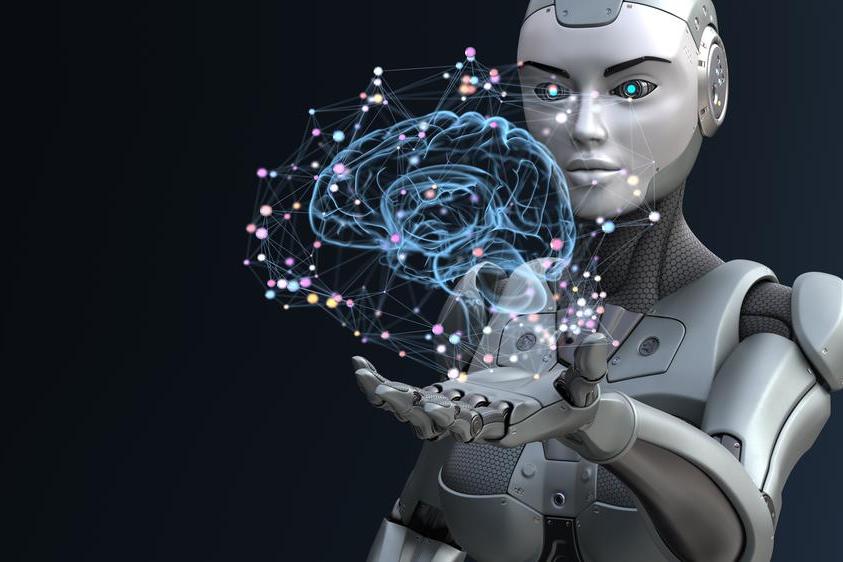
This premise becomes essential for reflecting on the topic of artificial intelligence which represents a form of non-human communication. Although AI is the fruit of human ingenuity and its algorithms, it remains a mere flow of data. Authentic communication, however, is a divine and human act based on empathy, judgment and moral responsibility. Unlike machines, man has a unique soul, capable of communicating on levels that the artificial cannot replicate. The AI processes patternsi.e. linguistic patterns (fixed formulas) and can simulate empathy, but lacks a real inner conscience.
For this reason, as he points out Paolo Benantimember of the United Nations Committee on Artificial Intelligence, such systems are “constitutively fallible” and require ethics, which does not belong to the machine but to the man who uses it. The machine calculates, man evaluates. Artificial intelligence was born to support and help human beings, not to replace them. Understanding their function helps to define criteria and limits for their use. It is important to remember that AI derives from humans, but does not “live” humans. Christian communication is the incarnation of the Word. In this act an exchange takes place: God experiences humanity and man experiences God, through the Spirit. This unique relationship allows man to suffer, love and forgive, because God shares these experiences with him. AI, on the contrary, remains neutral: it cannot feel mourning or pain, it only knows what man has described to it at the time of programming or at the moment in which he interacts with it.
Entrusting machines with what humans deserve weakens personal responsibility, both in families, at work and online. AI can amplify and distort our evaluations and thought patterns without feeling either empathy or remorse. As Benanti reiterates, AI must be a tool at the service of man, promoting human dignity, not dominating it.
Pope Leo XIV warns that anthropomorphizing machines is dangerousparticularly for the most vulnerable, the more deifying these tools undermines the social fabric. AI may promise a perfect world, but Christianity teaches us to value human vulnerability, which enables us to seek God and recognize that we need others. Saint Paul reminds us: “When I am weak, then I am strong” (2 Cor 12:10). Weakness should not be exorcised, but welcomed as a gift and opportunity for growth. However, to experience this dimension, man must take a fundamental step: convert to divine grace and not fall into the error of building a Tower of Babel, deluding himself into thinking he can replace God. Dreaming of a more humane and just society is only possible by accepting the Pope’s invitation to «raise your voice in defense of human beings». As long as communication and AI are used as tools and not as humanized machines, humanity can continue to hope for its own evolution. It is up to the Christian heart to awaken consciences and testify that communication is sacred, a bridge to the Infinite, and as such must be guarded with conscience and freedom.