The final sentence of 14 years and 9 months for the jeweler Mario Roggero, who turned himself in in Fossano prison after the Supreme Court ruling, has reignited the debate on self-defense. A part of the centre-right, with Matteo Salvini and the president of Piedmont Alberto Cirio (but Emanuele Filiberto di Savoia was also involved in this matter) promotes initiatives and a request for pardon which have brought the case back to the center of public discussion. The President of the Republic Sergio Mattarella received the Minister of Justice Carlo Nordio at the Quirinale to point out the limits of the minister’s powers in terms of granting pardons, a power which the Constitution reserves exclusively to the President of the Republic as confirmed by the Court Constitutional with sentence 200 of 2006. «The Court of Cassation confirmed the sentences of the judges of first and second degree of judgment, as it did not consider the exemption to exist (the cause of justification ed) of self-defense”, comments the criminal lawyer Fabrizio Gnocchiof the forum of Pavia. «The first paragraph of the art. 52 penal code in fact states: Anyone who has committed the act because he was forced to do so by the need to defend his own or another’s right against the current danger of an unjust offense is not punishable, provided that the defense is proportionate to the offense.».
What is the principle that the Supreme Court ruling affirms most forcefully? Why according to the judges can’t we talk about self-defense?
«This sentence does not create a precedent as the jurisprudence of the Supreme Court has already established the principle that the defensive reaction is dictated by necessity, and that in any case the reaction itself is proportionate to the offence.
The judges of merit excluded self-defense, believing that, by the time Roggero shot, the attack had ceased and the robbers were on the run.
From the point of view of criminal law, is this the distinction, i.e. the cessation of the danger, which can lead to the fact being classified as voluntary homicide?
«The concept already established by the Court of Cassation is that if the person who committed the offense is on the run and moreover in a public place and not armed, it is not possible to chase him down the street and shoot him. Because there is no “need” for defense and it is not proportionate to the offense. The Legislator with law n. 36/2019 clarified and in a certain sense expanded the possibility of legitimate defense. This possibility occurs in all cases in which the unjust offense and the safety of oneself, others or one’s property occurs in the home and/or domicile of the person unjustly attacked. However, the offense must be carried out by those who want to commit crimes with the use of violence, the threat of weapons or other means of physical coercion.”
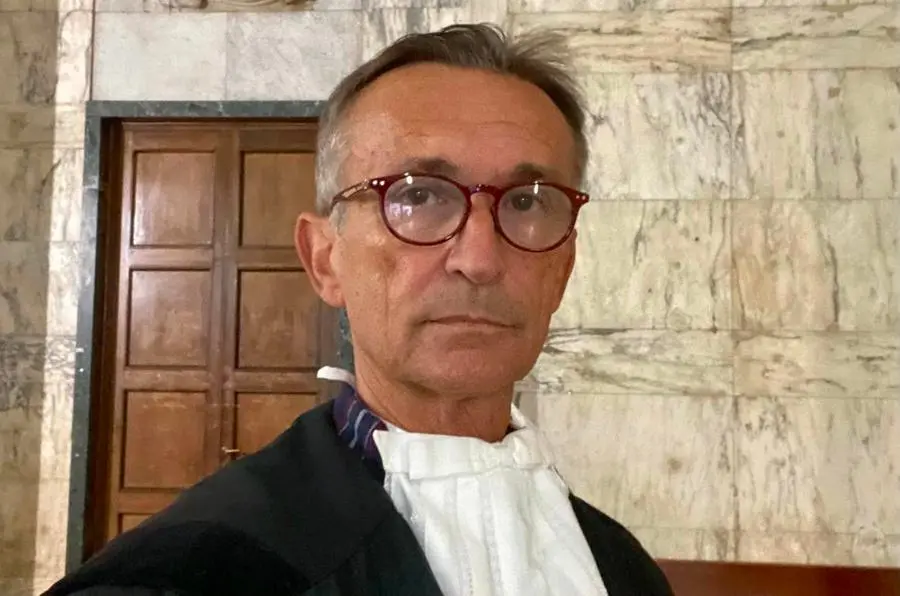
The lawyer Fabrizio Gnocchi.
Many citizens identify with a trader who had suffered several robberies and feel sympathy for his gesture. Must the law also take this experience into account or, once the danger has ceased, does the principle of the protection of human life exclusively prevail, even of those who have committed a crime?
«The right and protection of life is a value enshrined in our Constitution, therefore no ordinary law can derogate from this principle. From what can be seen from the videos and newspaper articles, the robbers were on the run and already on the public highway. Chasing them and shooting them cannot be considered self-defense, also because one of the subjects appeared to already be on the ground. Therefore there was a disproportion between the crime committed and the gunshots fired by the jeweler which resulted in death. Unfortunately, issues related to trials and justice have taken over on social media and the media and are often treated by people who are not familiar with the rules of the penal code and criminal procedure. This fuels the so-called “gut reactions” and not of reason. The law is clear: one cannot defend oneself by offending the good of the life of others except in the cases well established by the art. 52 of the penal code. Even any excess of self-defense is punished, except in very rare cases provided for by the code.”
What lesson should this sentence leave for citizens?
«The first teaching is that life is sacred and that it cannot be killed. Furthermore, having a weapon at your disposal can be counterproductive, especially in moments when impulse and instinct prevail over reason. Reacting to an unjust offense unless – unless it is absolutely necessary – or shooting a person when the offense is not proportionate, is a crime punishable by law as murder. The possession of firearms should be better regulated and people who have regularly reported weapons available should follow refresher courses on the right to use the weapon for defensive purposes”.