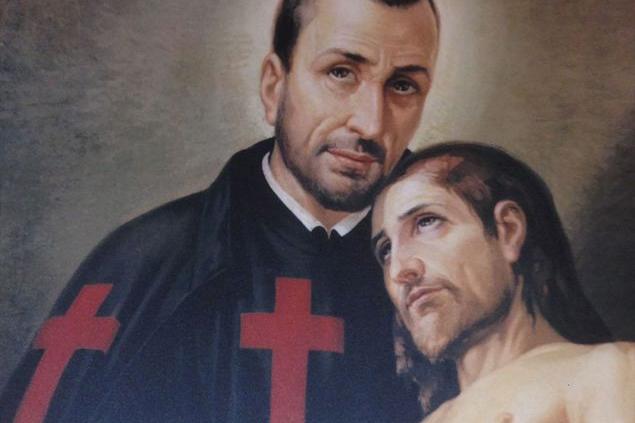
From a stray and dissolute life to holiness. From sin to grace. From selfishness to charity. Camillus de Lellis, the saint who is celebrated today, is an example of what God can do when we allow him to break into our lives: no matter the starting point, often soaked in mud.
Born in Bucchianico, near Chieti, on 25 May 1550from an officer of a noble family in the service of Emperor Charles V and from a mother already advanced in age (she was sixty when she gave birth to him), Camillo was a lively and restless child. He learned to read and write, which was no small feat for the time, but at thirteen, after the death of his mother, he began to experience the turmoil of a life without real direction.
In 1568 he enlisted, following in the footsteps of his career military father, in the army of the Republic of Venice engaged against the Turks. Having also lost his father early, he frequented military environments where he learned the language and habits of soldiers, including a passion for playing cards and dice. Due to a varicose ulcer on his foot he was forced to seek free treatment at the Roman hospital of San Giacomo degli Incurabili, where he also worked as a nurse. But after just a month he was removed precisely because of his gambling habit. Almost two meters tall and endowed with great physical strength, Camillo was also known for his good heart. After a partial recovery he returned to military life as a mercenary in the service of Spain: he fought first in Dalmatia and then in Tunis. Discharged in 1574, he lost everything gambling and was forced to beg, until he found work as a laborer in the construction of the Capuchin convent of Manfredonia.
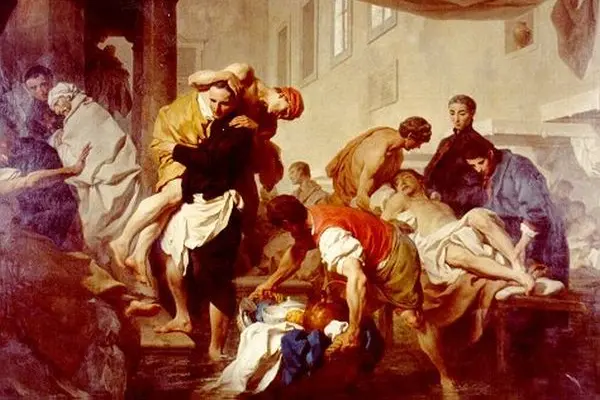
Pierre Hubert Subleyras, Saint Camillus de Lellis saves the sick of the San Spirito Hospital during the Tiber flood of 1598
The turning point: from the lost man to the service of the sick
The decisive turning point came on February 2, 1575. Camillo chose to embrace the Capuchin life: he, born into a noble family, would accept the most humble roles in the community. He managed to wear the habit, but after a few months the ulcer in his foot reopened and he was forced to return to the San Giacomo degli Incurabili hospital. Right there, alongside the sick and suffering, his true vocation matured. Rejected a second time by the Capuchins due to his infirmity, he decided to dedicate his life to caring for the sick under the guidance of Saint Philip Neri, the apostle of Rome. In those years he realized a serious need: many hospital nurses were people without training and without particular attention to those who were suffering. Camillus thus began to think of a community of men completely dedicated to the care of the sick.
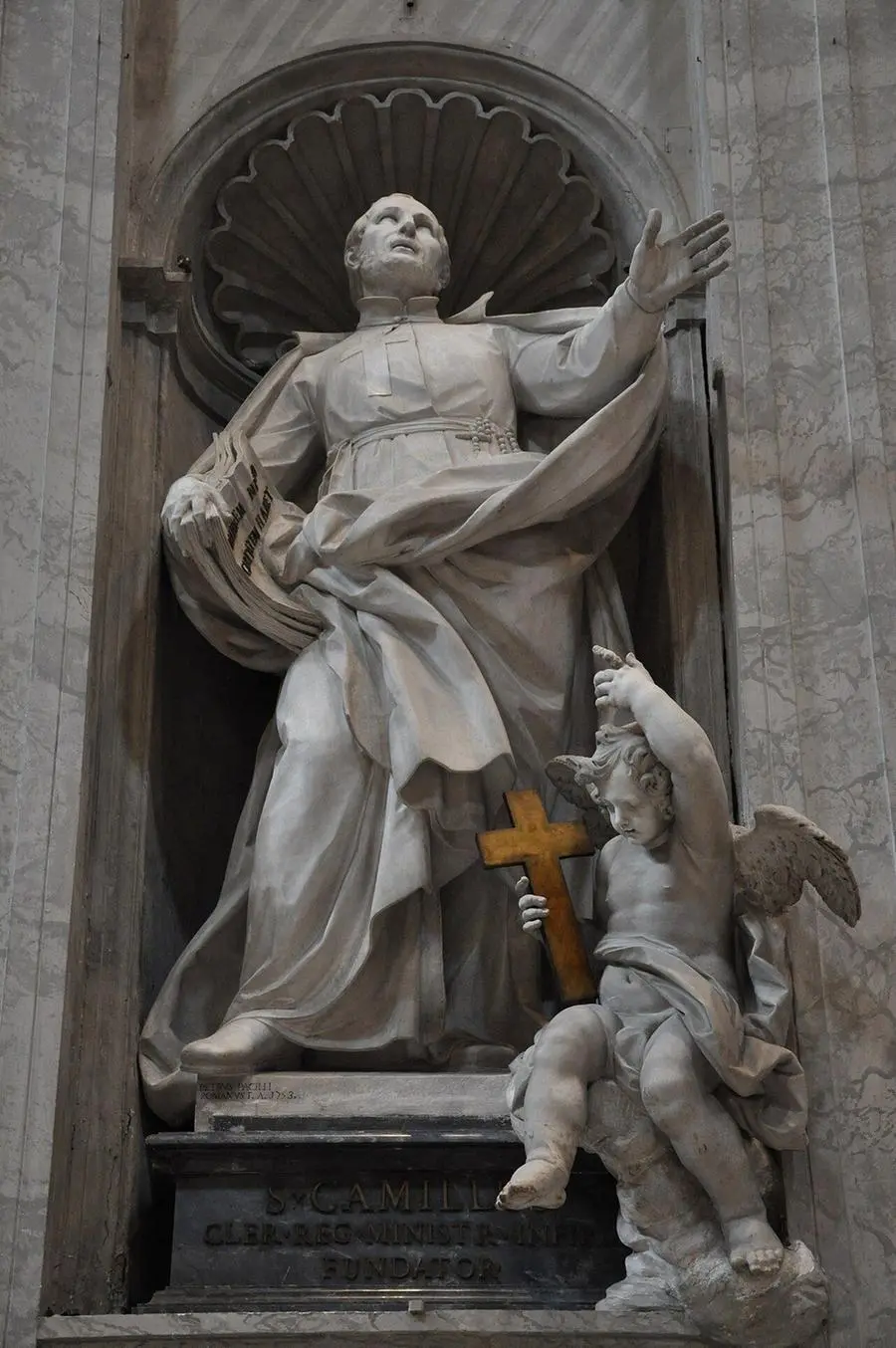
Statue of San Camillo de’ Lellis in St. Peter’s Basilica
The birth of the Camillians and the legacy of a saint
The first attempt to create a stable group encountered difficulties and misunderstandings. Camillus then understood that a truly independent religious family was needed. To realize his project, at the age of thirty-two he returned to school and attended the courses of San Roberto Bellarmino and Francesco Suárez at the Roman College, continuing in the meantime to visit and assist the sick. In 1584 he celebrated his first Mass and shortly after founded theOrder of regular clerics ministers of the sick, still known today by the name of Camillians: a community born to serve those who suffer and recognize the face of Christ in the sick. Camillo de Lellis died on 14 July 1614. His life remains the testimony of a radical transformation: a man marked by fragility who became a giant of charity.