






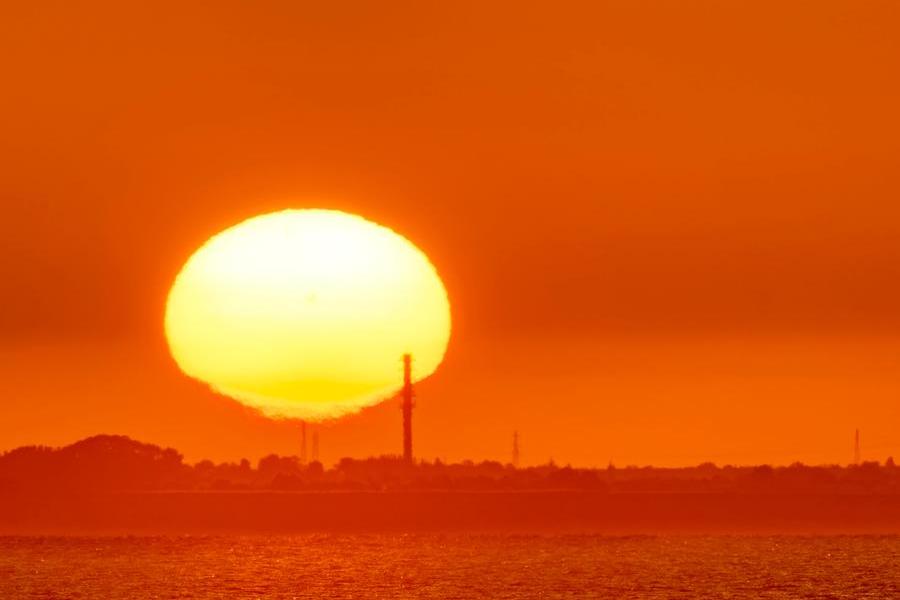
Today marks summer solsticean astronomical moment that officially marks the start of the summer season in the Northern Hemisphere. It is the day with the most hours of light of the year and, not surprisingly, this year coincides with one of the first intense heat waves affecting Italy.
But what exactly does the word solstice mean? The term derives from Latin solstitiumcomposed of sol (Sun) and sistere (stop). Ancient sky watchers had noticed that, in the days around this date, the point at which the Sun rises and sets on the horizon appears to stop moving northward before slowly reversing direction. Hence the idea of a Sun that “stops”.
Astronomically, the summer solstice occurs when the Sun reaches its maximum apparent height relative to the celestial equator. At that moment the sun’s rays hit the Tropic of Cancer perpendicularly, at about 23.5 degrees north latitude. For those living in the Northern Hemisphere, this translates to the longest day and shortest night of the year.
In Italy, the solstice brings over fifteen hours of light in the central-northern regions, creating the conditions for particularly long and bright evenings. From tomorrow, however, an almost imperceptible process will begin: the days will continue to be very long, but they will gradually lose a few minutes of light until autumn arrives.
This year the astronomical transition to summer coincides with a meteorological situation characterized by high temperatures across much of the peninsula. A robust area of high pressure of a subtropical matrix is in fact favoring conditions of atmospheric stability and a significant increase in temperatures, with values that in many areas greatly exceed the averages of the period. In several Italian cities, highs above 35 degrees are recorded or expected, while nights are particularly muggy, especially in urban areas.
It is important to remember that the solstice and heat waves are distinct phenomena. The first is an astronomical event that repeats itself regularly every year; the second is a meteorological condition linked to atmospheric circulation. However, their coincidence contributes to strengthening the perception of the entry into summer, especially when the heat is felt with intensity already in June.
For millennia, the summer solstice has represented a symbolic moment for many cultures, celebrated with festivals, rites and observations of the sky. Even today it continues to exert a strong fascination, reminding us of the profound link between the movements of the Earth around the Sun and the succession of seasons that mark life on our planet.