






by Nicoletta Bagliano
Exam time has already arrived for our kids, but for school this time lasts the whole year. Discussed, criticized, judged, the Italian teaching class is almost daily under the lens of a society that is anything but soft in its evaluations. News events confirm this: physical and verbal violence, abuse and abuse inhabit the classrooms and corridors, sometimes making them the scene of unacceptable situations, which remain in the memories of parents and students. However, in those same classrooms and along those corridors live passionate teachers who commit themselves every day to training future generations, not only by dispensing knowledge, but by listening to requests, opening horizons, creating possibilities for our children. This segment (and it is the largest!) of the teaching staff, not ending up in the newspapers, remains forgotten, almost invisible, like a silent engine that constantly works to keep a complex machine going, which is only talked about when a piece breaks.

He thought about restoring dignity and value to Italian schools the fourth survey on Italian teachers Constantly evolving. Teaching between multiple commitments in plural contexts, edited by Gianluca Argentin for Edizioni Il Mulino. The research is the result of collaboration between the University of Milan-Bicocca, the IARD Institute and the “Be for Education Foundation”a foundation specialized in education issues, which brought the survey back to life, fully financing it and guaranteeing continuity to a thirty-year tradition of studies on Italian teachers. Almost 10,000 teachers from over 400 schools distributed throughout the country responded to a questionnaire developed together with a vast network of scholars from various universities.
A world in constant change
For once, therefore, we are asked to look at this world from the teachers’ point of view: the photograph that emerges is that of a complex school, certainly, but in continuous evolution. A universe in motion constantly committed – often with insufficient resources – to adapt to different needs and cultures, to train children and young people who are not only hungry for knowledge, but also confused and restless.
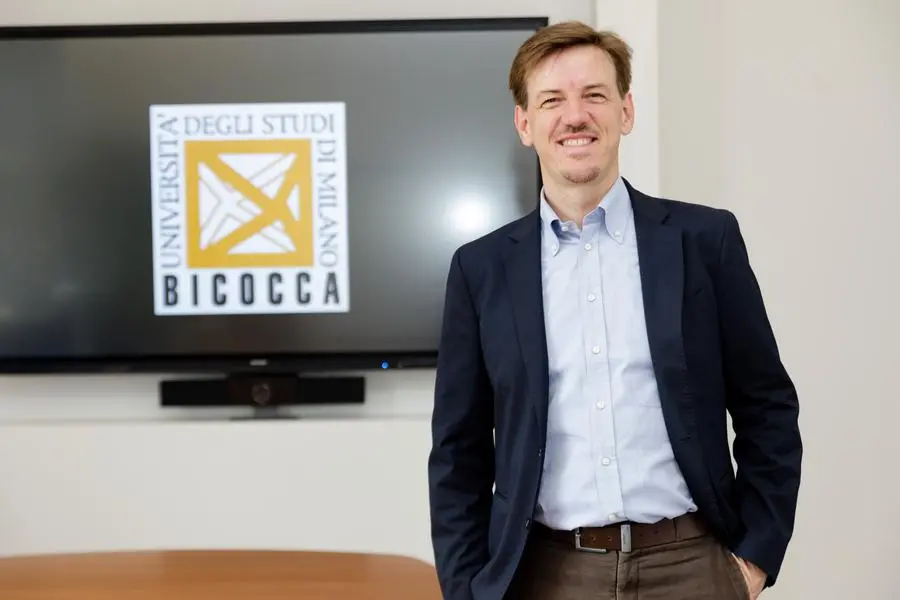
«It is a concept that we wanted to express already in the title of the white paper», he comments Gianluca Argentin, editor of the volume and associate professor of General Sociology at the Department of Sociology and Social Research of the University of Milan-Bicocca. «The tendency to paint schools as an immutable, static world, incapable of adapting to changes in the youth population, has always prevailed. In reality this is not the case at all. School has a different pace of change than we are used to, frenetic, immediately visible: it has longer transformation times. Unfortunately, this constancy in becoming is perceived as slowness. Instead it is a dynamism characterized by the alternation of moments of acceleration and others of slowdown, but always in a constant context of change.”
The school has amply demonstrated its ability to adapt on several occasions: think of the school emergency imposed by the pandemic, where distance learning was organized in record time – and teachers still suffer today from the lack of recognition of the efforts made then -; to multiculturalism, which has forced teachers to radically change their attitude when dealing with classes of students with a migrant background; to get to Artificial Intelligence, which one cannot fail to deal with even at school, where the pressure is very urgent.
8 out of 10 teachers are women
So what is the identikit of the typical Italian school teacher? «The world of teaching is predominantly female», replies the sociologist, «eight out of ten teachers are women. And the average age is 49.7 years. So we could say that the typical teacher is a woman in her fifties, who has loads of family care on her shoulders in addition to her work commitments. But there is much more: she is a busy citizen, who informs herself, reads books, volunteers, generally overwhelmed by the workload and the multitasking it entails, forced to manage commitments on multiple fronts, marked by different times and logics, within an organization little designed for collaboration, in which many solutions are left to personal initiative”. Despite the thousand difficultiesHowever, this woman – according to the survey data – loves her profession, is satisfied with it, would make her choice again in 90% of cases, despite the inadequate pay and the poor social prestige that the profession enjoys. «We are therefore talking about a person who finds gratification within the meanings of daily work», continues Argentin, «to compensate for the lack of external recognition. The surprising aspect is that, even though we think that consideration will only get worse in the future, this does not turn into anger or a decline in commitment: it translates into the awareness of carrying out meaningful, interesting work that deserves to be done in the best possible way, reaping the benefits within the class.”
Why do you choose to be a teacher?
The levers motivational are mainly two: the desire to work with young people and the desire to pass on one’s discipline. «Then there is also an important instrumental aspect, closely linked to the weakness in the labor market», adds the expert. «This is reflected in the fact that a not insignificant share of teachers comes from different experiences, even far from teaching: they were educators, academics, administrators». What might seem like a second-best choice is actually not: «School has completely changed in recent decades: today it needs different skills because the needs are different. It is a capillary structure that reaches the small town on the Sila as well as the center of Milan. A machine of this type needs differentiated skills, so the fact that many have come to teaching after an adjustment in direction is an enrichment, not an impediment. However, they need a structure that supports them.”
The critical points: from training to precarious employment
The survey returns an image of the school still characterized by profound critical issues: first of all the training of teachers. «It’s an issue that has only been seriously addressed in the last 15 years, so today we have better trained teachers than in the past, but we are still behind», explains Gianluca Argentin. «Moreover, teacher-student matching remains a problem: temporary workers are often assigned to the most disadvantaged schools, resulting in the most needy students having inexperienced teachers». Third problem: support teachers. Despite the efforts made to stabilize this professional figure, and more targeted university training, that of support often remains a transitory choice. «Since the demand for this professional figure is very high», clarifies the sociologist, «it is easier for teachers to go through this experience at the beginning of their career, to accumulate scores and position themselves in a professorship». However, this does not benefit the most vulnerable students, who need support that guarantees not only preparation but also continuity over time. Fourth, but not least: precarious employment. «It has an immeasurable duration», says the expert, «our investigation highlights that on average a young teacher in Italy takes around eight years to stabilize. And there have been years – far too many – where everything is uncertain: the evaluation and qualification criteria, the timing of the competitions, the assignments of places of work. This is an aspect on which there is still a lot to work on.”
The strengths: from tutors to freedom of action
The difficulties do not obscure the optimism: «Looking at the future I remain confident», says Argentin, «first of all about the future preparation of teachers. The university has begun to provide initial training in ever closer contact with the school, thanks also to support – through tutors – which makes the trial years real quality paths. If we look at the average age of our teachers, however, it will take time before we have a full turnover of the teaching class: for this reason, in order not to waste time, collaboration and training within the school itself is necessary”. But what are the strengths of the Italian school? It seems paradoxical, but these are precisely its weaknesses. «Being an organization that is not very structured from a hierarchical point of view», continues the sociologist, «the Italian school leaves room for the autonomy of the individual, giving teachers the opportunity to interpret their profession by tailoring it to their own preferences, their valuesthe”. This is an extra step, inserted in a heterogeneous and multicultural context like the current one, but at the same time it reflects a reality that needs to be supported by a better organizational model, precisely to avoid excessive disparities between hyper-efficient and malfunctioning schools.
Violence and the state of alert
Why then is school often attacked by merciless judgements? Perhaps because it is never looked at through the teacher’s eyes, often based on current events, which describe it as an unsafe place of violence and abuse. The white paper dedicates an entire chapter to the issue: from 2000 to today, the levels of violence experienced by teachers have been almost stable. However, if we ask teachers to comment on the last decade, they report that violence has increased greatly. What does it mean? “That there is no correspondence between generalized social alarm and the real quantity of violence experienced at school» replies Gianluca Argentin. «If a few extreme episodes, albeit very serious, remain news for days, the alarm spreads and remains over time, creating a continuous state of alert throughout the teaching class, even among those who have never experienced violence first hand. This causes us to focus only on this aspect, while neglecting other important structural issues, which are the real problems of our school.”
Heterogeneous, multicultural, crowded, often disorganized. But also joyful, passionate, constantly evolving. The Italian school is all of this. The survey by the University of Milan-Bicocca takes a snapshot, also highlighting today’s needs: supporting teachers from an organizational point of view, giving them the necessary resources to continue to be bearers of culture, training the adults of tomorrow. So that there are fewer and fewer desks without teachers, and fewer and fewer teachers without chairs.