





There is something more insidious than a bomb: it is the idea that precedes it, that justifies it, that makes it, in the eyes of those who plant it, almost necessary. And it is right there, in that dark ecosystem of propaganda, loneliness, trauma and digital manipulation, that European terrorism has chosen to hide. He hasn’t disappeared. He transformed.
This is the merciless and lucid photography that emerges from VI Report #ReaCT2025 on terrorism and radicalization in Europe, published on 29 April by the Observatory on Radicalism and Countering Terrorism, directed by Claudio Bertolotti and created by Start InSight. A document that does not limit itself to counting the attacks, and the numbers, even if they are significantthere are, but which invites an effort at deeper, almost anthropological understanding of what is happening in the social and digital peripheries of our continent.
The numbers: fewer attacks, but no less danger
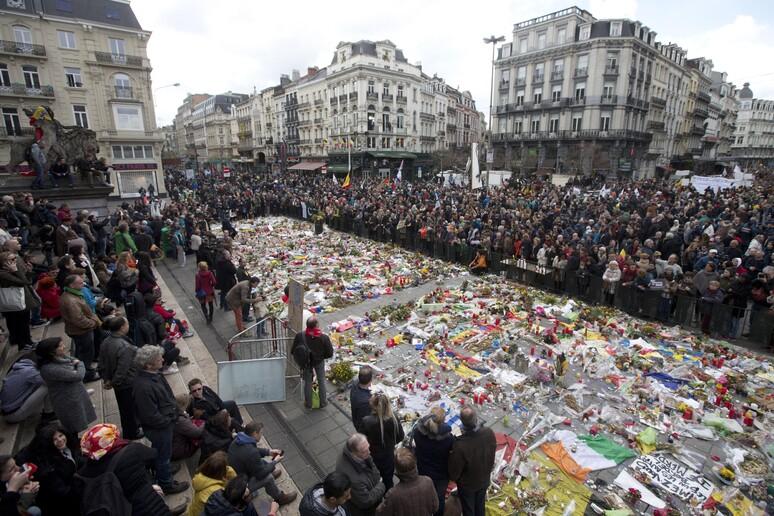
From a quantitative point of view, the Report records relative stability, with a slight decline, in jihadist terrorist attacks in Europe: 99 attacks in the period 2020–2025 (12 in 2025 alone), in EU states, the United Kingdom and Switzerland, the same value recorded in the five-year period 2014–2018. A fact that, at first reading, might seem reassuring. But analysts warn: the numerical decrease does not equate to a reduction in the overall danger.
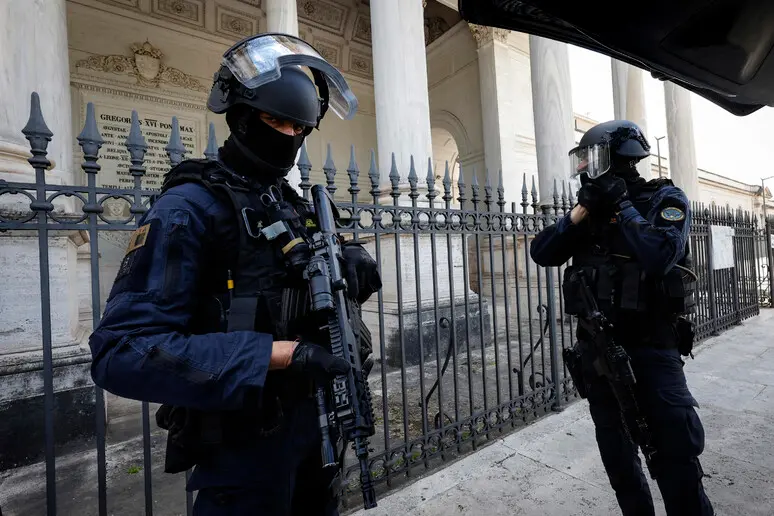
Terrorism has not retreated. It changed shape. Today it appears less and less attributable to structured organizations and increasingly characterized by individual actions, often improvised or emulative, implemented by radicalized individuals outside traditional hierarchical circuits. The “lone actor”, the wolf that no one sees coming, has become the dominant threat profile. And this, paradoxically, makes everything more difficult: because there is no network to dismantle, there is no leader to arrest, there is no encrypted message to intercept. There is only one man, often young, often fragile, often invisible to the institutions, who one day decides to take action.

Radicalization is not a flash: it is a journey
One of the most valuable contributions of the Report is the description of the process that leads to violence. Radicalization is not a sudden event, but a gradual path, fueled by a combination of personal fragilities, social marginalization, individual and collective traumas. You don’t become a terrorist by chance, or in a day. We slide, slowly, sometimes imperceptibly, along a path paved with unelaborated resentments, social exclusion, fragile identities in search of a meaning, a mission, an enemy on which to unload the weight of an existence perceived as failed or unjust.
In this path towards the abyss, the digital ecosystem plays a decisive role: social networks and online platforms become spaces of propaganda, identity construction and legitimization of violence. The Internet does not cause radicalization, but accelerates it, structures it, gives it a language and a community of reference, albeit virtual. It offers those who feel alone in the real world the illusion of belonging to something great, right, necessary.
The unseen war: hitting minds before bodies
The most disturbing, and most novel, concept that emerges from the Report is that of “cognitive warfare”. Contemporary terrorism does not only aim at physical destruction, but aims to attack the perception of reality, memory and trust, exploiting emotions, language polarization and AI-enabled information manipulation, to weaken democratic cohesion.
It’s not just about bombs and knives anymore. It’s about sowing distrust, fueling fear, making institutions perceived as enemies and democracies as corrupt and indefensible systems. Propaganda thus takes on a strategic function, becoming an integral part of the conflict. And artificial intelligence, capable of producing fake videos, synthetic voices, news created on the table, becomes the sharpest tool in this silent war.
As Bertolotti writes, contemporary security no longer concerns only the protection of physical spaces, but concerns the cognitive, symbolic and relational sphere of our societies. Protecting a square from an attack is still possible with metal detectors and cameras. Protecting a mind from ideological infection is much more complex, and requires completely different tools.
A mosaic of extremisms: jihadism, hybridizations and new narratives
Alongside jihadism, which remains the most lethal form of terrorism, the Report also analyzes other forms of violent extremism and anti-system radicalism, highlighting phenomena of ideological hybridisation and contamination between different narratives. A picture emerges where the boundaries between one ideology and another become increasingly porous: right-wing and left-wing extremism, conspiracy theories, violent nationalism and jihadism contaminate each other, draw from the same deposits of anger and resentment, producing explosive and unpredictable mixtures.
This ideological fluidity is perhaps the greatest challenge for those involved in prevention: there are no longer monolithic movements with clear manifestos and recognizable structures, but constellations of toxic narratives that aggregate around individual fragilities as happens with certain opportunistic viruses, ready to attack where the defenses are lowest.
Prevention is education: the response that requires courage
The Report underlines that the fight against terrorism, radicalization and hybrid threats cannot be limited to the repressive dimension and the use of exclusively reactive tools. Going after terrorism after it explodes is necessary, but not sufficient. We need to go upstream, work on the causes, drain the swamps in which radicalization thrives.
Bertolotti says it clearly: it is necessary to strengthen the capacity for anticipatory reading, invest in information cooperation, develop prevention tools based on knowledge of social and cultural processes, and above all recognize that democratic resilience, media literacy, critical education and care for social vulnerabilities are today an integral part of security. Words that sound like an appeal to the educational community as a whole: school, family, parish, associations. Because the response to terrorism cannot only be military or police. It must be cultural, relational, human. It must go through the recovery of those bonds of belonging, to the community, to a system of shared values, to a collective hope, which digital solitude and social marginality corrode every day, silently, long before anyone becomes radicalized.
Understanding terrorism today, the Report warns, means above all understanding the human, social and symbolic ecosystem in which it takes shape, even before it manifests itself in violence. A task that belongs to all of us.