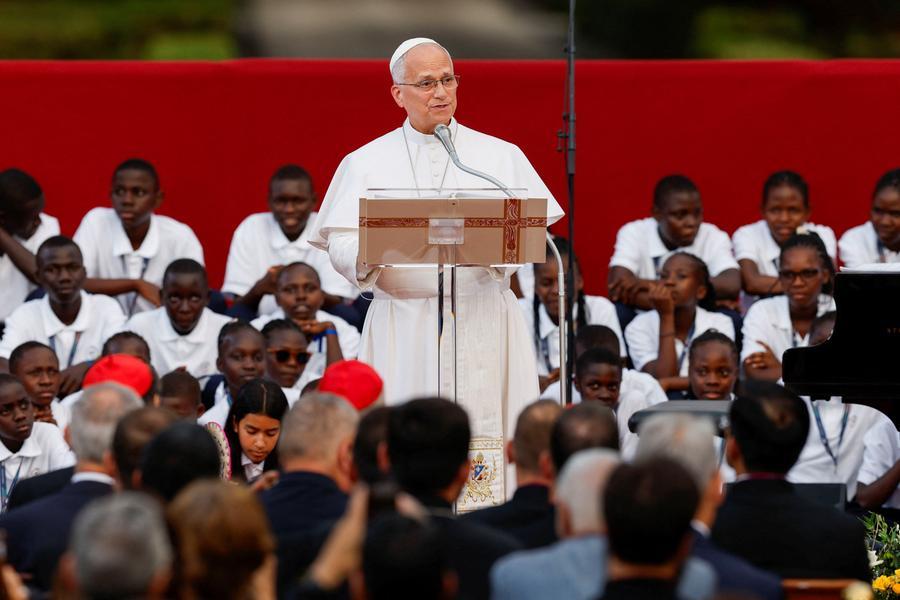





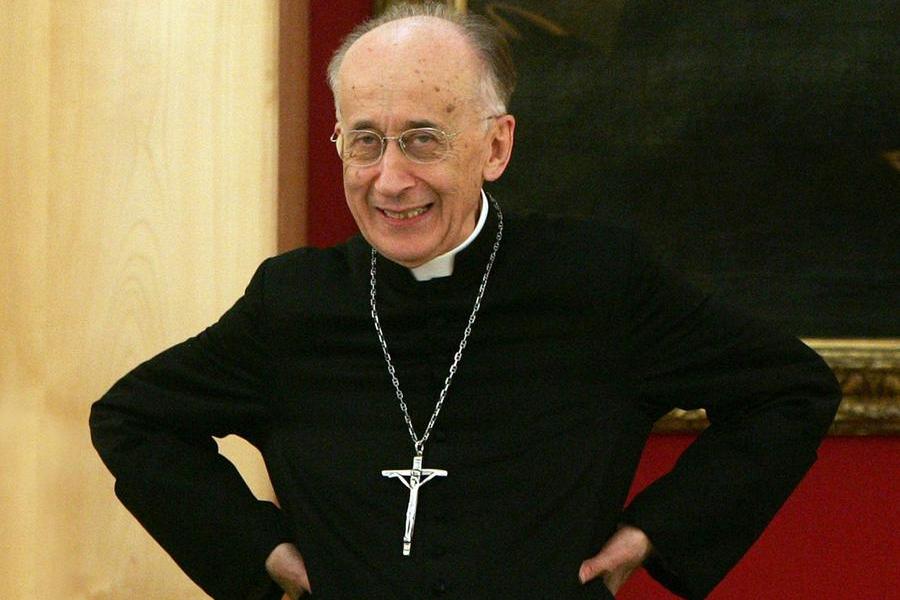
Man of power or last bastion of a Church otherwise condemned to irrelevance? It will be History, the one with a capital S, that will give a definitive judgment on the cardinal Camillo Ruiniwho died in Rome on Tuesday 16 June at the age of 95. Now is the time for prayer and silence on a man who, vicar of the Pope, John Paul II, for the diocese of Rome since 1 July 1991 to 27 June 2008 and president of the Italian Episcopal Conference for two terms (from 7 March 1991 to the same date in 2007), he shaped, for better or for worse, the Italian Church between the late 1990s and the early 2000s.
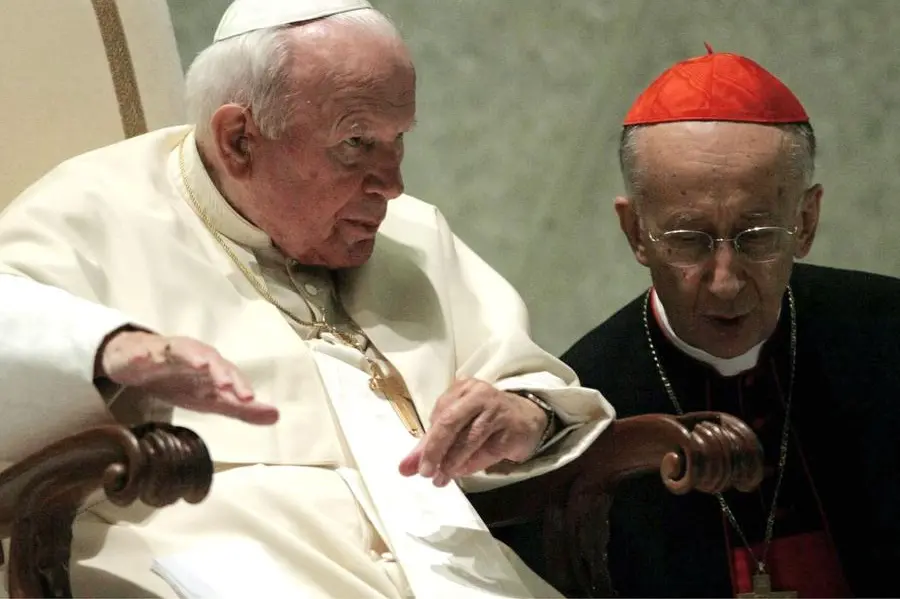
Cardinal Camillo Ruini with John Paul II in 2003
(HANDLE)
More presence than dialogue
Born in Sassuolo (Modena) on 19 February 1931 and ordained a priest in 1954, he began his great asceticism with the pontificate of John Paul II who appointed him first, in 1983, auxiliary bishop of Reggio Emillia and Guastalla and then, in 1986, general secretary of the Italian Episcopal Conference. He became cardinal, the youngest among Italians, on 21 February 1998.
A man not so much of dialogue but rather of “presence”, he was among the main architects of a markedly political return of the Church to the public scene. Those who lived in Italy between 1991 and 2007 remember well a phrase that circulated in Roman buildings: «First there is Ruini, then there is everything else».
Friend and confidant of Karol Wojtyła, who also listened to him on Italian episcopal appointments, he was able to transform the CEI into an active political entity by theorizing the so-called “non-negotiable values”: defense of life from conception to natural death, family founded on heterosexual marriage, support for private Catholic schools, conscientious objection.
On a practical level, this meant an organic alliance with Silvio Berlusconi’s centre-right and a sort of “excommunication” for all those who considered these issues a rather necessary object of political mediation. The Ruinian approach of those years, harsh and without yielding, contributed to rigidifying the Italian debate, delegitimizing anyone who did not think exactly like the cardinal.
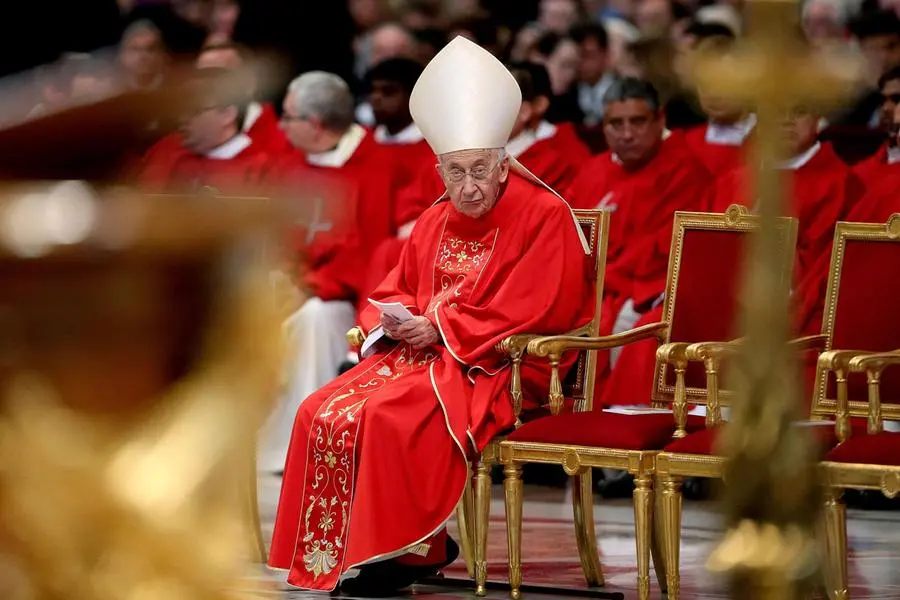
Cardinal Camillo Ruini in 2015 in St. Peter’s Basilica
(HANDLE)
1997, the accusations of “unscrupulousness” a Christian family
After the ecclesial conference in Palermo, in 1995, he launched the cultural project, supporting the need for a presence of the Church and Catholics in the world of culture. Project criticized within the Catholic Church itself for the partiality and claim to universality that characterized the initiative. These are the years in which tensions are also recorded with Christian family. In the autumn of 1997 the cardinal publicly criticized the editorial line of our magazine, accusing her of “extreme unscrupulousness” in dealing with moral and religious issues. It is the start of a phase that will lead to the appointment of a commissioner and a change in the management of the magazine.
2007, the battle against the Dicos of the Prodi government
In 2007, after the government’s announcement of Romano Prodi to create a legal status for de facto couples, the Dicos, the cardinal, who seemed to embrace the text prepared with great balance by Rosy Bindi and Barbara Pollastrini, moves to block the project. «Prodi was my friend, it’s true. But not on civil unions! We have stopped this project. I brought down his government! I made Prodi fall! Civil unions: this was my battlefield”, he declared in 2018, only to change his opinion more recently, considering the Dicos to be less worse than the civil unions approved later.
In 2019, when Ruini “opens up” to the leader of the League Matteo Salvinitensions return with Christian family who criticizes him for some positions expressed by the cardinal in an interview with Corriere della Serain particular for the indulgence towards the public performance of the Rosary.
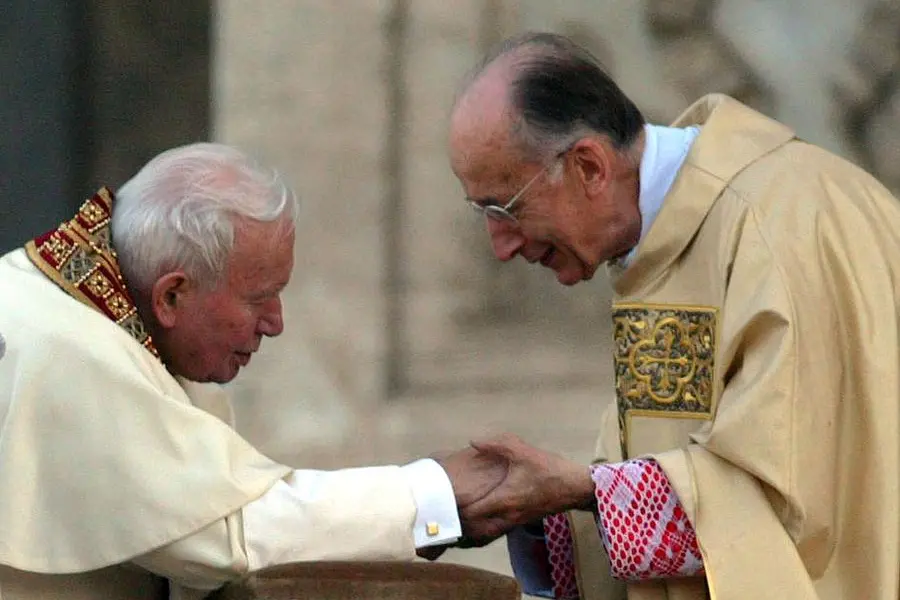
Ruini with John Paul II in 2002 at the end of his mandate as the Pope’s vicar for the Diocese of Rome
(HANDLE)
The contrasts with Pope Francis
With the pontificate of Pope Francis, harshly criticized by Ruini, “non-negotiable values” exited the language of the Church. A position that the cardinal has never digested enough to want to be among the first to speak in the Congregations, the meetings of the cardinals that were held before the last conclave that elected Leo XIV. Not being able to enter the Sistine Chapel to elect the new Pope, having well exceeded the age of 80, Ruini, who was accompanied in a wheelchair and was already seriously ill, he did not hesitate to ask to change course, to “return the Church to its people”, also declaring that he found himself “in difficulty with Pope Francis”.
The “silent schism”
A refined intellectual, Ruini did not fail to underline the dream of a “Church as teacher of truth”, however far from the synodal spirit desired by Bergoglio. Under his presidency of the CEI, what analysts call what happened took place «the silent schism»that is, the silent departure of many faithful who no longer felt in a welcoming home close to the people, but who saw the increasingly marked replacement of pastoral care with militancy.
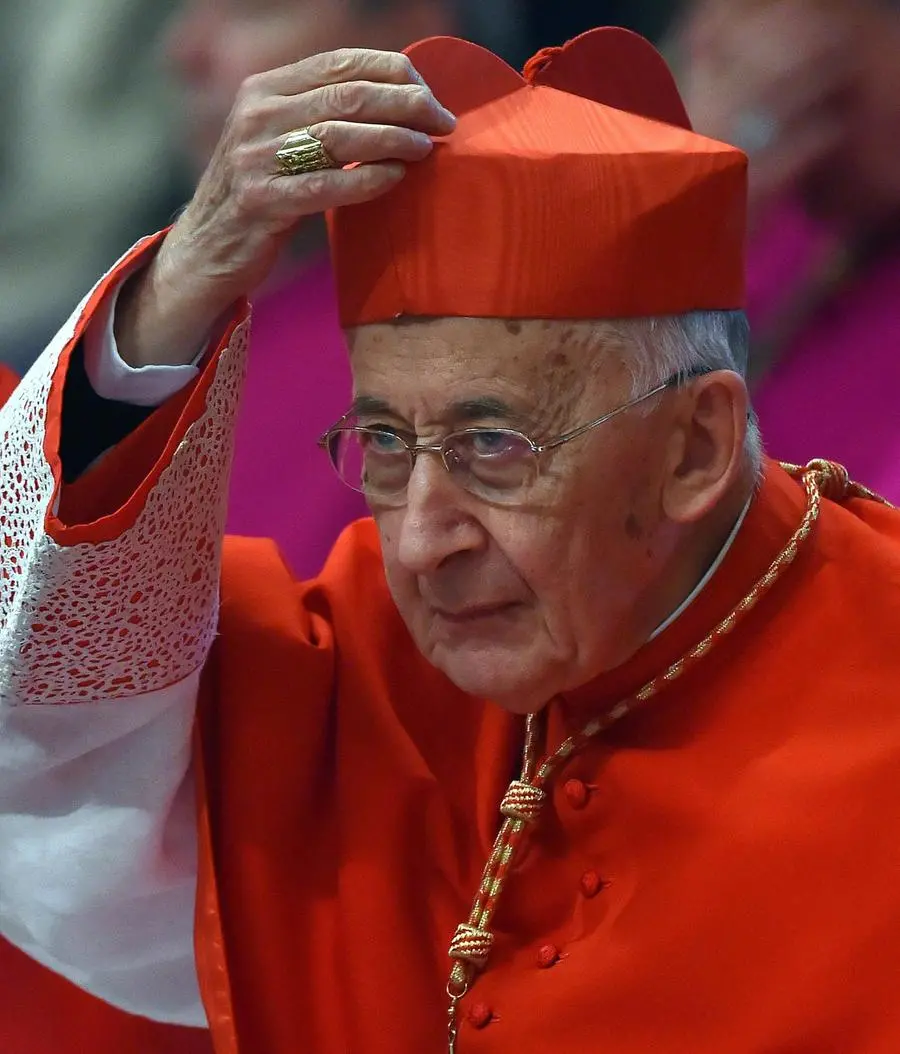
Ruini in 2015 at the opening celebration of the Synod on the family wanted by Pope Francis
(HANDLE)
2026, the referendum on justice
He did not spare himself even during the last referendum on justice reform with the separation of careers. After the Italian Church had asked to promote debates without expressing voting positions, it instead released an extensive interview again to Corriere della Serain which he explained why we should vote yes and why Giorgia Meloni is governing well.
In recent years, in an interview with the monthly magazine The Rudder he declared that he regretted nothing: “I did what I had to do”, he said, almost in a spiritual testament. On the contrary, Lhe more conciliar Church replies that, if values are not negotiated, the forms of their announcement are. And it is there, perhaps, that the distance between two very different visions was marked.