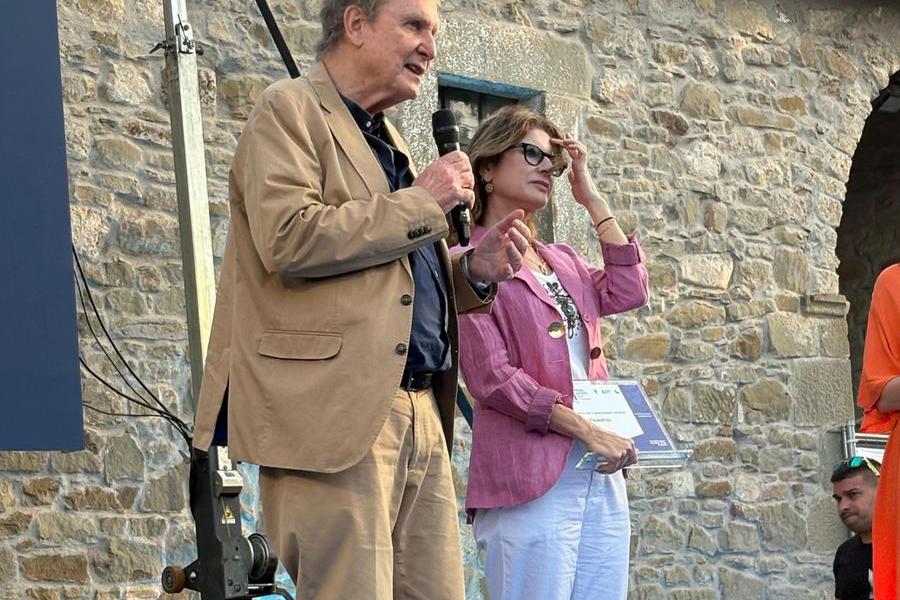
For three days, from 17 to 19 July, Fano Adriano, a small village in the Gran Sasso where Don Giuseppe Zilli, historic director of Famiglia Cristiana from 1954 to 1980, was born, became a meeting place for journalists, scholars, students and citizens to reflect on the present and future of information. The fifth edition of the Giuseppe Zilli Prize for journalism has confirmed its vocation: not only to celebrate professional excellence, but to propose an idea of journalism based on ethics, civil responsibility and the search for truth.
Promoted by the Giuseppe Zilli ETS Prize Association, with the support of the Municipality of Fano Adriano and the Order of Journalists of Abruzzo, the event began on Friday with a meeting dedicated to “St. Francis and the forest”, followed by the screening of the film Parola di Tommaso, dedicated to the figure of Tommaso da Celano, the first biographer of the saint of Assisi. A common thread that linked spirituality, environment and culture, enhanced by the presence of the leading actor Matteo Oddi and the report by the historian Franco Cardini.
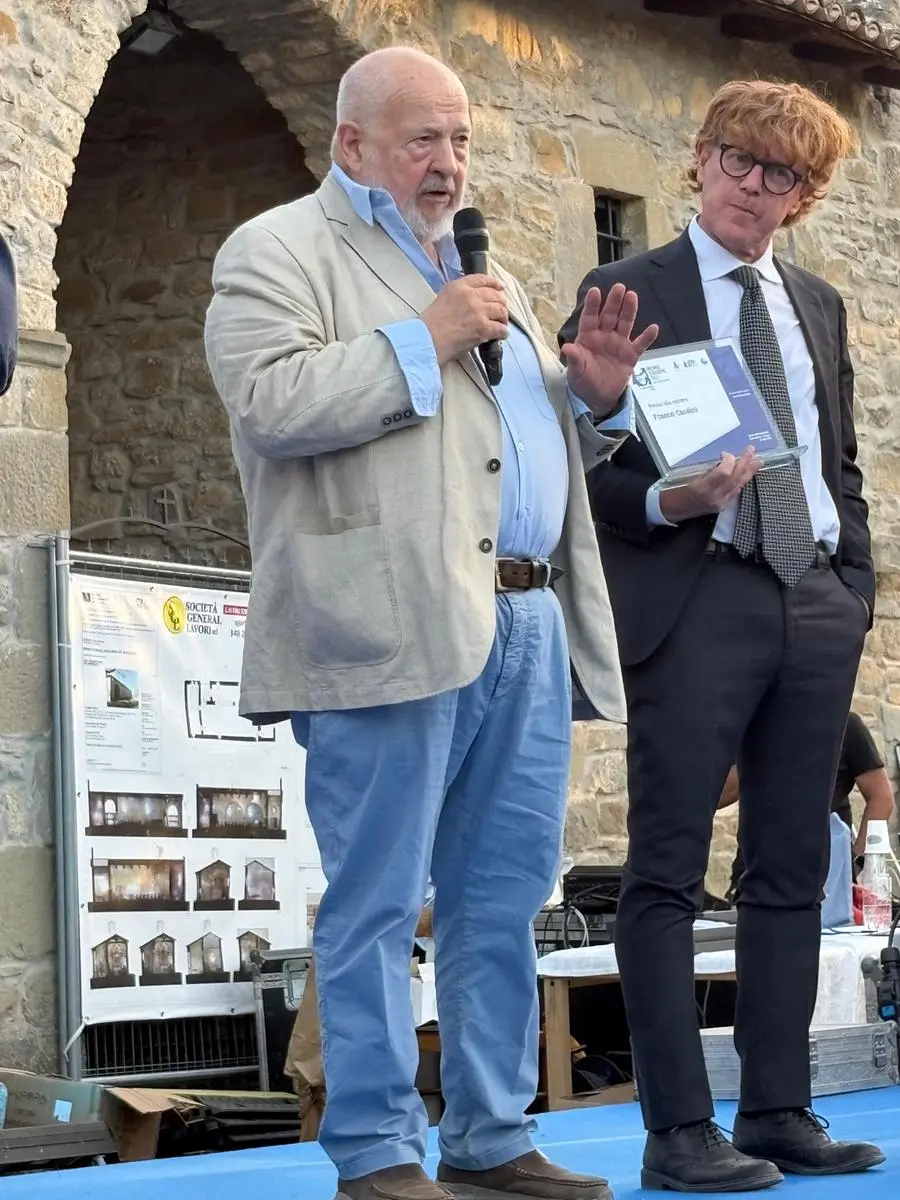
After a training moment for journalists on the code of ethics, the central moment took place on Saturday afternoon at the Eremo dell’Annunziata. The ceremony, conducted by Roberta Lanfranchi with the musical accompaniment of Arturo Valiante, awarded figures who represent different languages and generations, united by the commitment to rigorous and credible information. For paper journalism, the award went to Lina Palmerini, historic writer of the Sole 24 Ore and well-known face of 8 e mezzo of La7, rewarded for the balance and depth with which she has reported on Italian politics and republican institutions for years. The Award for television journalism was awarded to Vincenzo Morgante, director of TV2000 and InBlu2000, protagonist of a long career at the service of public information and the values of legality and personal dignity.
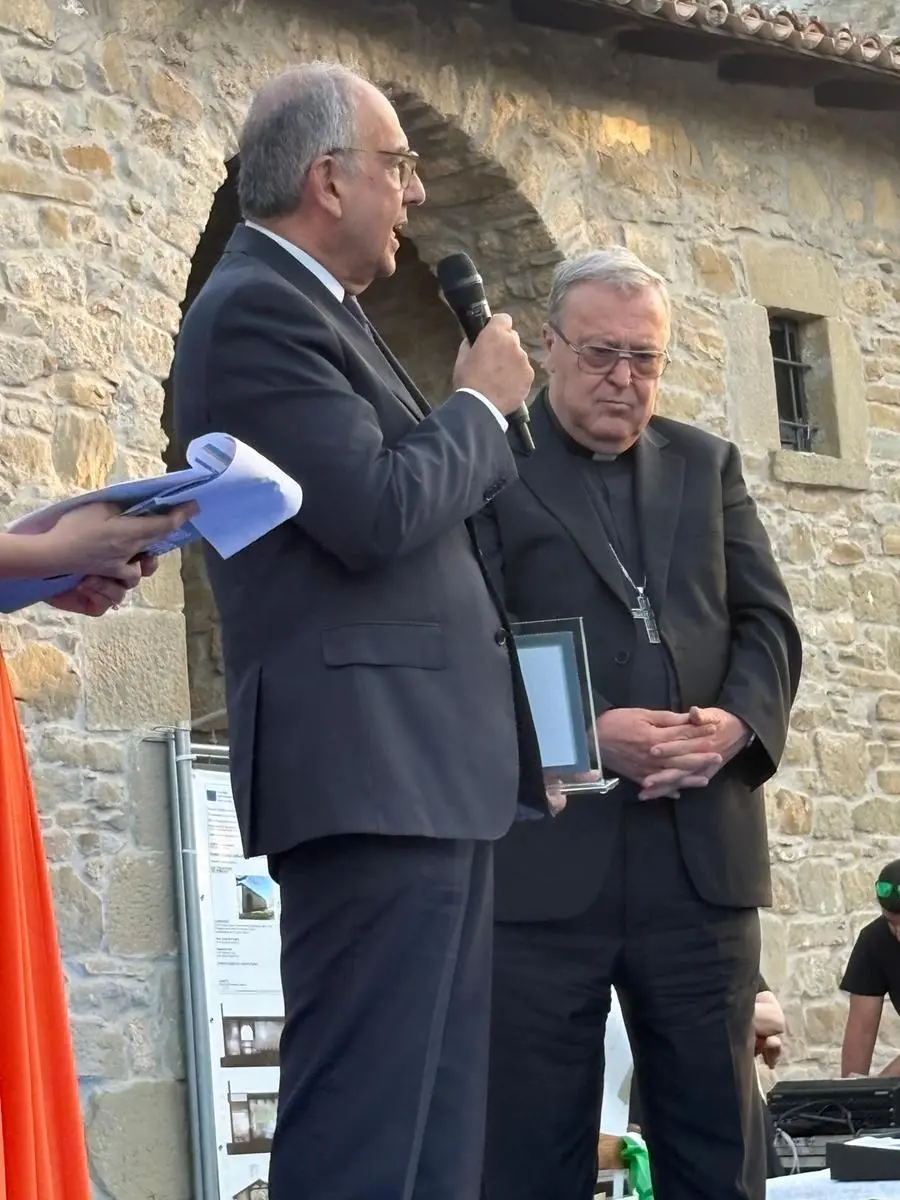
The director of TV 2000 Vincenzo Morgante with the bishop of Teramo Lorenzo Leuzzi
For radio, the award was given to Sonia Filippazzi, journalist of the Giornale Radio Rai, recognized for her work in disseminating environmental and sustainability issues through the program L’aria che respiri. The award dedicated to web journalism was given to Liala Antonino, a young creator and university student, an example of a conscious use of new digital languages and social networks at the service of information and civil battles.
Particularly applauded was the awarding of the Lifetime Achievement Award to Franco Cardini, one of the most authoritative Italian historians, capable for many years of combining the rigor of research with journalistic dissemination, offering readers precious tools to understand, starting from history, the complexity of the contemporary world.
The Special Prize was also awarded to the University of Teramo, for the contribution to the training of future communication professionals, and the Memorial Prize to Sandro Galantini, director of the Prize who passed away last May due to a serious illness, remembered with emotion for the decisive role played in the growth of the initiative.
The jury, chaired by the director of Limes Lucio Caracciolo and composed, among others, also by the director of Famiglia Cristiana Don Stefano Stimamiglio, was guided above all by the professional qualities and civil value of the awarded courses. Caracciolo recalled how journalism today is called upon to deal not only with armed conflicts, but also with a real “war of information”, indicating intellectual honesty as the first responsibility of those who tell the truth.
On Sunday 19th, after the Mass celebrated by Don Stefano Stimamiglio in the church of Saints Peter and Paul, the program continued with a visit to the artistic treasures of the country and with a meeting dedicated to the Middle East, during which Laura Canali, cartographer from Limes, presented the volume Israel and Palestine in 10 maps, offering reading tools to understand one of the most dramatic conflicts of our time.
More than a simple award ceremony, the Giuseppe Zilli Award has thus confirmed itself as a cultural laboratory where journalism returns to question its task. It is no coincidence that all this happens in the birthplace of the Pauline priest who, at the helm of Famiglia Cristiana, made information an instrument of human, ecclesial and civil growth. In a time marked by speed, polarization and artificial intelligence, his teaching continues to remind us that the journalist’s first duty remains to seek the truth without losing sight of the dignity of people.