





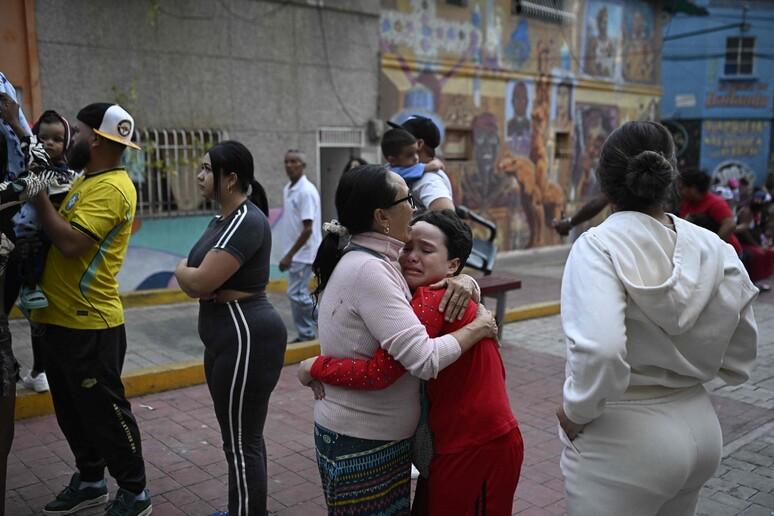
At 6 pm on June 24, two earthquakes occurred in Venezuela, measuring 7.2 and 7.5 on the Richter scale. The first shock had the city of San Felipe as its epicenter, about 260 kilometers east of Caracas, the second was located in the city area of Valencia. But the region most affected by the disaster is La Guaira. The area is located between two faults, the Caribbean one and the South American one. Until now they are counted 235 dead and more than 4300 injured but the numbers are destined to increase because there are areas that are still waiting for help. The newspaper El Impulso activates a platform for registering the missing, who currently number almost 50 thousand.
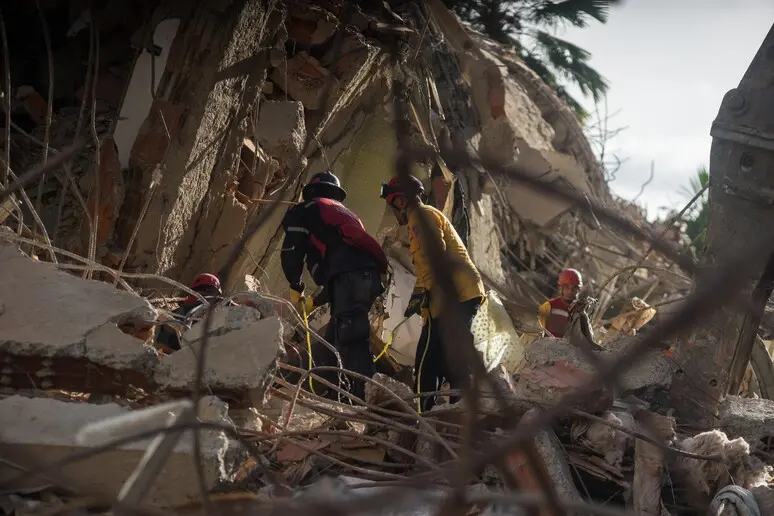
There are parts of Caracas that have completely collapsed, such as in the municipality of Chacao, one of the five municipalities that make up the metropolitan district of the Venezuelan capital, which represents the economic and financial engine. «Immediately after the violent tremors, I went down the street to see what the situation was. The Chacao area is totally desolatethe structural damage is serious; there are parts of the municipality that are without light, without services and that are impassable due to the danger”, says Valentina Rivas, journalist of the periodical El Estímulo.
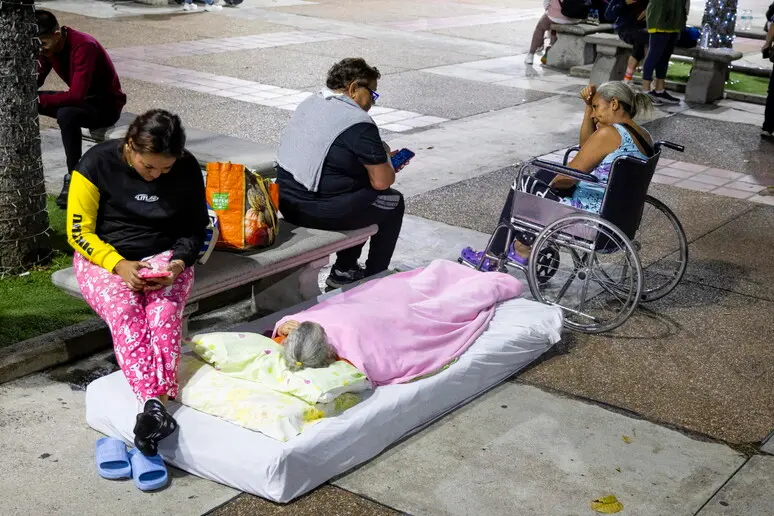
«On the street there is great uncertainty, people don’t know what to do, we are all in shock because we have never experienced an earthquake of this magnitude. Who has experienced the 1960 earthquake maybe yes, but this one was far stronger and lasted a long time because they were two linked earthquakes. In some areas, such as Altamira, which is the beating heart of Chacao, there is total chaos because there are no suitable means to pull people from the rubble. The authorities are asking for fuel to power the generators and therefore allow rescuers to workin addition to the tools to be able to break concrete, wood, to be able to break different materials and create tunnels to enter buildings. It is truly a disaster, Venezuela was not prepared for two such devastating earthquakes”, he continues.
At the moment, in the areas affected by the collapses, work is being done thanks to word of mouth and human chains: there are those who are looking for a hammer and the word spreads to get a hammer, those who want a container, those who ask for a sharp object to leverage and try to find a timid opening. We are looking for civil engineers, specialized people who know how to use rescue tools, from the lightest ones to mobile cranes. Hospitals are collapsing and clinics are overflowing with injured people.
«I don’t know if I can speak because we are without electricity and therefore without a network, I know you will be able to understand, I can only tell you that there are many, many people still missing under the rubble and I hope that help will be able to arrive before it is too late. The situation in the country is critical, especially in the Guaira”, says the sister Yanny Ballesteros belonging to the order of Misioneras Inmaculada Concepción.
There Venezuelan Caritaswhich is part of the Venezuelan Episcopal Conference (CEV), immediately activated an aid network to offer assistance in the affected areas: «You are not alone, the Church walks alongside you. In these moments, when the earth itself seems to destabilize beneath our feetthe Church is called to be presence, consolation and concrete action», says the pastoral body. In the areas most affected by the two earthquakes, Caritas operates as a logistical service for the distribution of drinking water, food and essential medicines, as well as for the procurement of economic resources through donations both internal and external to the country.
«Many of our churches, parish houses and schools have suffered structural damage, but at this moment the priority is people, that’s why I invited all the parishes, parish Caritas and apostolic movements to activate their solidarity network to respond to the emergency and needs that arise in the communities», reported Monsignor Raúl Biord Castillo, archbishop of Caracas since 2024.
Immediately after the violent tremors, Monsignor Castillo set out to visit the parishes of his diocese, to give comfort to the bishops, priests and to help people. But also to lend a practical hand in removing dangerous objects and making others safe. «This is the moment of unityit is therefore time to put differences aside and provide help to the victims, but above all it is the time to rebuild a social fabric that opens horizons to the future and then to rebuild buildings”, adds the archbishop.