





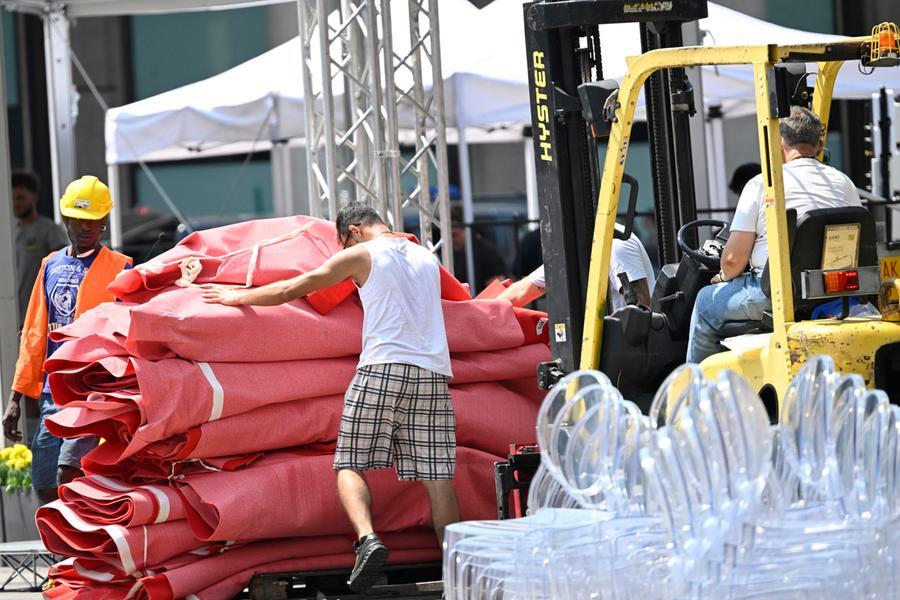
The exceptional heat wave that is hitting Italy has caused a series of tragic fatal illnesses in the workplace, concentrated in a few hours in the northern regions. In the Mantua area, in Borgocarbonara, Haddad Taher, a 55-year-old Moroccan agricultural worker by the name, collapsed while picking watermelons under the sun in Magnacavallo, and rescue efforts were to no avail. In the Trevisano area, in Susegana, a 59-year-old worker from the Smurfit Kappa Italia factory was found lifeless outside the factory immediately after finishing his work shift. On the daysPreviously, in Padua, the 57-year-old construction worker Stefano Tonin died on a construction site, presumably due to the prohibitive temperatures. Investigations are underway to ascertain that the deaths are directly linked to the heat, but in the meantime the CGIL, CISL and UIL unions are on a war footing.
THE COMPLAINT FROM THE UNIONS
The CGIL of Mantua highlights how the phenomenon especially affects the most blackmailable sections of the population, such as migrant workers from the Indian and Moroccan communities, denouncing the presence of pockets of gangmastering and agrarian slavery even in the Po Valley. Although many companies remodel their hours with shifts starting at 5 in the morning, the unions denounce the ineffectiveness of the regional anti-heat ordinances due to the chronic lack of inspection controls. Furthermore, Fillea CGIL criticizes the interpretative doubts of the regional texts, explaining that the public utility clause allows the majority of public construction sites not to stop work even with high levels of risk.
THE GOVERNMENT DECREE
The Government has included in the Infrastructure Decree the rule for facilitated access to the Ordinary Redundancy Fund for climate emergencies between 1 July and 31 December 2026. However, the provision has been harshly criticized for the insufficiency of resources. They have been allocated for the second half of 2026 15.2 million euros, a figure more than halved compared to the 33 million expected in 2025. Furthermore, the activation date of July 1 left the heat waves of the previous weeks exposed. The distribution of funds includes 4.9 million euros for industry and construction. Another 10.3 million euros are intended for agricultural workers on fixed-term and permanent contracts, with treatment accessible even in the event of a reduction in activity equal to half of the daily working hours. However, riders, self-employed workers, VAT numbers, the fishing sector and seasonal tourism workers remain totally outside the protections..
THE STRIKE IN MARCEGAGLIA
On the corporate front, there are strong tensions at Marcegaglia in Ravenna and with the Glovo platform. On June 30, the Fiom-Cgil and Usb unions called a strike in the Ravenna metallurgical plant, which has around 1,200 direct and contract workers. In the warehouses the external heat adds to that of the machinery and incandescent coils, bringing the internal temperature between 45 and 48 degrees in the departments with heavy manual movement. The workers are asking for structural investments in cooling and more breaks, while the company claims to respect the ordinances, denies internal illnesses and has postponed the confrontation until July, an appointment which Fim-Cisl and Uilm-Uil, who did not go on strike, have joined.
THE CASE OF THE GLOVO RIDERS
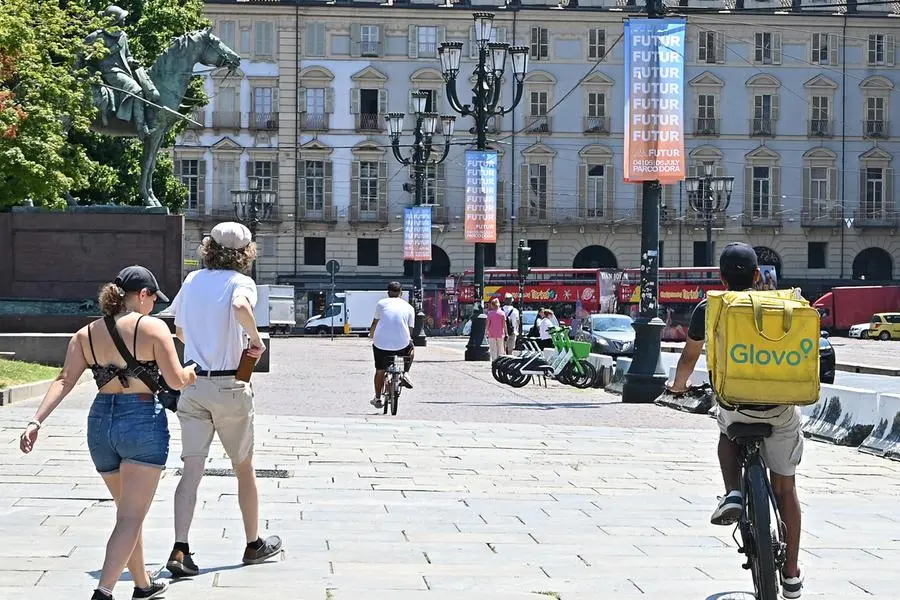
A rider at work in Turin below during the latest heat wave
(HANDLE)
Meanwhile, the NIdiL CGIL union has opened a formal clash with the delivery platform Glovo. The company, in addition to providing hydration and safety advice, has introduced a communication with a system of economic bonuses linked to temperatures, which provides for an increase of 2% between 32 and 36 degrees, 4% between 36 and 40 degrees and 8% above 40 degrees. The union considered the message very serious, accusing the company of transforming a mortal danger into an economic incentive. NIdiL demands the withdrawal of the note and recalls that Legislative Decree 81/2008 requires the protection of health. Consequently, with high risk on the Inail Worklimate portal, the activity of riders, exposed directly to the sun on bikes or scooters, must be entirely suspended and not monetized.