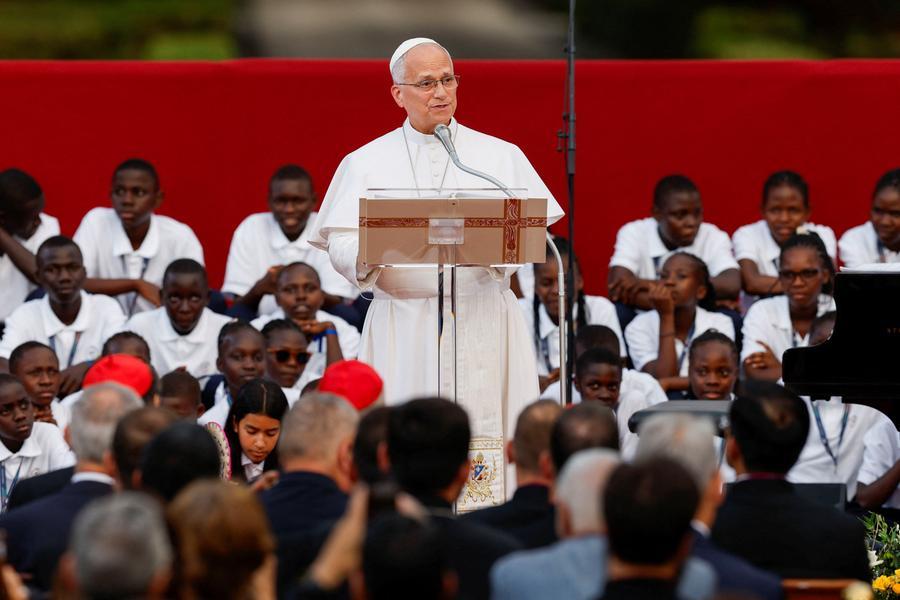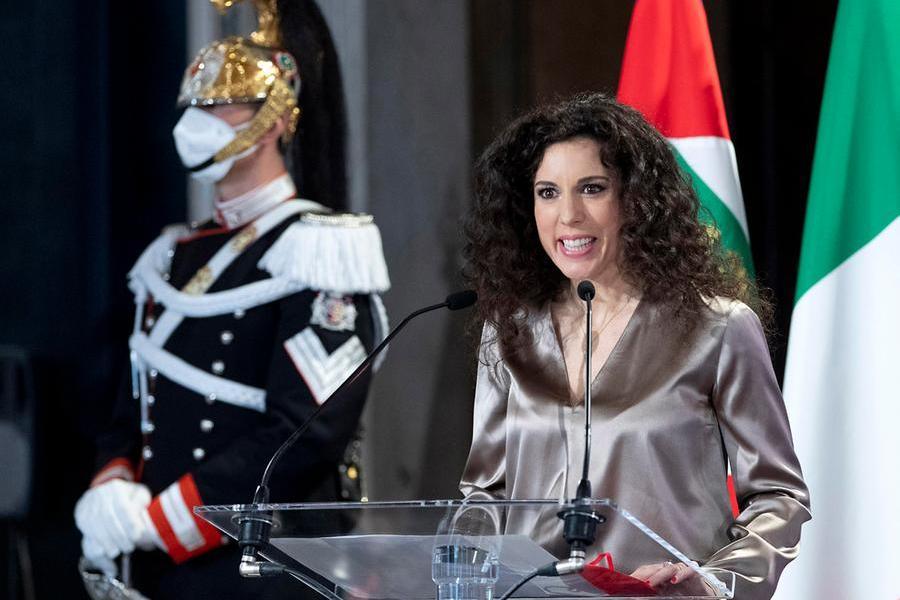
A sort of handover between the Popes. Always looking for peace. Antonio Preziosi, director of TG2, presents his latest volume to the Italian embassy at the Holy See “Easter of peace. From John XXIII to Leo XIV, towards the Jubilee of 2033” (San Paolo editions) and recalls that «the last word of Pope Francis was “peace” and “peace” was the first word of Pope Leo». Peace is the goal and dialogue is the tool to proceed towards it. Preziosi’s new essay reconstructs the tireless commitment to harmony that binds the pontiffs from John XXIII to Leo XIV: an active and assiduous work for the reconquest of the unity of the universal Church and for peace in the world. Almost a relay race between the Pontiffs told through facts, documents and anecdotes that show how each one has added a piece to the mosaic of unity.
The journey starts from John XXIII, the Pope who opened the Second Vatican Council and signed the historic encyclical Pacem in Terris, redesigning the very concept of peace and international relations. It happens to him Paul VI, who brought the Council to completion and pronounced the memorable “Never again war”. Then John Paul I, who in just 33 days of his pontificate confirmed the Church’s commitment to ecumenism and wrote the historic letter to the American president of the time, Jimmy Carter, to support the Camp David agreements between Israelis and Palestinians. And again John Paul II, with the Day of Prayer for Peace in Assisi in 1986 and the encyclical Ut unum sint. Until Benedict XVI, who resumed the legacy of Assisi, and to Pope Francis, who with the encyclical Fratelli tutti he condemned all forms of violence in the name of religion. The baton finally passes to Leo XIV, who made peace and dialogue the key words of his Pontificate.
The heart of the book is the symbolic date of 2033, when the Church will celebrate an extraordinary Jubilee for the two thousand years of the Resurrection. The idea for the drafting, explains Preziosi himself, was born in June 2024, when Pope Francis announced his desire to go to Nicaea to commemorate the 1700th anniversary of the Council together with the Orthodox Patriarch Bartholomew I. Preziosi got to work to conclude his commitment at the very moment in which Pope Leo closed the Holy Door of the 2025 Jubilee.
Between these two moments there was also a significant astronomical event: on April 20, 2025, due to a coincidence of the Gregorian and Julian calendars, Easter was celebrated simultaneously by all Christian confessions. Pope Francis defined this circumstance as a “providential coincidence” and imagined that the path to peace could pass through dialogue between religions, leading up to the common celebration of Easter.
Preziosi underlines that the search for a single date for Easter is not just an exercise in pure calendar technicality, but the attempt to overcome historical divisions in the name of a common faith. It is an important goal, a concrete commitment to which we are all called, which can be traced back to the agenda of the Second Vatican Council.
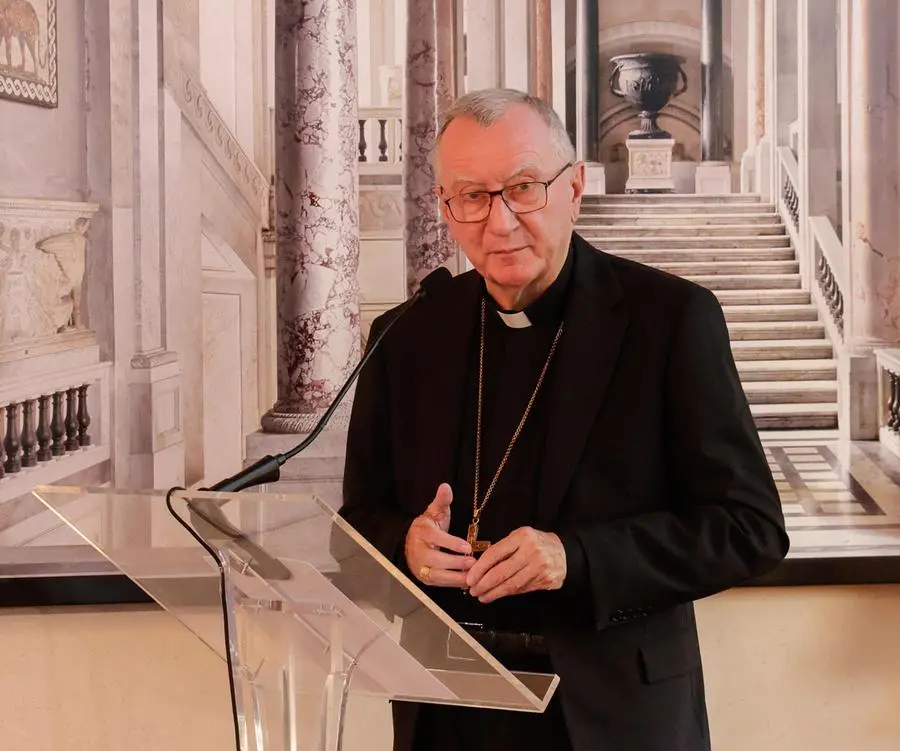
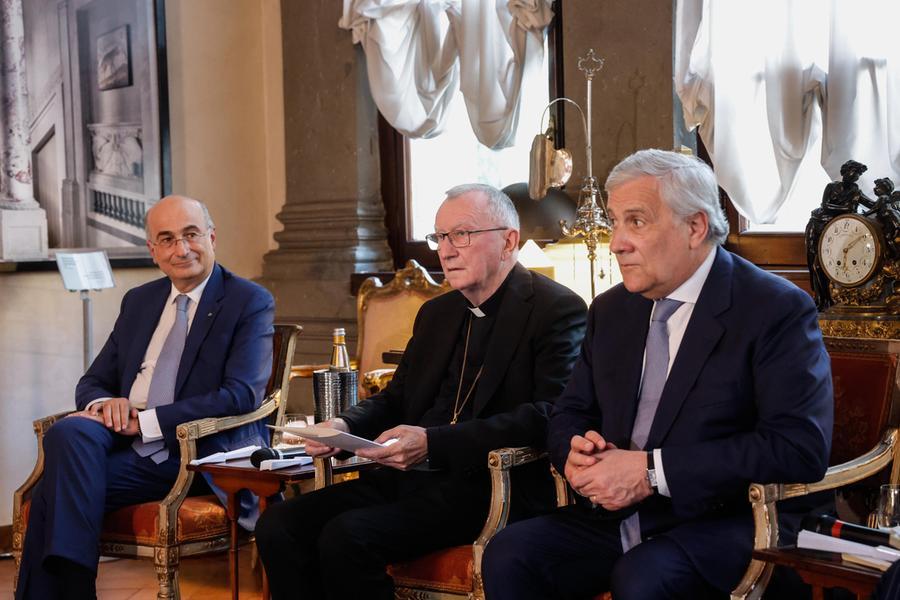
During the presentation, also in the presence of Foreign Minister Antonio Tajani, the Secretary of State Pietro Parolin, taking up the title of the book, underlined how necessary an “Easter of peace” is more than ever to eliminate war, “never worthy of man and never blessed by God”.
The cardinal recalled the words of Pope Leo XIV: «Peace exists, it wants to live there, it has the power to illuminate and broaden intelligence, it resists violence and overcomes it. Peace is the breath of the Eternal, while to evil one shouts ‘enough’, to peace one whispers ‘forever’.” A message that echoes the four columns on which, according to John XXIII, the building of peace is supported: truth, justice, freedom and love.
“Easter of Peace”, then, is not a simple essay on ecumenism, but a work that invites us to hope “even against all hope”, giving us the vision of a Church which, through unity, becomes the guardian of the future of humanity. In an era marked by conflicts and deep fractures, the book offers an authoritative key to understanding why peace represents a vital good today more than ever. A vital asset for the many conflicts that still exist in the world, the ones that everyone talks about, but also the forgotten ones. And to also build a more peaceful climate in our societies.
It is no coincidence that, on the sidelines of the meeting, Cardinal Parolin recalled, both on the case of Bologna and that of the jeweler Roggero which exacerbate polarizations, that «the Church continues to repeat words that can serve. But the important thing is that these words, as in the parable of the sower, find suitable soil and bear fruit. The Church never tires, the Pope never tires of repeating it and I believe that it is right to do so, regardless of the results that can be obtained, but this is the Church’s task. Here we continue to insist on these values that serve to ensure peaceful and constructive coexistence”.