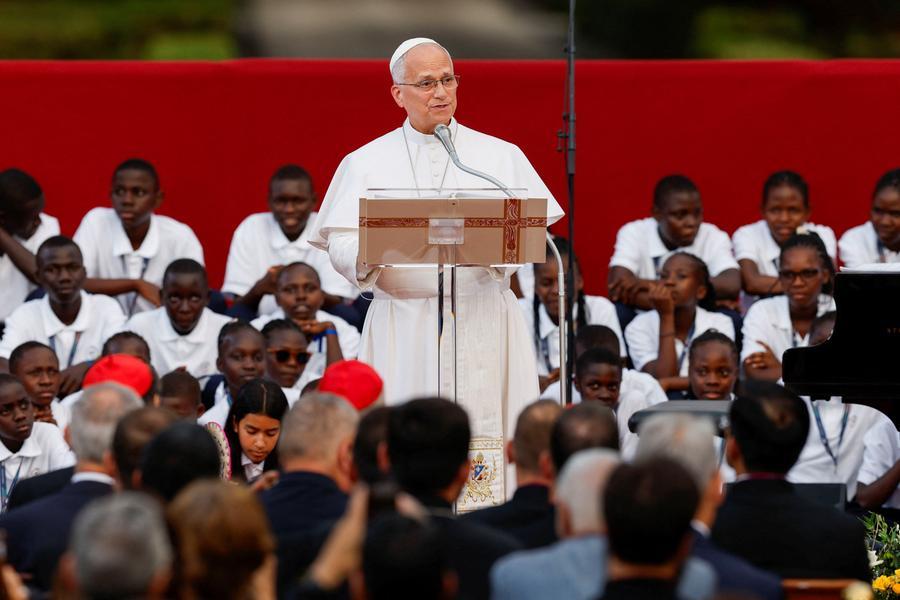






The flags of Italy and Vatican City hang from the balconies, as well as those of the United States and Peru, the two “homelands” of Pope Leo XIV. It’s almost unusual to see them in a small town like that Sant’Angelo Lodigiano – 13 thousand inhabitants, of which 3 thousand immigrants from Eastern Europe, especially Romania, North Africa, sub-Saharan Africa and Latin America – but the reason is that it was born here Saint Frances Xavier Cabrinithe “patron saint of emigrants”, who left this place as a missionary in 1889 to go to the United States and assist Italian American immigrants.
Pope Leo, in his trip to Lombardy, wanted to include this stop, after that of Pavia, to pray before the relic of the Saint’s heart. First the landing at the “Carlo Chiesa” municipal stadium, where the kids from Grest, the summer oratories, and the children of the city’s nursery schools welcomed him in a festive atmosphere, then the ride in the popemobile to get to the center Basilica dedicated to Santa Cabrini and Sant’Antonio Abate where the Pontiff, welcomed by the bishop of Lodi, by the mayor of Sant’Angelo, Cristiano Devecchiand by the mayors of the area, by the priests of the diocese of Lodi and by the Missionaries of the Sacred Heart of Jesus.
«I am here to pay homage to Mother Cabrini»
«I am here to pay homage to Mother Cabrini, Patron Saint of migrants, first Saint of the United States of America, born here, in Sant’Angelo Lodigiano, in 1850, and died in Chicago, my hometown, in 1917», says the Pope, «when I learned that Sant’Angelo Lodigiano is a few kilometers from Pavia, I thought I would seize the opportunity… And here I am. Thank you for your warm welcome! Thus you demonstrate to me the love of the Church of Laud for the Pope, a love that Mother Cabrini nourished with singular devotion and obedience.”
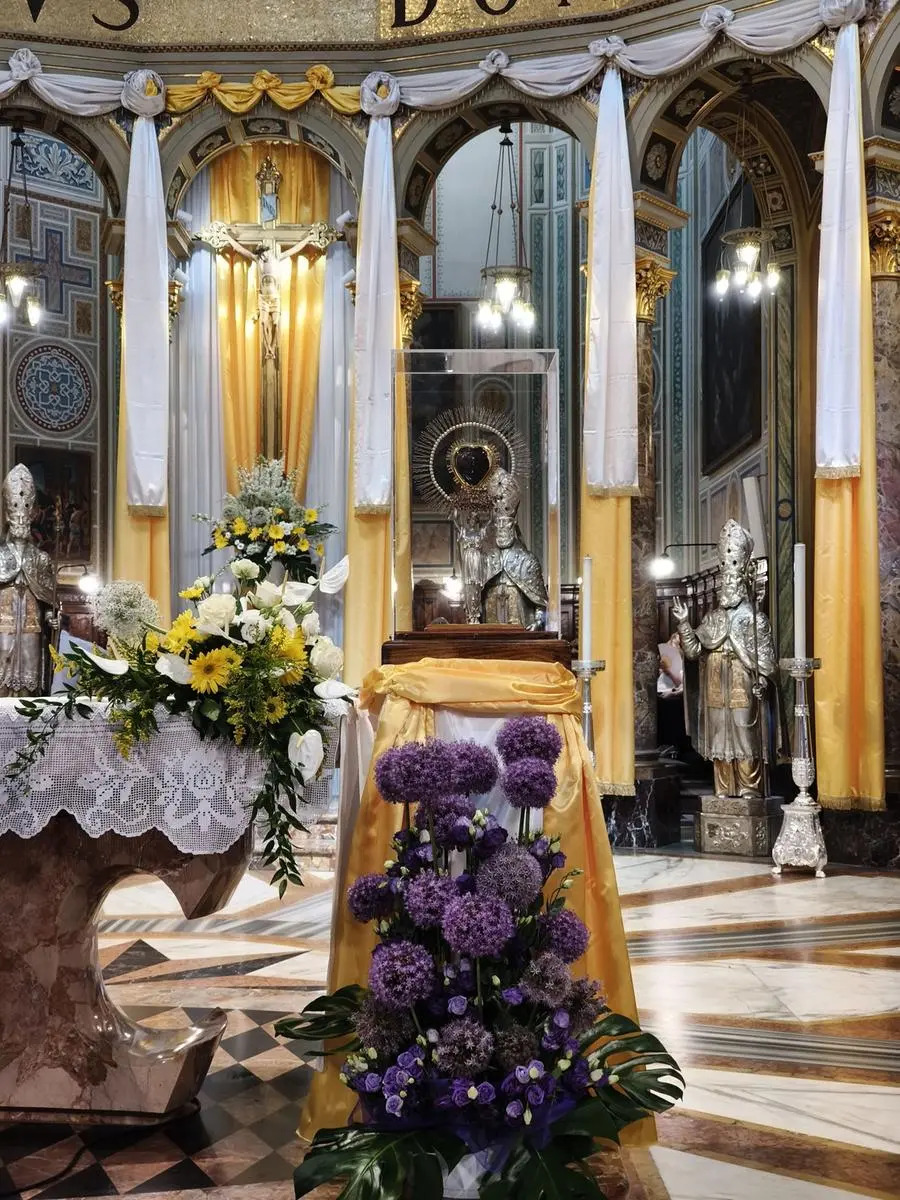
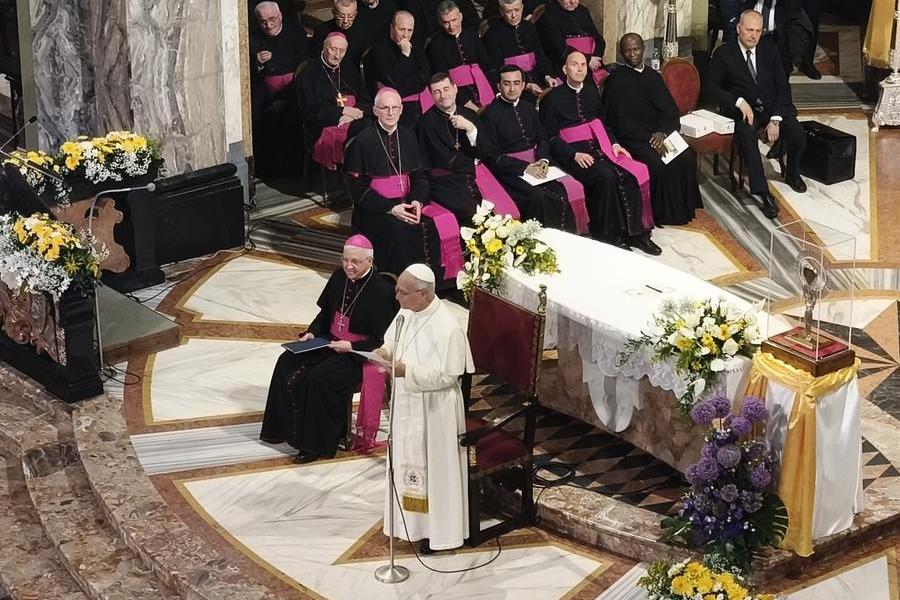
The relic of the heart of Saint Francesca Cabrini venerated by the Pope in Sant’Angelo Lodigiano
Pope Leo recalls that «when it was the moment of the decisive choice on the “route” to give to the mission of his religious institute», Saint Frances Cabrini «wanted the Pope to indicate it. And Leo XIII was clear: “Not to the East, but to the West”, at the service of the thousands of Italian emigrants in America, as the Bishop of Piacenza, San Giovanni Battista Scalabrini, had already suggested to her. Through the voices of these two enlightened Pastors, Mother Cabrini interpreted the signs of the times and understood that the dream of going to China, emulating Saint Francis Xavierit had to be carried out where, at that moment, the need was greatest. But, dear sisters and brothers, if we look at today’s world, what should we say?”, asks the Pope, “that “sign”, i.e. the migratory phenomenon, has entered a different phase, certainly more complex, yet no less capable of challenging the Church».
Francis’ legacy and service to migrants
«If Mother Francesca lived today, what would her missionary soul tell her? Or rather, what would the Heart of Christ say to her heart as a woman consecrated to Him and to the service of his Kingdom? And what What would a Pope like Francis, who, the son of Italian emigrants, made service to migrants one of the key points of his pontificate, would have asked her?» asks Leone, recalling the magisterium of his predecessor.
«Pope Francis wanted his third Encyclical, Dilexit noswhich turned out to be the last, was dedicated to the “human and divine love of the Heart of Christ”, that is, to that mystery of infinite charity which is the only true “motor” of Saint Cabrini’s life, of everything she achieved and, even more, of how she did it. Well, in this Encyclical, Pope Francis writes: “The relevance of devotion to the Heart of Christ is particularly evident in the evangelizing and educational work of numerous congregations female and male religious who have been marked since their origins by this Christological spiritual experience”.
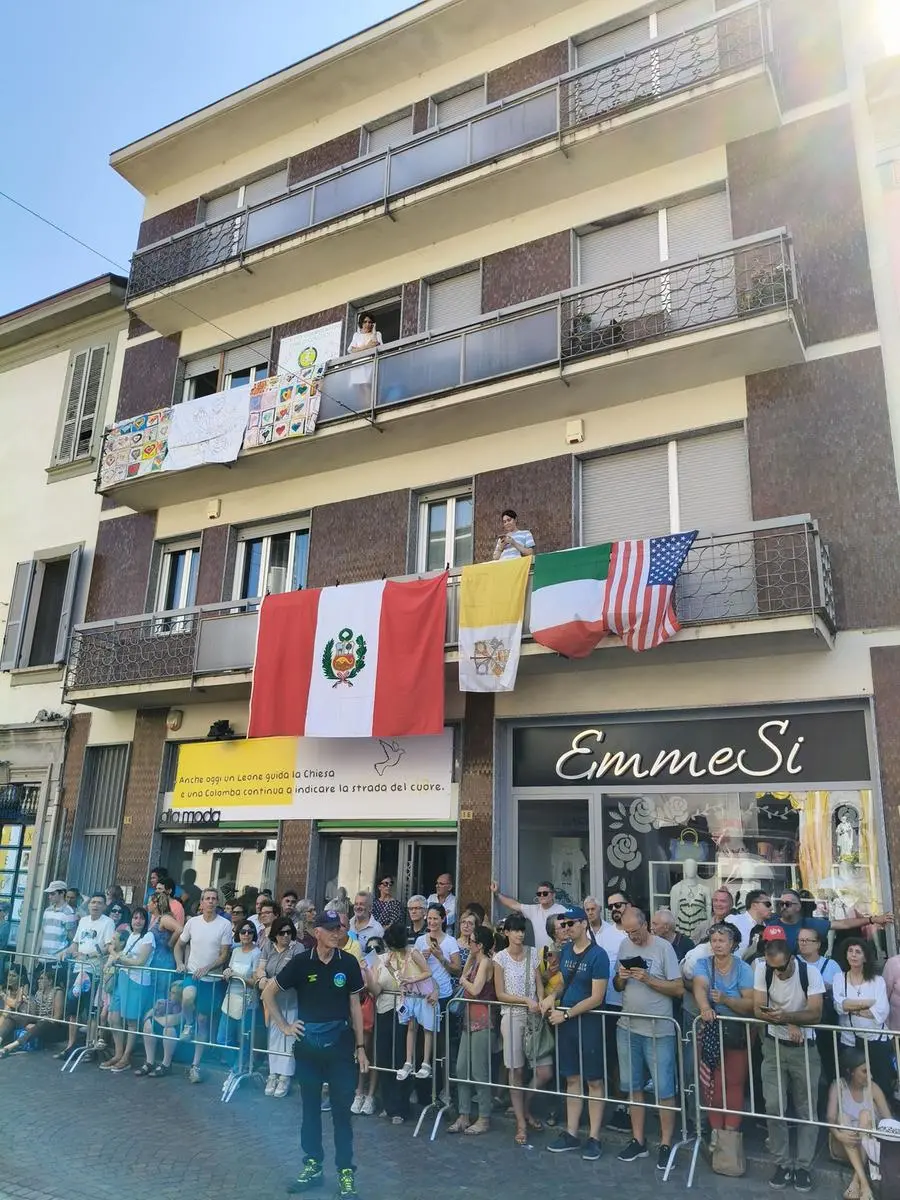
The faithful at Sant’Angelo Lodigiano
The Pontiff continues by underlining that he has carried forward the teaching of Pope Francis with the Apostolic Exhortation Dilexi you on love towards the poor and, he underlines, «where charity is spoken of in the form of “accompanying migrants”, the figure of Saint Frances Xavier Cabrini appears, right next to Saint John the Baptist Scalabrini. “Her maternal heart, which never rested, reached them everywhere – the emigrants –: in the hovels, in the prisons, in the mines” (n. 74). She herself wrote like this: “No work will be too difficult, no land too distant, no person too wounded for the love of the Heart of Jesus and for all those invited to be bearers of the love of Christ in the world”».
Starting from the extraordinary relevance of this figure, the Pope asks: «What is more current than this charism? I say it here, in front of the relic of Mother Cabrini’s heart, brought from the Motherhouse of Codogno. I say this by greeting and thanking with affection his spiritual daughters, the Missionary Sisters of the Sacred Heart of Jesus. What is more current than a missionary charism that places itself at the service of migrants?”.
The appeal to young people and the greeting of the bishop of Lodi
The Pope then launches an appeal especially to the younger ones: «Get to know Saint Frances Cabrini! Read his writings, full of passion for Jesus and for the mission; his letters, his travel diaries, the notes from his retreats. Anyone who knows Mother Cabrini is won over by her. His soul was at the same time contemplative and active; she was immersed in the love of the Heart of Christ and this gave her an extraordinary capacity for work and strength of mind, consistently with the Pauline motto she had chosen for the Institute: “I can do all things in Him who gives me strength”».
An appeal that the Pope addresses «in a special way to the Church in Lodi, which today welcomed me with so much affection! And I would like to express it in the form of a wish: may the Church of San Bassiano always stand out for those traits that shine in this most glorious daughter of its. With his example and his intercession, May Saint Cabrini help you to be in love with Christ, witnesses of his Gospel with an industrious and generous style, at the service of the poorest. May he help you to live an effective synodality, walking together and striving together towards holiness, in the variety of gifts and ministries. For this reason I assure you of my prayers.”
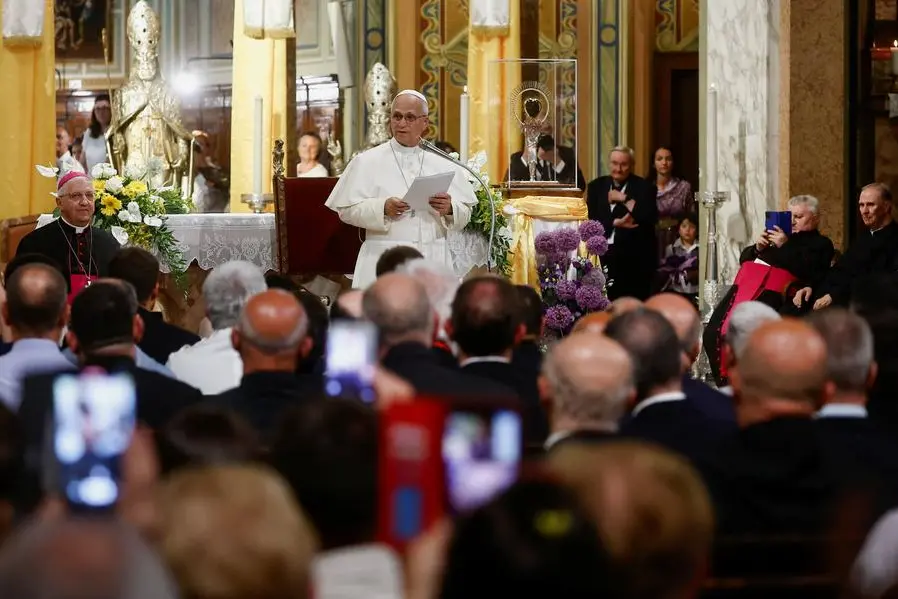
Pope Leo in the Basilica dedicated to Santa Francesca Cabrini in Sant’Angelo Lodigiano (Lodi)
(REUTERS)
The Pontiff also addresses a thought to Missionaries of the Sacred Heart of Jesusthe Congregation founded by Saint Frances Cabrini and of which in the front row is the Superior General, Sister Maria Eliane Azevedo Da Silva: «God bless them and renew them in fidelity to the charism of Mother Cabrini. And may the entire Church look to this stupendous missionary of Love, to learn what it means to serve the Kingdom of God in the midst of history.”
In his greeting address, the bishop of Lodi, Maurizio Malvestiti, recalls the figure of Saint Francesca Cabrini who «eighty years ago was proclaimed a saint: her union between contemplation and social charity is original and very fruitful, both overwhelming and far-sighted in the evangelical reading of the times and new things. With ecumenical and interreligious insights to attest that no one is a stranger in history: we are all called to brotherhood in justice and peace. From the bishop of the Roman Church, who presides over universal charity as a guarantor of unity, we desire confirmation on the steps of faith as pilgrims of hope who land in charity.”
Malvestiti also remembers the visit to Lodi by John Paul IIwhich took place on the same day, June 20, 1992, and the exhortation of Pope Francis who “in the audience with the diocese on 26 August 2022 evoked Saint Cabrini and the spiritual kinship also because of Don Enrico Pozzoli, a missionary from Lodi who baptized him”. And he concludes with a wish: «Today we enjoy all the joy of being “fellow citizens of the Saints and family members of God” and we hope for the coveted beatification of Giancarlo Bertolotti, exemplary doctor in the defense of nascent life and conjugal love, whose remains rest in this temple.”